
The Dark Side of Polymarket: Where Only a Few Win Big
In recent years, prediction markets like Polymarket and Kalshi have surged in popularity. They market themselves as opportunities to bet on a wide array of events and make substantial profits. However, the reality paints a starkly different picture.
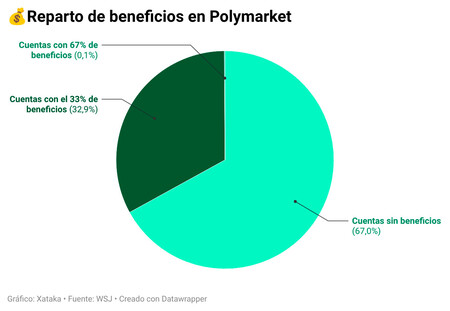
67% of Profits to Just 0.1%
According to a Wall Street Journal analysis, only a select few users reap the majority of profits on Polymarket. The analysis, which examined 1.6 million accounts from 2022, reveals that 67% of all generated profits were shared among a mere 2,000 users—representing just 0.1% of the total user base. To put this into perspective, these fortunate individuals each received about $250,000, totaling approximately $500 million.
The Odds Are Stacked Against You
What about the remaining profits? They are spread thinly among a larger pool of users, meaning the competition is fierce and unforgiving. At Polymarket’s competitor, Kalshi, the ratio of profitable to unprofitable users is 1:2.9. For every one winning bet, about three users are losing their stakes, indicating that many individuals essentially fund the winnings of a select few.
Who Are the Winners?
That elite group of 0.1% isn’t made up of casual gamblers; rather, they are professional traders and quantitative firms. These players leverage real-time data and sophisticated algorithms to execute thousands of trades daily, capitalizing on minute price fluctuations. Additionally, many of them act as ‘market makers,’ which allows them to establish buying and selling prices, reducing their own trading costs.
The Losers’ Side
The majority of Polymarket users find themselves in the negative, with typical losses ranging from $1 to $100. Notably, around 10% of users face average losses of $4,000. These users, often casual bettors, make decisions based on intuition or superficial research, ultimately paving the way for their funds to end up with the professional cadre.
The Reality of a Disguised Gamble
Prediction markets like Polymarket have cleverly cloaked what is essentially gambling under the guise of smart investing. This creates a deceptive allure that can ensnare casual users, leading to significant financial losses disguised as informed trading. The stakes are high, and for many, the losses are painfully real.
Conclusion
As Polymarket gains traction as a platform for betting on everything from politics to sports, it’s crucial to recognize its inherent risks. The overwhelming majority of users find themselves on the losing end, inadvertently supporting the profits of a small elite. Recognizing this imbalance is essential for anyone considering involvement in prediction markets.