
The Symbolic Presence of the Damaged Ukrainian Ambulance in Berlin
A National and International Outcry
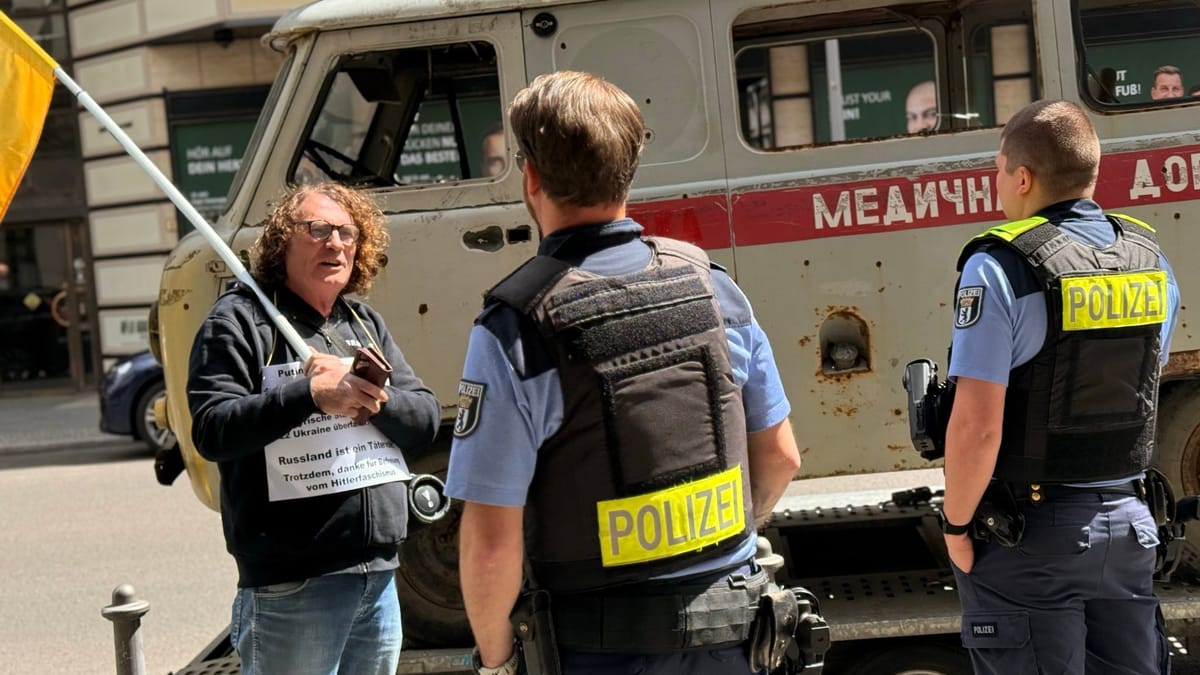
The Ukrainian ambulance, bearing the name "Barwinka," has emerged as a powerful symbol in the ongoing war between Ukraine and Russia. This vehicle, heavily damaged in a Russian attack, recently made headlines when it was strategically placed outside the Russian House for Science and Culture in Berlin. The intent was clear: to provoke thought and dialogue about the impact of the war on civilian infrastructure, especially healthcare.
Guerrilla Action and Public Response
On a typical Saturday morning in Berlin, members of the German association "Fellas for Europe" executed a carefully planned guerrilla action. Earlier in the week, three cars parked outside the Russian House were driven away simultaneously, clearing the way for the arrival of the damaged ambulance on a trailer. This act quickly caught the attention of not only the passersby but also the authorities. The police were summoned by the Russian House’s management, but their arrival yielded no significant intervention.
The Heart of Berlin: Friedrichstraße
The Russian House is located on Friedrichstraße, a bustling street in the heart of Berlin. The space allowed for parking along the road, making it an opportune spot for the association to carry out this act of protest. The timing aligned with the performance of Anna Netrebko, a prominent Russian soprano, at the Staatsoper, amplifying the event’s visibility and impact.
Barwinka: More Than Just an Ambulance
The ambulance "Barwinka," named after the periwinkle flower symbolizing immortality, played a crucial role in emergency medical services in the town of Derhatschi, located in the Kharkiv region. Prior to its destruction, it was the only all-terrain ambulance providing critical care until March 12, 2022. On that fateful day, Russian forces targeted medical facilities and civilian homes, marking a pivotal moment in the conflict. The ambulance was shot at, leaving its driver injured and the vehicle a poignant symbol of the war’s brutality.
Fundraising and Humanitarian Aid
The Fellas for Europe organization has since used the damaged ambulance to raise awareness and collect donations for medical facilities in Ukraine. In a tweet last July, Ukrainian Ambassador Oleksij Makejew expressed gratitude, noting that their efforts had facilitated the transport of six ambulances back to Ukraine. This fundraising initiative underscores the urgent need for medical resources in a war-torn country.
Highlighting the Attack on Civilian Infrastructure
The presence of "Barwinka" at the Russian House is not merely a protest against the current conflict but a powerful statement on Russia’s systematic targeting of civilian infrastructure. As stated by Christian Wolf, a founding member of Fellas for Europe, the ambulance symbolizes the relentless attacks on essential services like hospitals. "Russia’s actions are designed to create chaos and hinder humanitarian efforts," he added, emphasizing the dire situation in Ukraine.
Contrasting Messages in Cultural Spaces
Historically, the Russian House has been positioned as an unpolitical cultural environment. However, Wolf and other protesters argue that placing a damaged ambulance outside this space casts a stark contrast to its mission. "This is no longer just about culture; this is about life and death," remarked Wolf. The juxtaposition of art and activism in such a symbolic location serves to intensify the message being communicated.
Police Presence and Public Reaction
Following the ambulance’s arrival, four police cars were dispatched to inspect the situation. The authorities frequently respond to protests at the Russian House, notably those led by Henry Lindemeier, who advocates for Ukraine. This time, however, the police deemed the display non-threatening and allowed the ambulance to remain parked.
A Delicate Balance of Views
While the protest aimed to raise awareness, it also drew mixed reactions from attendees of the performances and casual passersby. Lindemeier himself faced hostility from some Russian citizens who felt provoked by the display. One woman even spat at him, while others expressed discontent over the potential emotional impact on children visiting the Russian House.
Conclusion: A Call to Reflection
The placement of the damaged Ukrainian ambulance in Berlin serves not only as a protest against the ongoing war but as a plea for awareness and compassion. The strategic choice of location amplifies its message, stirring discussions about the consequences of warfare on civilian life.
In this light, the actions of the Fellas for Europe organization invite all of us to reflect on the larger implications of conflict and to recognize the resilience of those who continue to fight for medical assistance in war-torn regions.
Aktivisten parken einen vom Krieg beschädigten ukrainischen Krankenwagen vor dem Russischen Haus in Berlin. Eine Reaktion lässt nicht lange auf sich warten.
In Berlin sorgt aktuell ein ukrainischer Krankenwagen für Aufsehen, der durch einen russischen Angriff schwerbeschädigt wurde. Zunächst stand er vor der Staatsoper, wo die russische Sängerin Anna Netrebko in einer Verdi-Oper in der Hauptrolle singt. Am Wochenende tauchte er dann in einer Guerillaaktion vor dem “Russischen Haus für Wissenschaft und Kultur” auf. Die staatliche Einrichtung, die russische Kultur und russisches Denken im Ausland stärken soll, rief deshalb die Polizei – vergebens.
Die Friedrichstraße, Standort des Russischen Hauses, befindet sich im Herzen Berlins. Wenn Plätze frei sind, kann dort am Straßenrand geparkt werden. So bereiteten Mitglieder des deutschen Vereins “Fellas for Europe” im Laufe des späten Freitagabends vor, was sich dann am Samstag gegen 10.30 Uhr abspielte. Drei Autos, die in der Nacht direkt vor dem Haupteingang des Russischen Hauses abgestellt worden waren, fuhren zeitgleich von ihren Parkplätzen und machten Platz für ein Fahrzeug mit Anhänger. Auf dem Anhänger befand sich ein vom russischen Angriffskrieg beschädigter ukrainischer Krankenwagen. Im Russischen Haus wurde das als Provokation verstanden.
Der Krankenwagen heißt “Barwinka” nach der Pflanze “Immergrün”, die für Unvergänglichkeit stehen soll. Im Ort Derhatschi in der Region Charkiw spielte er als einziger Krankenwagen mit Allradantrieb eine zentrale Rolle bei der Krankenversorgung – bis zum 12. März 2022: Damals attackierten die Russen nach dem großflächigen Einmarsch in die Ukraine medizinische Einrichtungen und Wohnhäuser mit Sprengwaffen und Streumunition. Das kleine Rettungsmobil war deshalb auf dem Weg zu einem Einsatz. Doch “Barwinka” wurde selbst beschossen, der Fahrer verletzt – und das beschädigte alte Krankenfahrzeug zu einem Symbol.
Mit ihm sammelt der Verein “Fellas for Europe” seither Spenden für Gesundheitseinrichtungen in der Ukraine. Im Juli vergangenen Jahres bedankte sich der ukrainische Botschafter Oleksij Makejew auf der Plattform X: “So konnten bereits sechs Krankenwagen in die Ukraine gebracht werden.”
Der zerstörte Krankenwagen soll aber auch auf Russlands Krieg hinweisen. “Er ist ein Symbol, dass Russland lebensnotwendige, zivile Infrastruktur wie Krankenhäuser systematisch angreift, um die Versorgungslage zu erschweren”, sagt t-online der Mainzer Rechtsanwalt Christian Wolf, Gründungsmitglied bei den “Fellas for Europe” und an der Aktion in Berlin beteiligt*. Da das Fahrzeug zu den Konzerten mit Netrebko in Berlin gebracht wurde, sei der Vorschlag schnell umgesetzt worden, ihn auch vor das Russische Haus zu fahren.
“Barwinka” erinnerte auch schon bei der “Kieler Woche” an den Angriffskrieg Russlands in der Ukraine, stand auf Einladung des EU-Parlaments in Brüssel, war in Städten mit vielen Russland-affinen Einwohnern wie Dresden und Baden-Baden – insgesamt in rund 80 Städten. “Aber das Russische Haus war sicher der kontrastreichste Ort”, so Wolf. Deren Leiter hatte t-online kürzlich gesagt, das Haus sei ein unpolitischer Ort der Kultur und deshalb für Proteste ungeeignet.
Schon kurz nachdem der Krankenwagen abgestellt worden war, trafen vier Streifenwagen der Polizei ein, die das Russische Haus gerufen hatte. Hierher rückt die Polizei häufig zu Einsätzen aus, weil dort der Berliner Henry Lindemeier regelmäßig mit Ukraineflagge und Musikanlage protestiert. t-online hat über die Reaktionen auf seinen Protest ausführlich berichtet. Lindemeier gesellte sich auch am Samstag zu dem Krankenwagen. Die Polizei sah aber keinen Anlass zum Eingreifen und rückte wieder ab. Das Fahrzeug durfte dort stehen. “Wir haben auch brav Parktickets gelöst”, so Wolf. “Neun Euro für je zwei Stunden.” Und das von 10.30 bis fast 20 Uhr.
Lindemeier, der neben dem Fahrzeugwrack als Unterstützer der Ukraine erkennbar war, bekam jedoch den Unmut russischer Bürger zu spüren. “Eine Frau kam, und hat mich angespuckt”, berichtet er. Eine andere Frau habe beklagt, er könne Kindern so etwas nicht zumuten, die das Haus besuchten. “Die Auseinandersetzung damit ist für Russen nicht schön”, sagt Lindemeier. “Viele Besucher haben auch sehr bemüht gewirkt, keinen Blick in die Richtung zu werfen.”