
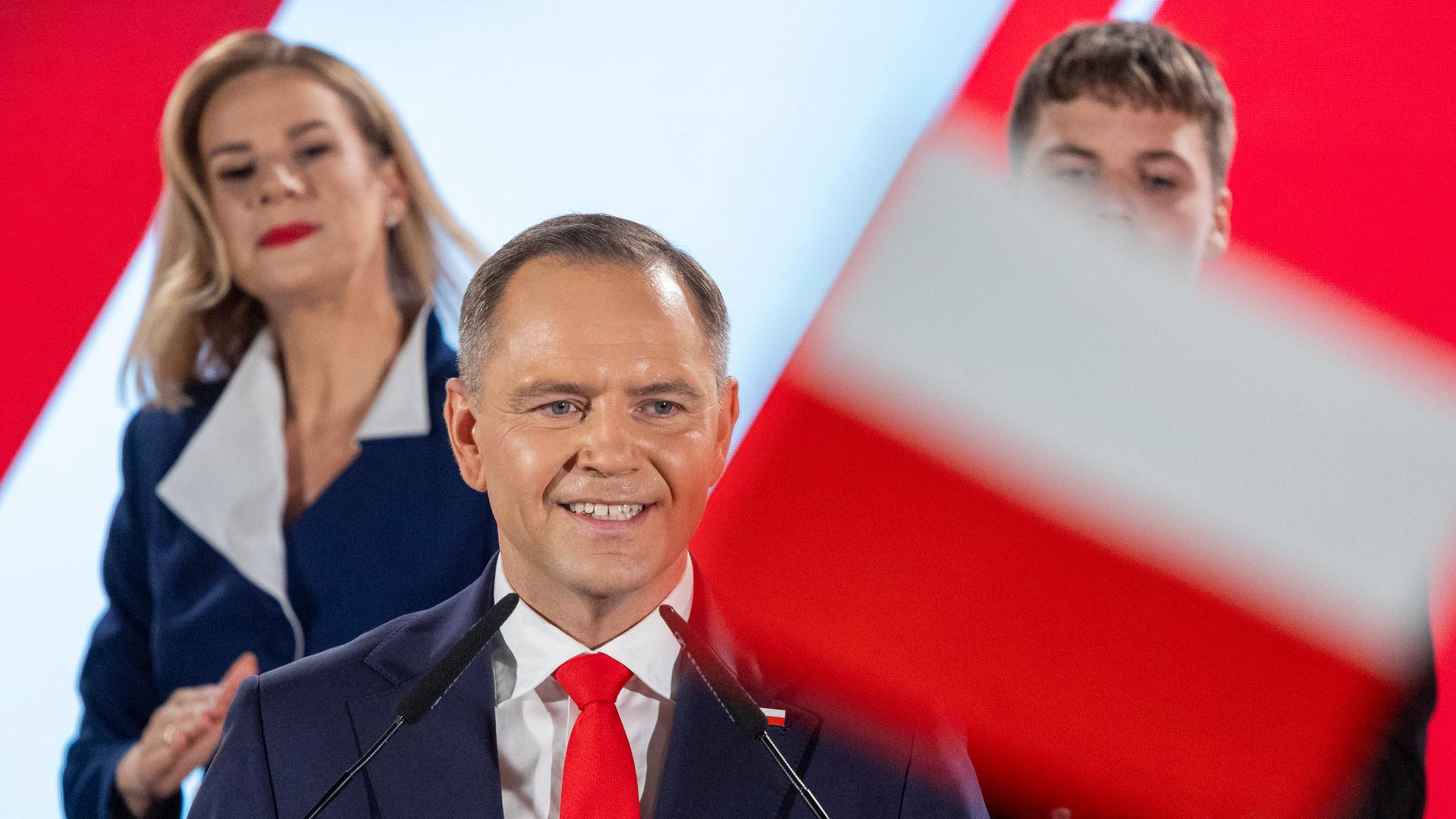
The recent Polish presidential elections culminated in a closely contested final round between Karol Nawrocki , representing the Law and Justice Party (PiS) , and the pro-European liberal candidate Rafał Trzaskowski , the Mayor of Warsaw. Nawrocki secured his victory with 50.89% of the votes, although Trzaskowski was not far behind, garnering 49.11% . Voter turnout was a remarkable 72% , indicating high public engagement in this critical electoral process.
Nawrocki’s ascent to the presidency marks a significant shift for Poland, particularly in the context of its European Union (EU) policies. Trzaskowski’s victory would have bolstered the liberal-conservative government led by Prime Minister Donald Tusk . In contrast, Nawrocki’s victory raises questions about Poland’s continued support for Ukraine and signals a potential overhaul of the government’s reform agenda. Nawrocki himself has declared intentions to block significant reform measures and has previously expressed skepticism regarding Polish support for Ukraine.
Presidential Powers and Responsibilities
The role of the president in Poland is far from ceremonial; the president serves as the Supreme Commander of the Armed Forces and plays a pivotal role in shaping the nation’s foreign policy. Furthermore, the president possesses the unique legislative power to propose and veto laws. This authority raises concerns about how Nawrocki’s presidency will affect the existing political landscape, particularly the government’s reform agenda initiated under Tusk.
During the first round of voting held in mid-May, neither candidate achieved the requisite majority of 50% to secure victory, with Trzaskowski leading but lacking sufficient traction. The emergence of the far-right faction was also noteworthy, illustrating shifting political dynamics within the country.
Following the election results, Trzaskowski extended his congratulations to Nawrocki, underscoring a commitment to maintain political dialogue. He expressed gratitude to his supporters while acknowledging the challenge of unifying the country under differing visions for its future.
International Responses
International reactions to Nawrocki’s win have been swift and meaningful. German President Frank-Walter Steinmeier reached out to congratulate him, reflecting on the historical weight of German-Polish relations. He stated, “Germany recognizes its enduring responsibility for the suffering caused to Poland, and we are grateful that today Germany and Poland stand as close partners within the EU and NATO.” Steinmeier even extended an invitation for Nawrocki to convene in Berlin for discussions regarding future collaboration.
Ursula von der Leyen , President of the European Commission, expressed optimism for continued strong cooperation between the EU and Poland. Her statement on social media emphasized the importance of working together for the security and prosperity of their shared home. Meanwhile, Ukrainian President Volodymyr Zelenskyy also shared his eagerness for enhanced collaboration with Poland and President Nawrocki, particularly concerning ongoing regional issues.
Political Challenges Ahead
Political analysts predict that Nawrocki will adopt a confrontational stance toward the Tusk administration, similar to that of his predecessor, Andrzej Duda . Paul Ziemiak , a member of the CDU , suggested that Nawrocki’s primary focus will be to create obstacles for Tusk’s government, potentially stalling its reform initiatives. Ziemiak characterized the current political climate in Poland as deeply divided, hinting at the possibility of early parliamentary elections on the horizon.
The German government’s appointee for Polish relations, Ziemiak, also commented on the challenging electoral outcome, warning that it could hinder Tusk’s administration in successfully implementing necessary reforms for the country. Agnieszka Lada-Konefal , deputy chair of the German-Polish Institute , pointed out that Nawrocki’s inclination may lean towards a more nationalistic foreign policy, indicating that his administration might prioritize a Trump-style approach, complicating EU dynamics further.
Further Information
As Poland navigates this new political chapter, various resources are available for those seeking deeper insights into the election and its implications. For more detailed analyses, check out:
- Dämpfer für Tusk: Konservativer Nawrocki wird neuer polnischer Präsident
- Reaktionen auf die Wahl in Polen
This news reflects the evolving landscape of Polish politics and the significance of Nawrocki’s presidency for the nation and its relationship within Europe.
General News – 2