
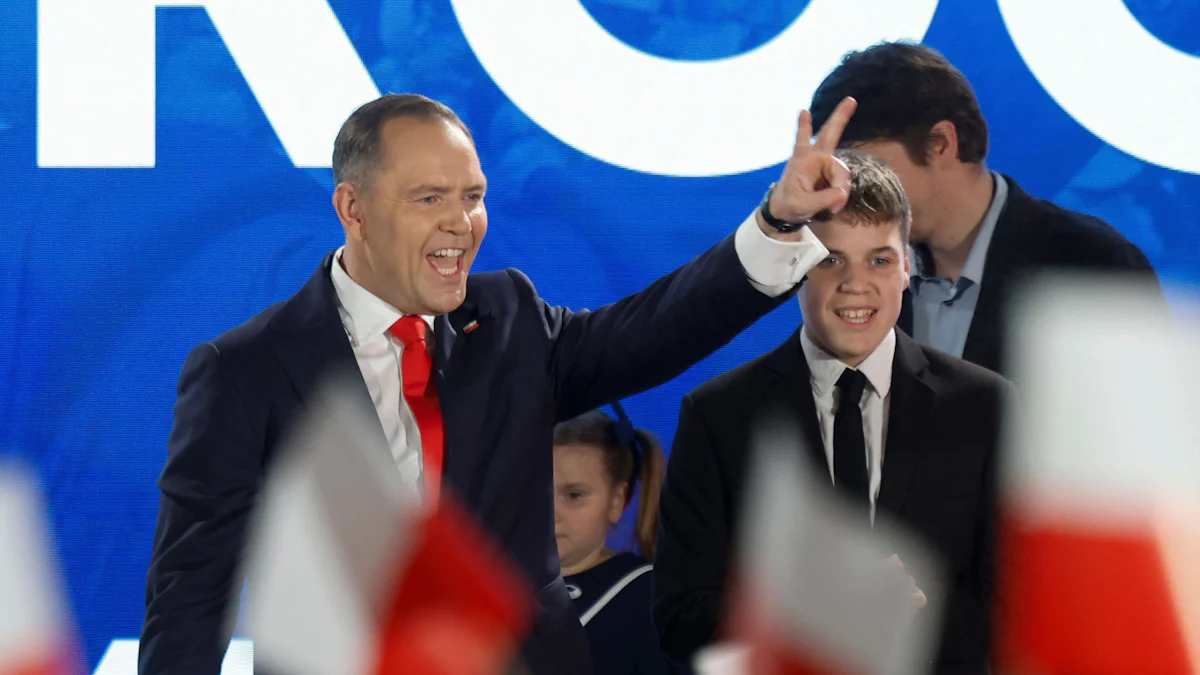
Karol Nawrocki Triumphs in Polish Presidential Election: A Turning Point for Poland
In a highly contested runoff, Karol Nawrocki, the right-wing candidate, has secured victory in the Polish presidential election. With 50.9% of the votes cast in his favor, Nawrocki narrowly defeated his liberal opponent Rafał Trzaskowski, who garnered 49.1%. The election saw an impressive voter turnout of over 71%, making it a pivotal moment for Polish democracy.
A Hard-Fought Contest Reflecting Poland’s Divided Landscape
Both candidates exhibited confidence as polls closed, despite the neck-and-neck race that had developed. Nawrocki, a 42-year-old historian and an independent candidate, was backed by the influential Law and Justice Party (PiS), seeking to fill the shoes of outgoing president Andrzej Duda. Nawrocki is a controversial figure; he has faced accusations of involvement in hooligan fights and maintaining connections with neo-Nazi groups.
In contrast, Trzaskowski serves as the mayor of Warsaw and received backing from the coalition led by Prime Minister Donald Tusk. The differences between the two candidates not only symbolize differing policies but represent a broader ideological divide within Polish society.
Implications for the European Union
Nawrocki’s election carries significant implications for Poland’s relationship with the European Union. He is known for his skepticism towards the EU, often branding decisions made in Brussels as anti-Polish. His reluctance to adopt the Euro and doubts about supporting Ukraine’s potential integration into the EU and NATO raise questions about Poland’s foreign policy direction under his leadership.
Since the end of 2023, Warsaw has had an EU-friendly government under Tusk. However, Nawrocki’s presidency could challenge this alignment, as he holds greater power in the Polish political system than his German counterpart. The Polish president has significant influence over foreign policy, appoints the government, and has the potential to disrupt legislative processes through a veto power.
A Record Voter Participation
This election has opened a new chapter in Poland’s democratic journey, with approximately 29 million eligible voters participating in the decision-making process. Duda, who is closely aligned with the PiS, was ineligible for a third consecutive term, making this election critical for the party and its future agenda.
In the first round of voting held weeks prior, Trzaskowski received 31.4% of the vote compared to Nawrocki’s 29.5%. The initial round revealed a neck-and-neck battle, foreshadowing the tense atmosphere of the second round.
The Political Landscape Shifts
This victory not only indicates a shift in leadership but suggests a possible resurgence of conservative values in a country that has seen substantial changes over the past few years. Nawrocki’s background in history may offer a unique perspective on Poland’s past, but his controversial associations raise concerns regarding the potential polarization of Polish society.
His presidency could herald a stricter immigration policy, increased nationalism, and a departure from EU norms, especially concerning human rights and community values.
Looking Ahead: What’s Next for Poland?
As Poland braces for what lies ahead under Nawrocki, the questions of EU alignment, domestic policies, and international relations hang heavily in the air. While both candidates campaigned on promises of prosperity and stability, the divergences in their political visions could create a tumultuous atmosphere in the coming years.
The ramifications of this election will play a crucial role not just in Polish politics but also in shaping the future dynamics within Europe. Nawrocki’s presidency could either fortify or undermine Poland’s role in the EU, affecting everything from economic stability to humanitarian policies across the continent.
As the tale of this election unfolds, the world watches closely how a new chapter in Polish governance will echo through the halls of Brussels and beyond, determining not just Poland’s trajectory but also its standing on the global stage.