
The Cup of the Generalissimo: A Controversial Artistic Experiment in Moià
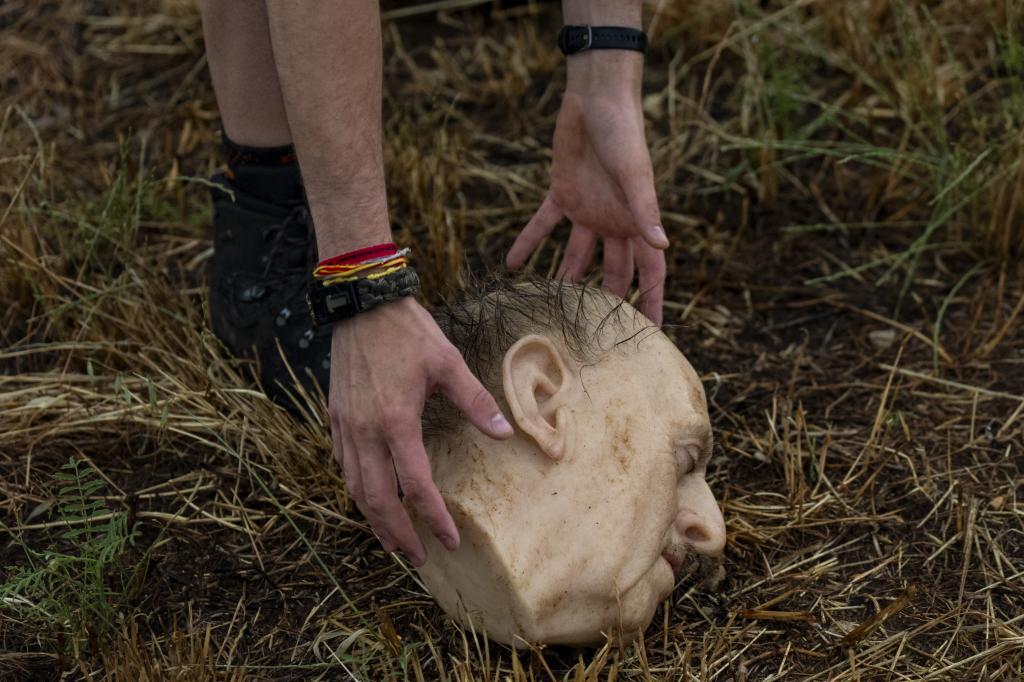
In a remarkable intersection of art and politics, a hyperrealist replica of dictator Francisco Franco was prominently featured in a daring performance titled “The Cup of the Generalissimo.” This provocative event took place in the backdrop of genuine Civil War trenches in Moià, Barcelona, on Thursday afternoon. The performance was spearheaded by artist Eugenio Merino, who is known for his ability to blend satire with social commentary.
This year marks a particularly poignant occasion as it aligns with the 50th anniversary of Franco’s death. The timing has sparked discussions surrounding his legacy and the lingering shadows of his regime. Merino’s work, often characterized by a bold critique of historical figures, invites viewers to contemplate the impact of Franco and the Civil War on contemporary Spain.
Decade of Cultural Activism
The event was part of the Fex – contemporary ex -contemporary art festival, which celebrates a decade of cultural activism and “indisciplined creation.” Merino collaborated with the American collective INDECLINE to create a framework for this event that has garnered international attention. Known for previous projects like “Always Franco,” which depicted the dictator in a Coca-Cola fridge, Merino’s venture aims to provoke discussion and reflection on Spain’s historical context.
Merino stated that the organizers asked for a project commemorating the festival’s anniversary, and given the preservation of a Civil War trench in Moià, he saw this as an appropriate venue to stage his artistic endeavor. He emphasized the importance of this occasion: “It seemed pertinent for Franco to have its weight,” he remarked, recognizing the venue’s historical significance as a site for anti-Franco resistance.
Historical Relevance and Political Commentary
Merino’s performance is not merely a spectacle; it is deeply rooted in historical context. Franco’s legacy remains a point of division in Spain, with many still grappling with the implications of his rule. According to historian Steven Forti, although historical fascism may have ended post-World War II, its ideology continues to manifest in various forms, particularly in Spain. Forti suggests that while democracy was established, there has been a lack of historical reparation, which has contributed to a surrounding atmosphere of collective amnesia among younger generations.
In response to this cultural amnesia, “The Cup of the Generalissimo” evokes football as a political tool, transcending its traditional role as mere entertainment. Merino aims to involves younger audiences who may not have a clear understanding of historical denialism. By fusing sport with art, he opens a dialogue about societal norms, historical accountability, and the importance of memory in shaping identity.
A Football Game with Unconventional Rules
During the performance, participants engaged in a game where they kicked the replica of Franco’s head. Merino explained his intention: “The important thing here is to kick this head, for people to enjoy and have a good time.” The event was designed as a collective catharsis, preserved on video for perpetuity. This unique approach blurs the lines between violence and catharsis, as Merino defends the act as a metaphorical game rather than an act of aggression.
Critics have labeled the performance as violent, sparking debates about the appropriateness of using such symbols in a performance art context. However, Merino has clarified that he views it as a participatory game highlighting the importance of communal engagement and reflection.
Looking Ahead: A Festival of Memory and Art
The festival continues its programming over the weekend, promising a vibrant lineup of artists and groups that explore historical memory and community engagement. By incorporating elements of formal experimentation and community vocation, Moià is transformed into a platform for dialogue and artistic expression.
The event signifies more than just an artistic performance; it symbolizes the ongoing struggle for recognition and understanding of Spain’s complex past. In a world increasingly subject to alternative narratives, Merino’s work serves as a vital reminder of the significance of remembrance in a society eager to leave behind the shadows of tyranny.
As history remains a living aspect of contemporary society, artistic expressions like “The Cup of the Generalissimo” serve not only to entertain but also to educate and provoke essential conversations around democracy, memory, and identity. In doing so, they challenge audiences to confront uncomfortable truths about their historical legacies, ultimately aiming for a more just and informed society.