
The Rise of Solar Energy Projects in Carmona, Seville
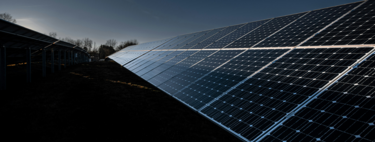
As the world continues to pivot towards renewable energy sources, the small town of Carmona in Seville has become a focal point for the emerging photovoltaic industry in Spain. Currently, 28 solar projects are under development on land that was once cultivated with crops like cereal, chickpeas, and other agricultural products. This solar boom is not merely a tale of energy investment; it’s reshaping the local economy and the very landscape of the countryside.
Farmer José Portillo , featured in a report by the Research Team Program, illustrates this transformation well. He reports a staggering economic shift: “For each hectare of dry farm, I earned about 100 euros per year; now, leasing to a solar plant brings me 1,900 euros .” This income leap exemplifies the new possibilities that solar energy offers to local farmers.
Economic Benefits Driving Change
This is not an isolated phenomenon. With long-term contracts lasting between 20 to 30 years, many farmers are increasingly considering whether to continue traditional farming or pivot to solar energy. The answer for many is clear; according to the installation company Eave, rental prices for photovoltaic projects in 2024 range from 1,000 to 2,000 euros per hectare. Not all lands are suitable, though; ideal locations must meet environmental standards, possess adequate hydraulic procedures, and have access to a capable point of connection to the national electricity grid.
<img alt="THE MYSTERY OF LIGHT IN SPAIN: Why with the solar working to the fullest there is only one hour 'cheap' A day" width="375" height="142" src="https://i.blogs.es/ae5878/panel-solar/375_142.png"/>From Agriculture to Renewable Energy—A Seasonal Shift
The economic impact of this shift from farming to solar energy is substantial and contextually significant. According to the Ministry of Agriculture, Spanish agricultural income grew by 11.2% in 2024, primarily driven by a recovery in cereal prices (+38.9%) and an increase in olive oil production (+34.3%). However, the advantages are not evenly spread across all types of farming.
The National Agrarian Accounting Network (Recan) highlights that in extensive crops like cereals, the income generated is generally quite modest. In contrast, intensive crops, such as olive groves and almond orchards, show much higher yields. Farmers are reaping between 3,000 to 4,000 euros per hectare from olive cultivation, while pistachios can yield up to 8,000 euros per hectare in full maturity.
In essence, much depends on what the land produces. The potential income from solar leases dwarfs the traditional benefits seen from dryland farming . In more technologically intensive agriculture, profit margins may resemble those of photovoltaic energy, but with added risks and higher costs. Hence, solar energy has effectively emerged as a strong competitor to traditional agricultural practices.
Self-Consumption: A Gradual Approach
Farmers are not limited to leasing their lands for solar energy; another growing trend is self-consumption. More farmers are opting to install solar panels to mitigate their own energy costs. According to a recent report from APPA, Spain boasts over 8,585 MW of self-consumption, predominantly in industrial projects, which satisfies around 3.7% of the national energy demand.
The cost savings from such installations are significant. Estimates suggest that each kilowatt installed can save homeowners around 157 euros annually and about 101 euros for industrial setups. For example, an irrigation system using a 100 kW installation could potentially save close to 10,000 euros per year in electricity costs. This savings could increase even further with the addition of energy storage solutions like batteries that optimize usage during sunlight hours.
A Third Option: Agrovoltaics
The concept of agrovoltaics presents an innovative middle ground between traditional agriculture and solar energy. Researchers at the University of Córdoba have demonstrated that it’s feasible to install solar panels in a way that benefits both agricultural output and energy production. Studies show that strategically placed solar panels can enhance sunlight exposure for crops, thereby not compromising agricultural yields.
International examples support this notion; Italian wineries have reported improved wine quality under the shade of solar panels, while farms in Australia have found that even livestock, like sheep, benefit from the shading provided, improving wool quality.
The Future’s Horizon: Integrating Land and Energy
The future of the agricultural landscape in Spain may not hinge on an exclusive choice between land or solar energy. Instead, it could be about how best to combine the two. As we approach 2025, the measurement of one hectare’s value could extend beyond its traditional yield in tons of cereal or liters of oil; it may now also account for kilowatts of energy produced.
With agricultural income rebounding due to the gains in crops like cereals and olives, solar leasing represents an attractive opportunity for many farmers, particularly in low-profitability zones. The trajectory ahead may be one of hybridization—an evolving interplay between solar arrays, olive groves, and energy storage solutions. The future farm, therefore, will be a complex ecosystem where land, sun, and energy networks converge for mutual benefit.