
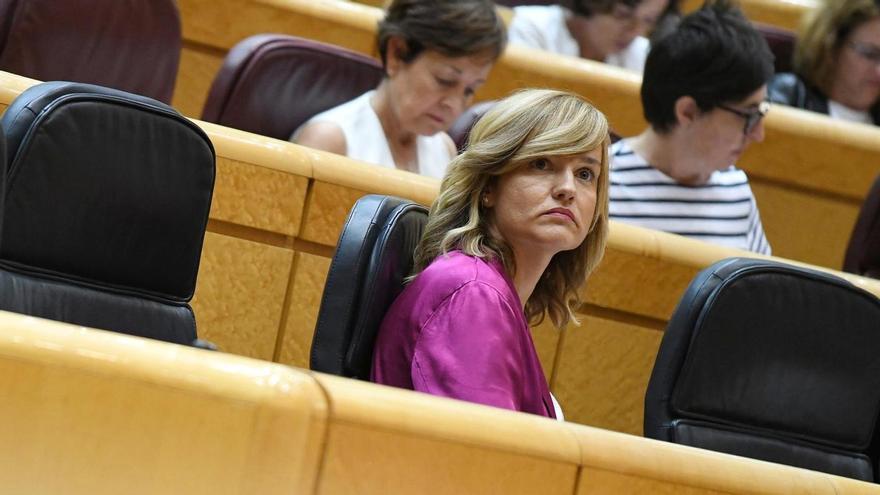
The Controversy Surrounding Pilar Alegría
The political landscape in Spain has become increasingly tumultuous with the upcoming appearance of Pilar Alegría, the Minister of Social Rights and former Government Delegate in Aragon, at the Senate committee investigating the Koldo case. Scheduled to take place this Thursday, the session is set to shed light on an alleged event tied to former Minister of Transport José Luis Ábalos, which reportedly took place at the Parador of Teruel during a night when Alegría was also present.
Allegations and Denials
Alegría has firmly denied any knowledge of the alleged party hosted by Ábalos, stating that there are attempts to implicate her as part of a smear campaign aimed at detracting from her professional credibility. She has specifically pointed to a surge of misogynistic harassment targeting her on social media platforms. This highlights a troubling trend where public figures, particularly women, find themselves at the center of derogatory media narratives.
Demand for Clarity
The Popular Party (PP) is pressing Alegría to address what transpired at the Parador on the night of September 15-16, 2020, when she was serving as the Government Delegate in Aragon. They assert that her testimony is crucial to "illuminate" the circumstances of that evening. The narrative surrounding this incident has led to heightened scrutiny of Alegría’s actions, with the opposition eager to depict it as a serious lapse in governance.
Testimonies from the Parador’s Director
In a related development, the director of the Parador of Teruel, Joaquín Gutiérrez, has come forward to refute claims of any misconduct or disturbances during Ábalos’s stay. Gutiérrez has been quoted several times asserting that it was "an absolutely normal night," and reiterated that he would have been the first to know if any irregularities had occurred.
This aspect of the case raises questions about the reliability of various accounts and the extent to which personal testimonies can be trusted amidst political turmoil. The director’s statements clash with the allegations made against Ábalos and by extension, Alegría, creating a complex web of conflicting narratives.
Alegría’s Clarifications
In recent weeks, Alegría has furnished detailed explanations regarding her whereabouts and activities during her stay at the parador, including times, invoices, and individuals she was with. She emphasized that her visit was primarily linked to Ábalos’s examination of the railway project connecting Teruel to Valencia.
During her term as government delegate, Alegría asserted that the only time she stayed away from home was during this trip to Teruel. She stated her professional obligations necessitated her presence the night of Ábalos’s visit, where she awaited his arrival for a meeting that concluded late.
The Professional Burden
Expressing the weight of her responsibilities, Alegría noted, "I had to be present as a delegate awaiting a minister to participate in a visit that concluded at 11 PM." She argued that it was essential for her to also be at the Delegation by 10 AM the following morning. It reflects the demanding nature of political office and the scrutiny that comes with public service roles.
In her defense, Alegría remarked, "I am unaware of what could happen behind closed doors in any hotel room." This statement underscores her frustration with the allegations and the unsubstantiated rumors circulating about her involvement.
The Opposition’s Stance
Despite Alegría’s denials, the PP insists she must clarify what she witnessed during the evening of Ábalos’s purported party, which he has also categorically denied. The call for public accountability is rooted in concerns over transparency in governance, especially concerning actions that could be interpreted as misconduct.
Allegations of Corruption
The spokesperson for the PP opined that the circumstances surrounding this incident hint at broader issues such as corruption, secrecy, and alleged misconduct within the government. They referenced "threats of dismissal" to employees and contradictory statements from government officials as key factors further complicating this situation.
The implications of this case extend beyond just political accountability; they touch on the problematic narratives that often engulf female politicians, particularly those facing disproportionate levels of scrutiny compared to their male counterparts. The intersection of gender and politics continues to be a critical area of discussion.
Conclusion
As the Senate commission prepares for its forthcoming session, the revelations and testimonies emerging from this controversy will undoubtedly shape the public discourse surrounding Alegría and the broader implications for governance in Spain. The unfolding drama reflects the intricate dynamics of political accountability, personal integrity, and the need for transparency in the face of burgeoning allegations. As the situation develops, the public will be watching closely to see how it impacts both Alegría’s career and the political landscape in Spain.