
Spain’s Photovoltaic Sector Faces Critical Challenges Amid Stagnation in Growth
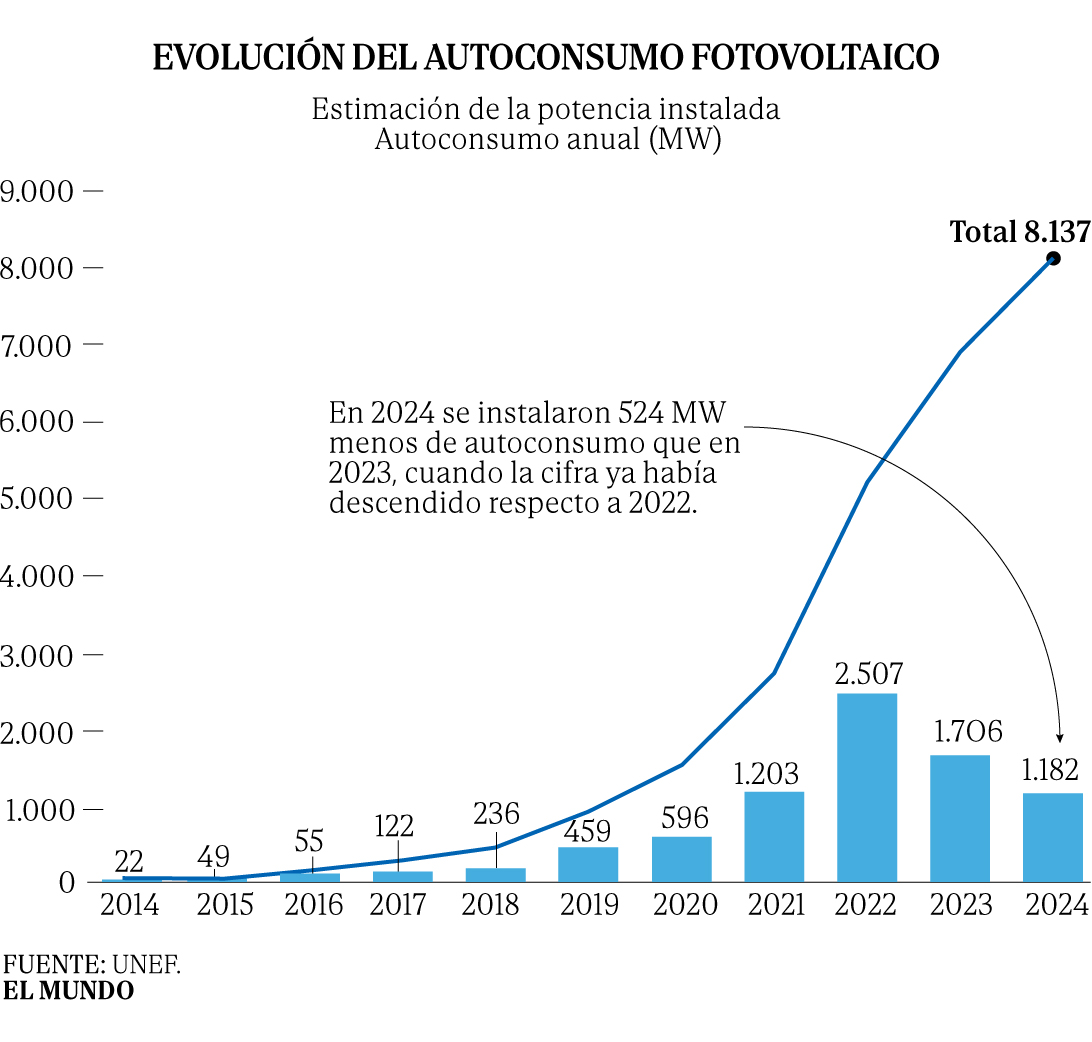
Spain’s photovoltaic (PV) energy sector has experienced a remarkable transformation over the past years, leading in renewable energy adoption. However, 2024 marks a significant shift, with the sector witnessing nearly static growth, installing 6,039 MW—a 1.47% decline compared to the previous year. This plateau raises eyebrows, yet industry leaders express a cautious outlook, indicating that stabilization had been anticipated. Nevertheless, they assert that this stagnation is a critical call to action, particularly in light of a drastic slide in self-consumption, which fell to 1,182 MW—down 31% from 2023. The decline has been substantially attributed to bureaucratic obstacles.
The latest troubling figures have been outlined in the Spanish Photovoltaic Union (UNEF) annual report. Cumulatively, this slowdown reflects a broader trend across the European Union, registering only a 3.9% annual power increase. In stark contrast, China continues to dominate the global market, contributing two-thirds of the new capacity worldwide with an impressive 357.3 GW added in 2024 alone. China’s total PV capacity now stands at 1,048 GW, dwarfing the European figures. Among EU nations, Spain ranks seventh in total installed capacity, reaching 7.5 GW in 2024 and accumulating 47.2 GW overall, with 32,157 MW accounted purely from ground installations. Germany, by comparison, leads the EU with 16.7 GW installed and a total of 99.8 GW.
At the start of 2024, the shift in energy dynamics became evident as photovoltaics became the primary source of installed power in Spain. This trend continued through summer 2024 and into 2025, positioning solar power as a cornerstone of Spain’s energy production.
Impact on Electricity Prices
As more solar plants come online, they contribute significantly to fluctuations in electricity pricing. José Donoso, the General Director of UNEF, highlighted this phenomenon as the “elephant in the room.” He emphasized the paramount need for a solution, stating, “Without photovoltaic, there is no cheap electricity.” Despite this, he indicated that nighttime energy prices are still excessively high, resembling the complexities of solar energy production.
The Need for Energy Storage Solutions
The conversation also turned towards energy storage, which Donoso noted is essential for mitigating excessive supply fluctuations and is necessary for the country’s ongoing ecological transition. While there is keen interest in storage investments, existing administrative barriers persist, hampering progress. However, he expressed optimism regarding a new Royal Decree that aims to simplify regulations and eliminate the requirement of an Environmental Impact Statement for battery installations that fall within existing solar facilities.
Challenges of Self-Consumption
Despite the promising advancements, Donoso pointed out that Spain lags behind the targets set in the National Integrated Energy and Climate Plan for 2030, particularly regarding self-consumption goals. The challenges primarily stem from a bureaucratic bottleneck, where local administrations are unable to keep pace with the volume of installation aid requests. Consequently, he advocates for administrative simplification to help facilitate smoother operations across autonomous communities that are struggling with existing constraints.
Economic Contributions and Job Creation
The overall economic impact of photovoltaics is notable, with UNEF estimating its contribution to the GDP at €10.694 billion, representing 0.7% of the total. However, there has been a 5.7% drop in exports to €3.4 billion, a reflection of the global slowdown in solar energy growth. Remarkably, the sector supports approximately 146,764 jobs in Spain, spanning direct, indirect, and induced employment opportunities, signifying its significance within the national economy.
The Need for Social Acceptance
Despite these contributions, societal acceptance remains a critical hurdle. Donoso emphasized that forming positive public perception is crucial, as negative narratives could lead to regulatory changes that hinder growth. He argued that the solar industry is not a burden for rural communities; instead, it plays a vital role in addressing their challenges.
Lessons from the Recent Blackout
The discussions also touched on the historic blackout that occurred on April 28. UNEF clarified that key reports from various authorities indicated that renewable energy was not to blame for this event. Instead, the issue was rooted in voltage control, an area where PV and wind energy have capabilities yet to be effectively utilized due to procedural delays. As efforts progress towards regulatory compliance, UNEF anticipates advancements in 2026 that will allow for enhanced stability in Spain’s energy sector.
In striving for a greener future, Spain’s solar industry must overcome significant barriers while promoting a holistic understanding of the benefits of renewable energy. Addressing these challenges head-on will be essential for ensuring the sector’s sustainable growth and securing the country’s energy independence over the coming decades.