
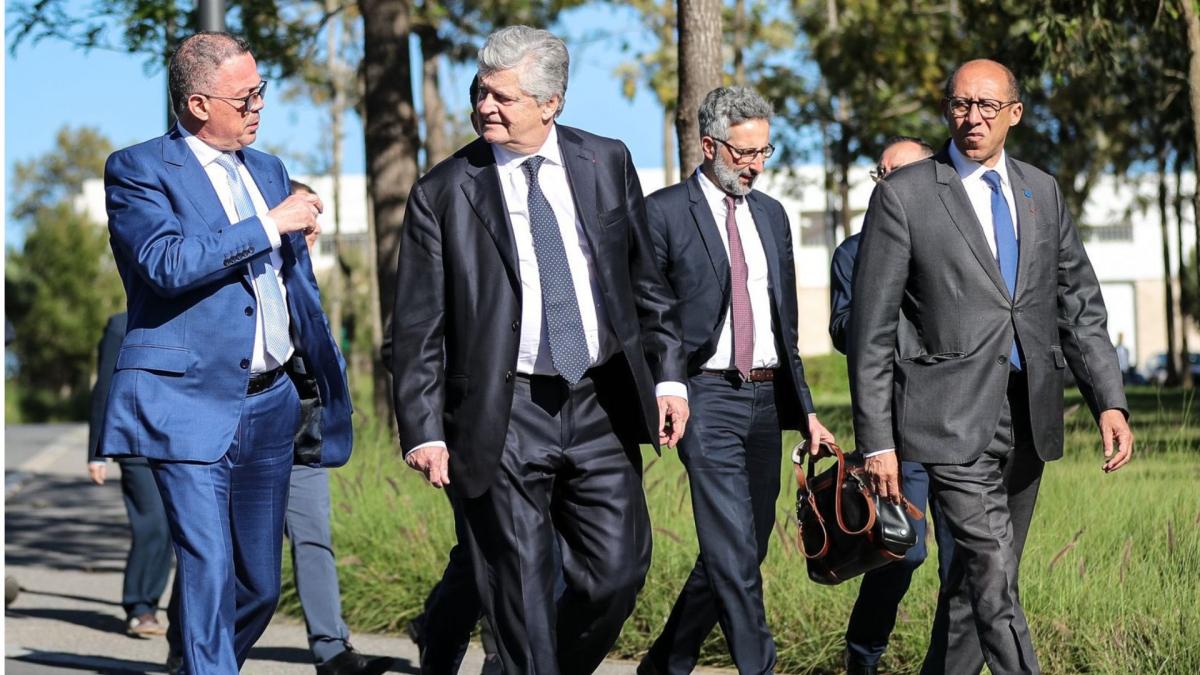
## Philippe Diallo’s Visit to Morocco
The recent visit of Philippe Diallo, President of the French Football Federation (FFF), to Morocco marks a significant stride in preparation for the upcoming 2030 World Cup. Accompanied by Nicolas Forissier, the Minister Delegate for Europe and Foreign Affairs, Diallo’s mission was primarily focused on fostering Franco-Moroccan cooperation ahead of this prestigious tournament.
### Strengthening Franco-Moroccan Ties
In his meeting with Faouzi Lekjaa, the President of the Royal Moroccan Football Federation (FRMF), Diallo aimed to explore opportunities tied to the organization of the World Cup. This collaboration is not merely about football; it serves as a platform to boost economic development and investment within Morocco. The dialogue centered on harnessing football as a driving force for social and industrial cooperation.
#### Economic Impact of the 2030 World Cup
The 2030 World Cup is envisioned as a major catalyst for economic growth in Morocco. As the country gears up to host potentially hundreds of thousands of visitors, emphasis has been placed on initiatives that enhance infrastructure, mobility, and service delivery. The World Cup presents an unparalleled opportunity for Morocco to showcase its capabilities on a global stage and modernize its facilities.
### Infrastructure Development Initiatives
A key focus of the discussions revolved around specific projects that would be essential for hosting the World Cup. This includes improvements to transportation networks, stadiums, and hospitality services. These developments will create jobs and stimulate various sectors, from construction to services, ensuring long-term benefits for the Moroccan economy. Moreover, sustainable practices in infrastructure development are likely to be prioritized to align with global best practices.
#### Supporting Local Communities
The impact of the World Cup will extend beyond mere economic figures; it also promises to uplift local communities. Diallo’s engagement underscores the importance of involving local stakeholders in the planning process. Investment in grassroots football programs, education, and community services around the tournament can leave a lasting legacy and foster a more inclusive atmosphere in Moroccan sports culture.
### The Global Football Landscape
As preparations for the 2026 World Cup in the United States are in full swing, Diallo’s visit reminds us of the interconnected nature of global football events. The successful negotiation of the French team’s recent trips, combined with their achievements against Brazil and Colombia, sets a positive tone for international collaboration. The outcomes of these events will play into the buildup toward Morocco’s pivotal role in the 2030 World Cup.
#### A New Era for Moroccan Football
With Morocco’s historical performance and rising prominence in international football, this collaboration could symbolize a new dawn for the nation’s football aspirations. Engaging in dialogue with established football authorities like the FFF lays the groundwork for a progressive footballing culture in Morocco, mirroring the successful models seen in Europe.
### Conclusion
Philippe Diallo’s visit to Morocco signifies not just an administrative meeting but a forward-thinking approach to leveraging sports for economic development. The discussions around the 2030 World Cup underline Morocco’s potential to make an indelible mark on the world stage while fostering prosperity within its borders. As we look ahead to the World Cup, both nations stand to gain immensely from this partnership—on and off the field.