
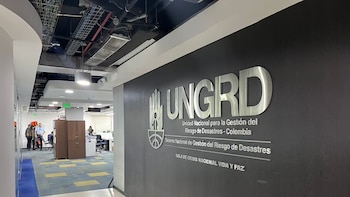
Corruption Crisis in Colombia’s National Unit for Disaster Risk Management
Recent developments in the National Unit for Disaster Risk Management (UNGRD) have thrown Colombian politics into turmoil. A comprehensive document, spanning approximately six hundred pages, compiled by Supreme Court Magistrate Misael Rodríguez, has unveiled substantial evidence implicating several congressmen and senior government officials in corrupt practices.
The file provides a clear picture of the alleged misconduct, raising important questions about the accountability of political leaders in Colombia. This matter could lead not only to legal action but also shake the very foundation of public trust in government institutions.
Evidence of Political Maneuvering
According to the findings, President Gustavo Petro was alerted to irregular practices, particularly the misuse of indicative quotas, as early as December 2023. However, he did not take immediate action to curb the diversion of public resources. This failure has sparked outrage and calls for accountability.
In a presentation relayed by Time, former presidential councilor for regions, Sandra Ortiz, detailed a shocking guideline proposed by then-Minister of the Interior, Luis Fernando Velasco. This guideline urged cabinet members to “adopt” a congressman in order to secure legislative votes in favor of government social reforms.
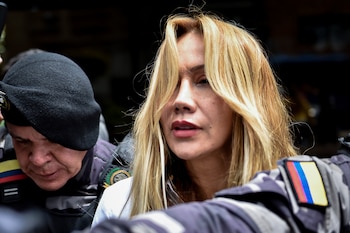
Ortiz’s testimony indicates that such tactics were not isolated incidents but rather part of a planned strategy from the highest echelons of government aimed at ensuring legislative backing.
Judicial Actions Requested
In his presentation, Judge Rodríguez has called for the preventive detention of congressmen Juan Pablo Gallo, Julián Peinado, Liliana Bitar, Wadith Manzur, and Karen Manrique. This request follows the acquisition of evidence relating to their involvement in manipulating public resources, which included redirecting budget allocations to facade entities or projects designed to benefit specific contractors allied with these legislators.
Among the most striking testimonies is that of Luis Carlos Reyes, former Minister of Commerce. He reported that on December 18, 2023, during a Council of Ministers, he alerted President Petro regarding these dubious practices occurring within the Ministry of Finance, overseen by Minister Ricardo Bonilla.
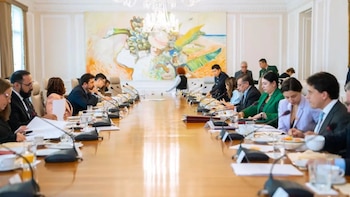
Reyes expressed that his warnings were met with scorn, particularly from Ortiz, who chastised him for speaking out. He further revealed that 200,000 million pesos were transferred from the DIAN to the UNGRD in 2023, allegedly to placate the “lack of cooperation” from specific congressmen, highlighting the connections between funding and legislative approval.
Responses and Next Steps
Reyes’s account has been corroborated by María Fernanda Valdés, former technical advisor at the Ministry of Finance. She confirmed that the only reference to indicative quotas came from Reyes, solidifying the notion that these practices were not only known but actively engaged in by high-ranking officials.
In contrast, both Ricardo Bonilla and Diego Guevara, the former Vice Minister, claimed ignorance of any meetings with congressmen regarding these allocations. This discrepancy raises further questions about accountability.
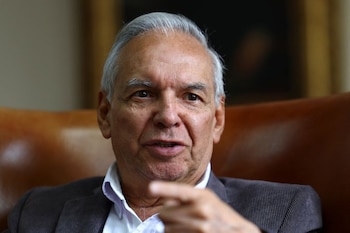
In a sworn statement given on February 6, 2025, President Petro denied being informed of any specific private pressures, suggesting that Bonilla’s prior claims were misleading.
Despite the gravity of the allegations, the Attorney General’s Office has chosen not to imprison the implicated congressmen, acknowledging reasonable indications but ultimately prioritizing caution over decisive action. The evidence further indicates Velasco’s central role in orchestrating the alleged corrupt system.
Amidst all this turmoil, other senior officials, such as Carlos Ramón González and César Manrique, remain absconded, as accusations surrounding their roles in coordinating these activities circulate.
The contents of the investigation reveal a troubling narrative of systematic corruption entrenched within the uppermost levels of Colombian politics. The ongoing investigation is poised to have far-reaching implications, as the public demands greater accountability and transparency from those elected to serve their interests.