
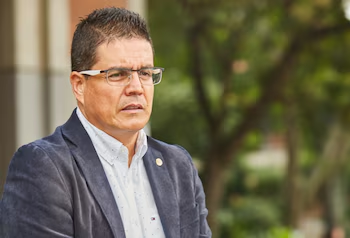
Petro Government’s Controversial Move: The Dismissal of UdeA’s Rector
On December 30, 2025, the Colombian Ministry of National Education officially dismissed John Jairo Arboleda Céspedes from his position as rector of the University of Antioquia (UdeA). This decision, made just a day before the year’s end, has sparked discussions around university autonomy and government intervention in academic institutions.
Reasons Behind the Dismissal
The Ministry’s resolution, issued by Minister Daniel Rojas Medellín, points to UdeA’s failure to fulfill previously mandated improvement obligations. According to Vice Minister Ricardo Moreno, the university faced dire financial and administrative crises, prompting the need for intervention to safeguard its sustainability and operations. The decision to remove Arboleda aligns with a series of preventive measures aimed at restoring financial health within the institution.
Appointment of Interim Leadership
Following the removal of Arboleda, the ministry appointed Héctor Iván García as the interim rector for a term of one year, which may be extendable once. García, a long-standing professor at UdeA, is expected to navigate the university through this turbulent period while addressing the issues highlighted by the Ministry of Education.
Implications for University Autonomy
This action by the central government has drawn criticism, raising concerns over the potential infringement of university autonomy. Critics argue that the intervention disrupts the traditional governance structure of academic institutions and could set a concerning precedent for future governmental interference. The ministry justified its actions by citing the need to rectify significant cash flow and administrative deficiencies within the university.
Broader Context and Tensions
This administrative shake-up comes amid broader tensions within UdeA, particularly following the appointment of new representatives in the university’s Superior Council by Minister Rojas. The atmosphere has been further complicated by questions surrounding the transparency and legality of these changes, particularly the involvement of Wilmar Mejía, a figure under investigation for alleged connections to FARC dissidents.
The ministry’s ultimatum for the university to present reports on its fitness to operate has only intensified anxiety within the academic community. The Academic Council has expressed its dissent, suggesting that the government’s demands might lead to punitive actions rather than constructive solutions.
Moving Forward: Potential Government Actions
The Ministry of National Education has indicated that further actions may follow, depending on the compliance of UdeA with the required improvement measures. This ongoing situation emphasizes the precarious balance between government oversight and the autonomy of educational institutions in Colombia.
As UdeA adapts to this unprecedented intervention, the academic community and stakeholders will be closely monitoring the developments surrounding governance, management practices, and the future trajectory of Colombia’s higher education system.