
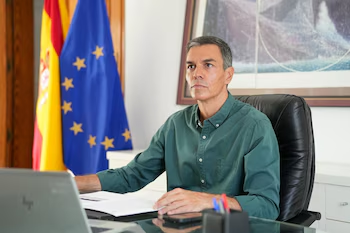
Pedro Sánchez’s Letter to PSOE Militants: A Call to Action Amid Controversy
In a recent letter addressed to the militants of the Spanish Socialist Workers’ Party (PSOE), Prime Minister Pedro Sánchez delivered a rousing message of encouragement and resilience. This passionate appeal, however, stands in the shadow of significant controversies surrounding his party, notably allegations of corruption and sexual harassment.
Embracing Progress Over Nostalgia
Sánchez begins his letter by addressing a growing sentiment among some left-wing factions in Spain. He argues that “some progressives have given in to nostalgia and defeat,” suggesting that they have succumbed to a narrative of despair regarding the future of the left in Spain. He challenges the notion that the current parliamentary landscape—characterized by fragmented power and coalition politics—is insurmountable for progressive policies.
He confidently asserts, “We should throw in the towel,” is not a viable approach. Instead, he encourages party members to face the realities of the political environment with courage and tenacity. By emphasizing the importance of progress, Sánchez sets a tone of defiance against what he perceives to be a retreat towards reactionary politics.
Condemnation of International Violations
Throughout the letter, Sánchez condemns various international infractions, particularly focusing on the situation in Venezuela. He firmly denounces the “recent violation of international legality,” framing it as part of a broader struggle against authoritarianism and injustice. This focus on external issues may be viewed as an attempt to rally support through international solidarity.
Omissions and Controversies
However, a stark omission from his letter raises eyebrows. While Sánchez passionately advocates for the advancement of Spain and its progressive ideals, he conspicuously avoids addressing unsettling issues clamoring for attention within his party. Investigations regarding corruption linked to PSOE leaders and ongoing complaints of sexual harassment among party members remain unmentioned.
By not directly confronting these issues, Sánchez may risk alienating segments of the electorate dissatisfied with the internal state of the PSOE. Critics argue that acknowledging these controversies is not just a matter of transparency but also crucial for rebuilding trust with the public.
The Path Forward
As Sánchez urges his party to embrace its progressive roots and move forward, the underlying challenges linked to accountability loom large. The absence of dialogue surrounding corruption and harassment can hinder the party’s credibility. In the coming months, Sánchez will need to balance inspirational messaging with robust action to address these controversies.
In conclusion, Pedro Sánchez aims to ignite a spirit of resilience among PSOE militants, pushing them to reject nostalgia and embrace a forward-looking agenda. However, the letter underscores the pressing need for the PSOE to address its internal challenges head-on. A commitment to both progress and accountability will be vital for the future of the party and for maintaining its foothold in an increasingly competitive political landscape.