
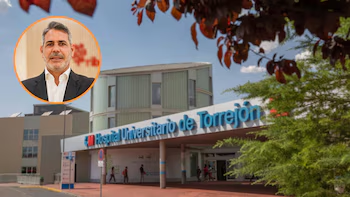
Pedro Sánchez Criticizes PP Over Torrejón Hospital Audios
A recent scandal has ignited controversy surrounding the Popular Party (PP) in Spain, following revelations about the management of the Torrejón de Ardoz University Hospital. Audios released by the newspaper El País have exposed alarming directives by the private health group Ribera Salud, the entity managing the hospital, which allegedly aimed to manipulate waiting lists to increase profits.
Controversial Instruction to Increase Waiting Lists
In a meeting held on September 25, Pablo Gallard, the CEO of Ribera Salud, directed hospital leaders to reduce the number of surgical interventions and to prioritize patients based on profitability. The objective was clear: to inflate earnings by an estimated €4 to €5 million. This strategy has raised serious concerns about the ethical implications of prioritizing financial gains over patient care.
Sánchez’s Response: A Broader Commentary on Healthcare
In response to these revelations, Pedro Sánchez, the President of Spain, utilized a political event in Plasencia to publicly address this issue, framing it as part of a larger critique against the PP’s healthcare model. He stated that the Torrejón incident exemplifies a systematic approach encouraged by the PP—a model that commodifies public healthcare for the financial benefit of a select few.
“It is not just Ribera Salud or Quirón; it is the model of the Popular Party, which is to do business with everyone’s healthcare so that four people win,” Sánchez remarked. He further emphasized that the focus should remain on people, not profits, stating that “they are patients, not clients”—a mantra that underscores the human aspect of healthcare.
The Broader Implications for Society
Sánchez’s critique was not limited to the immediate scandal; he contextualized the discussion within the broader debate about the welfare model in Spain. He urged citizens to reflect on the type of society they want, framing the upcoming December 21 elections in Extremadura as pivotal for safeguarding public services.
The President argued that a robust Socialist Party (PSOE) in the community is essential for ensuring a strong welfare state that supports the needs of ordinary citizens, contrasting sharply with the profit-driven motives attributed to the PP.
Ongoing Investigations and Political Fallout
In light of these allegations, the Ministry of Health has initiated an investigation to determine if any irregularities took place at the Torrejón hospital. In parallel, PP leader Alberto Núñez Feijóo has called for a stringent audit of the hospital, indicating that the political ramifications are just beginning to unfold.
Conclusion: A Call for Accountability
The Torrejón hospital scandal not only exposes potential ethical breaches within Spain’s healthcare system but also raises critical questions about the management and philosophy underlying public health services. As Sánchez emphasized, the situation calls for democratic engagement and accountability in the upcoming elections, highlighting the vital importance of prioritizing people over profit in healthcare. The unfolding events will undoubtedly influence public opinion and the political landscape in Spain as it moves forward.