
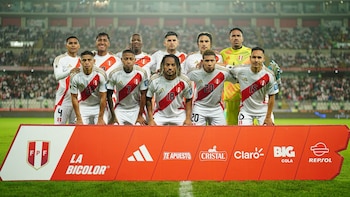
Peru’s World Cup Dream Ends in Draw Against Ecuador
The World Cup dream for Peru came to an abrupt end after a frustrating 0-0 draw against Ecuador in the 2026 South American Qualifiers. The Peruvian team was in desperate need of a victory, but the single point earned was insufficient, leaving them eliminated from the international competition with two matchdays still to play.
Despite the painful outcome, there were clear signs of improvement in Peru’s footballing performance. The national team underwent a significant transformation through three different coaching tenures during the qualifiers, led by Juan Reynoso, Jorge Fossati, and Óscar Ibáñez. Observing these changes, sports journalist Pedro García provided an extensive analysis of the current state of the “blanquirroja,” emphasizing the effort put forth by the team, yet also highlighting crucial deficiencies that ultimately sealed their fate.
The Journey of Transition Under Multiple Coaches
“While there have been emerging talents coached under different managers, none have established themselves as permanent fixtures within the national setup,” García commented. “Today, Peru played at the peak of their abilities according to their current strengths. Can anyone criticize Peru for their attitude, lack of effort, or concentration? Absolutely not. The only valid criticism is that we lack that extra quality needed to convert chances into goals.”
García contended that even with the improved performance of the current squad compared to those under Fossati and Reynoso, simply playing better would not have secured a spot in the World Cup. He affirmed, “If this current version of Peru had played the entire qualifying campaign, we still wouldn’t have qualified. We might have performed better overall, but based on current efforts, we would still find ourselves eliminated.”
The Struggle for Goals in the Blanquirroja
García did not shy away from pointing out the key weakness plaguing the Peruvian national team: their inability to score. Drawing comparisons between the present squad and the earlier one led by Ricardo Gareca, he lamented that the current forwards lack the necessary efficiency to capitalize on scoring opportunities.
“Peru finds it challenging to score; we have managed only six goals in 16 matches. Scoring is paramount, and we do not have strikers capable of converting the chances that Peru creates,” he noted, emphasizing the departure of pivotal players who had once generated crucial goals. “The three key figures during Gareca’s tenure were Gianluca Lapadula, Christian Cueva, and Yoshimar Yotún; their absence is undeniable, and we must confront that reality.”
Furthermore, García stressed that even if the blanquirroja had reached the World Cup 2026 playoff stage, their lack of goal-scoring ability would have hindered their success. “We’re simply not able to score. Why? Because we are not taking enough shots on target. I would not be confident in our chances against the playoff teams from Oceania, Asia, or Africa; that would be incredibly challenging, even for teams like Venezuela,” he concluded.
Looking ahead, the Peruvian national team will wrap up their qualifying campaign during the final two FIFA international windows in September. They will face Uruguay in Montevideo, followed by a home match against Paraguay in Lima during matchdays 17 and 18, respectively.
This conclusion could serve as a pivotal moment in re-evaluating their strategies and focusing on nurturing talent to ensure a stronger performance in future competitions.