
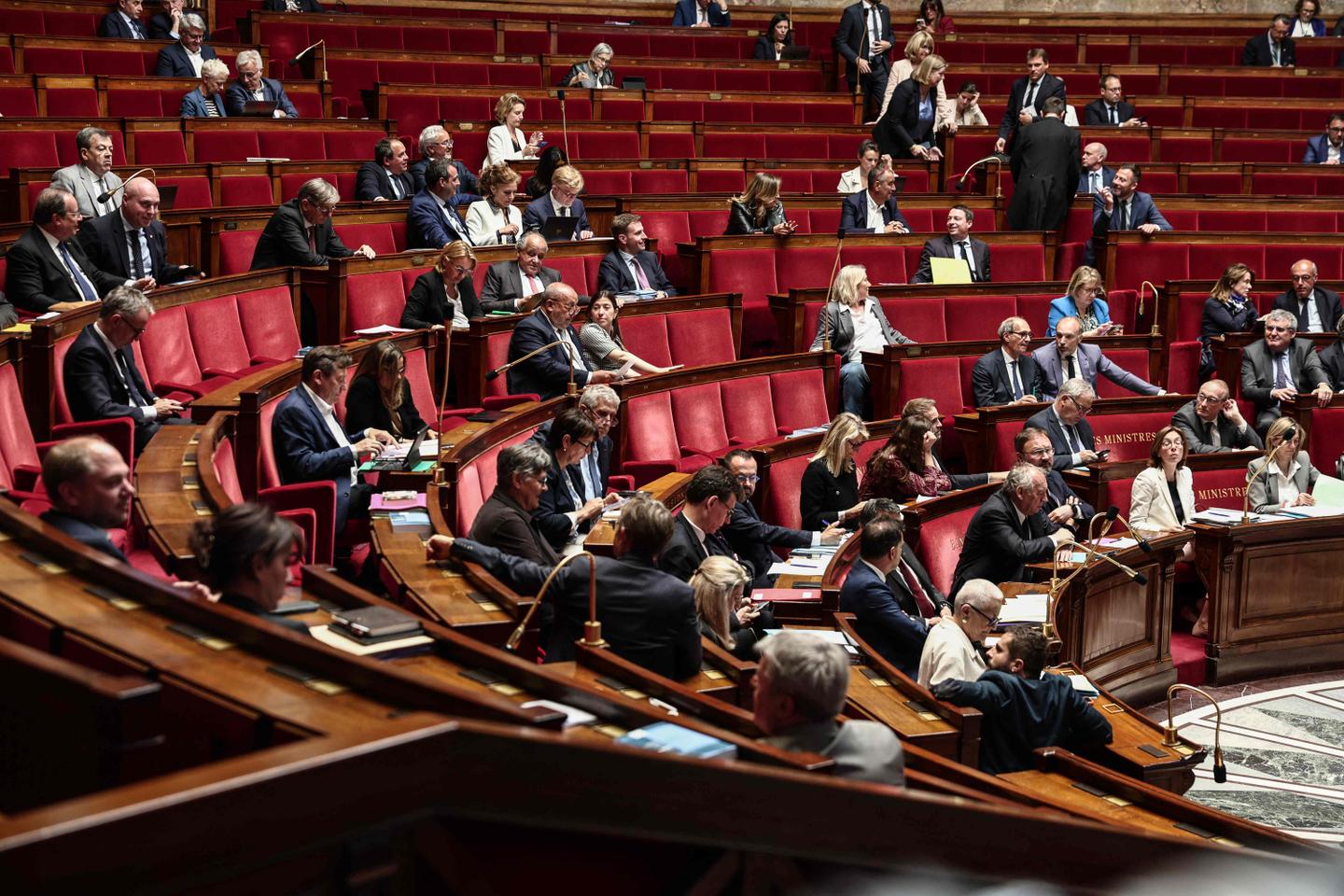
On May 23, deputies within the French National Assembly voted to remove a contentious provision from a proposed bill concerning the right to help die . This provision stated that patients who chose to utilize this option would be classified as having died of natural causes on their death certificates.
The amendment to abolish this provision passed with a slim majority, despite receiving an unfavorable opinion from the *rapporteur* (Socialist Party, PS), Stéphane Delautrette. The government presented a neutral stance, neither advocating for nor against it, allowing the article to progress unimpeded.
Deputy Nicole Dubré-Chirat (Renaissance) of Maine-et-Loire, who was instrumental in introducing this provision, expressed her intention to spare families any complications associated with commitments made during a patient’s lifetime.
However, various deputies criticized the provision, labeling it “Orwellian.” Dominique Potier, of the PS from Meurthe-et-Moselle, argued that it “completely distorts the meaning of words.” Similar sentiments were echoed by Charles Sitzenstuhl from the Renaissance party in Bas-Rhin, emphasizing that the language utilized seeks to “alter reality.” Patrick Hetzel, a representative from *Les Républicains* (LR), also condemned the provision, stating it is aimed at misrepresenting the truth.
Help to die: the deputies voted for the five cumulative conditions for a patient to be eligible
“Take Advantage of the Parliamentary Shuttle” to Improve This Point
“You change the meaning of words to impose an ideology, even if it means distorting reality,” stated Sandrine Dogor-Such, a deputy from the national gathering in Pyrénées-Orientales. She linked this language to the refusal of the bill’s proponents to include the terms “Euthanasia” or “Assisted suicide.”
Delautrette defended the notion that patients who undergo deep and continuous sedation, permitted under the 2016 Claeys-Leonetti law , should be classified as dying from natural causes.
However, Sitzenstuhl highlighted significant differences between the procedures, a distinction stressed by the High Authority for Health. He maintained that deep and continuous sedation merely prolongs life until natural death, while euthanasia results in immediate death.
Health Minister Catherine Vautrin suggested leveraging the parliamentary process to refine the wording of the bill as it advances to the Senate. A potential amendment may introduce two classifications to death certificates, one for deep and continuous sedation and another for assistance in dying.
Article reserved for our subscribers
Catherine Vautrin, Minister of Health, on help to die: “I am on a thread like a tightrope walker”
Apparent Clause
That evening, the assembly overwhelmingly approved (126 votes to 10) a framework for the “Consciousness clause,” permitting any doctor to opt-out of assisting in dying, similar to existing regulations surrounding abortion.
Newsletter
“The Journal of the World”
Each weekend, the editorial team selects the must-read articles of the week.
Register
This decision remains individual, in spite of attempts from conservative parties to authorize a collective opt-out at the establishment or service level. Patrick Hetzel alluded to “palliative care services that are hostile” to the notion of assisting in dying. Philippe Juvin, a fellow LR member from Hauts-de-Seine, mentioned retirement homes “operated by religious congregations.”
These proposed amendments were branded as lacking humanity by Sandrine Runel (PS of Rhône), who claimed they aimed to effectively nullify the law. Philippe Vigier (MoDem of Eure-et-Loir) added that such amendments could undermine the Republic itself.
Article reserved for our subscribers
The Debate on End-of-Life Provisions Faces a Temporarily Peaceful National Assembly
Nonetheless, the assembly opted not to include a conscious clause for pharmacists who would supply the lethal substance, a suggestion proposed by opponents but ultimately rejected.
Parliamentarians also validated procedures for administering the substance, emphasizing the need for a health professional to be “present and in direct vision of the person” even though their presence isn’t mandatory.
Amidst the various stipulations surrounding this significant decision, deputies approved the establishment of a “Control and Evaluation Committee, ” tasked with maintaining a registry of caregivers assisting in dying and reporting ethical violations or criminal conduct.
With fewer than 200 amendments left for discussion, the text’s initial reading is set to conclude on Saturday, paving the way for a formal vote on May 27.
Reuse this content