
The Impact of Mateo Pérez’s Murder on Press Freedom
The tragic death of journalist Mateo Pérez, director of the magazine The Confidant, has sparked national outrage and highlighted the ongoing vulnerabilities faced by reporters in Colombia. Pérez’s disappearance, which occurred while he was investigating the humanitarian crisis linked to illegal armed groups in Briceño, Antioquia, has shed light on the increasing jeopardy for journalists in conflict-affected regions.
Political Reactions to the Incident
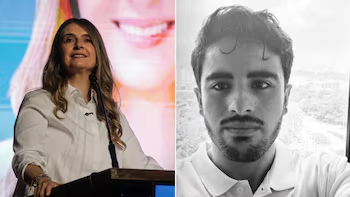
Among the most notable responses was that from Senator Paloma Valencia, who expressed her sorrow over the incident and criticized the Colombian government’s “Total Peace” initiative. Valencia remarked, “I am deeply saddened by the murder of journalist Mateo Pérez, at the hands of the dissidents alias Calarcá.” Her comments directly link the government’s dialogue efforts with illegal armed groups to a rise in violence against vulnerable populations, including journalists.
Evaluating the Government’s Peace Policies
Valencia’s remarks reflect a growing consensus that the current peace policies, spearheaded by Iván Cepeda, may not adequately address the threats posed by dissident factions like the FARC. She pointed out that even individuals like Calarcá, recently captured yet released due to being labeled a “peace manager,” may pose a threat to public safety. This raises questions about whether the policies are effective in curtailing violence or if they inadvertently empower criminal elements.
Investigating the Circumstances Surrounding the Murder
As investigations unfold, authorities have yet to confirm the exact circumstances of Pérez’s death. Initial findings suggest a connection to the 36th Front of FARC dissidents, a group blamed for escalating violence in the region. This development has reignited concerns about the safety of reporters covering sensitive issues in perilous areas.
Current Measures and Future Implications
The Office of the Ombudsman and press freedom organizations have both sounded alarms regarding the perilous environment for journalists in Antioquia. Following Pérez’s disappearance, early warnings were issued, highlighting the significant risks in the area marked by ongoing violent confrontations between FARC splinter groups and the Gulf Clan.
Community and Government Responses
Antioquia’s governor, Andrés Julián Rendón, has attributed Pérez’s alleged murder to alias Chalá from the 36th Front and has offered a significant reward for information leading to his capture. Various humanitarian organizations are involved in recovery efforts to locate Pérez’s body, while his family demands expedient action from authorities on investigations.
Pérez’s father remarked that he had advised his son against entering the dangerous area merely a day before the disappearance, underscoring the inherent risks faced by journalists dedicated to bringing crucial stories to light.
Conclusion
The murder of Mateo Pérez amplifies a distressing trend regarding journalist safety in Colombia. As press organizations report deteriorating conditions for reporters operating in conflict zones, the call for more robust protective measures and accountability for violent acts against the media has never been more urgent. Balancing the need for peace with the protection of fundamental rights, including freedom of the press, remains a critical challenge for the Colombian government.