
SEnjourn in kyiv in this month of March, after spending more than a month in the Gaza Strip, offers a privileged point of view on the state of our world.
I had already taught, in February 2023, to The Mohyla Academy From the Ukrainian capital, the different Middle East components of Russian aggression. Two years later, when I intervene on the same subject within this university, students do not need to be convinced of the importance of such a medium-eastern dimension.
It was indeed in Saudi Arabia that the United States of Donald Trump chose, on February 18, to reconnect high-level dialogue with Russia from Vladimir Putin, without the presence of Ukraine or Europeans. And it is still in Arabia that the United States imposed on Ukraine on March 11 to accept a cease-fire in a weak position from which Russia is already taking advantage.
A truce rather than a ceasefire
Such a central role in Arabia officially flows from prisoner exchanges that the Saudi kingdom has been able to facilitate between the United States and Russia, as well as between Russia and Ukraine. Never, however, Mohammed Ben Salman, crown prince and de facto leader of the country, would have assumed such a role if, on the one hand, he had not invested hundreds of billions of dollars in the United States since the inauguration of Donald Trump and if, on the other hand, he had not established with Putin a strategic partnership on the management of the world oil market.
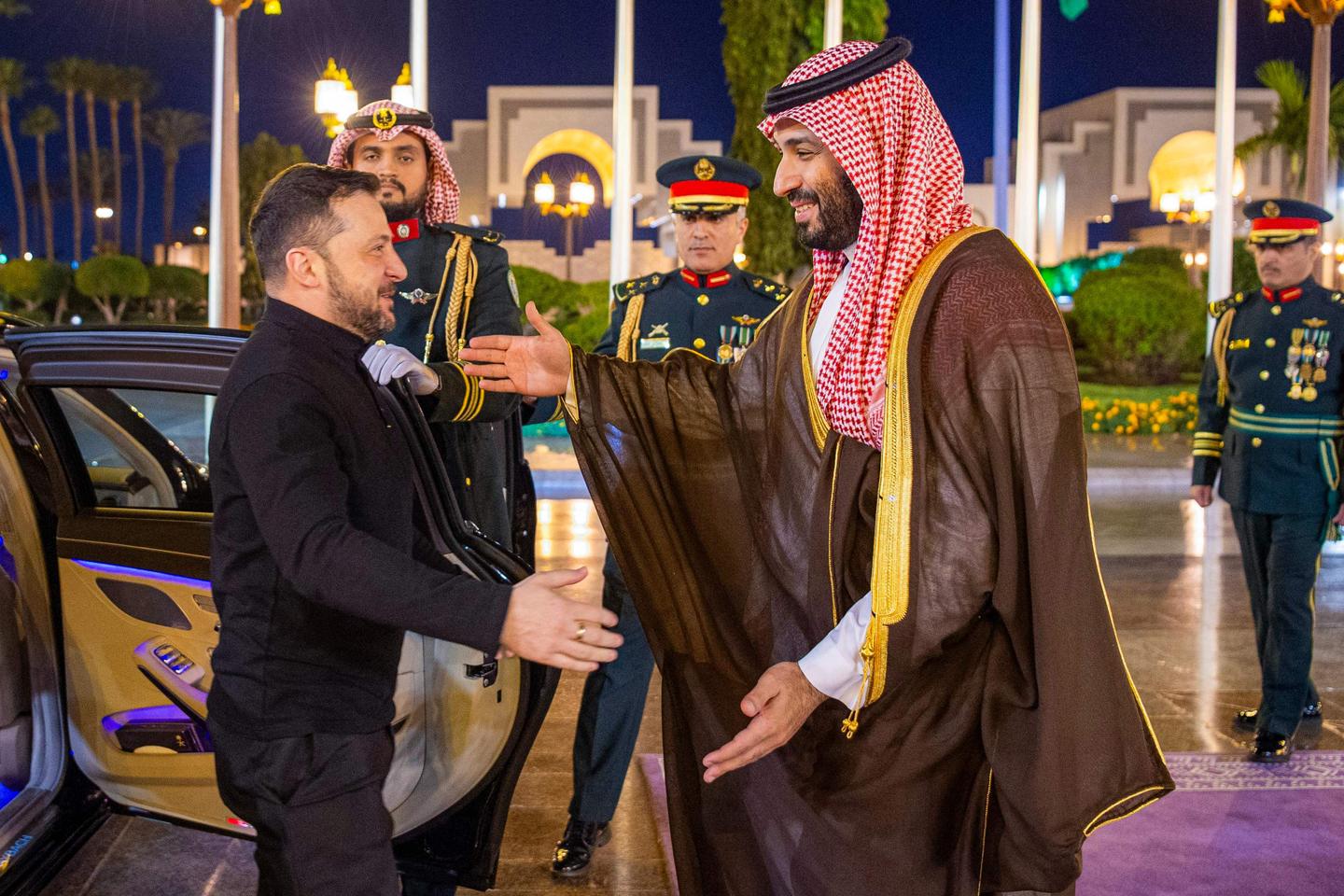
In the transactional logic of this American-Russian-Saudi triangle, Ukraine is likely to constitute the adjustment variable. This is why Volodymyr Zelensky wanted to go to Arabia to be received there by Mohammed Ben Salman, on March 10, without participating in the American-UKrainian talks of the next day.
You have 64.09% of this article to read. The rest is reserved for subscribers.