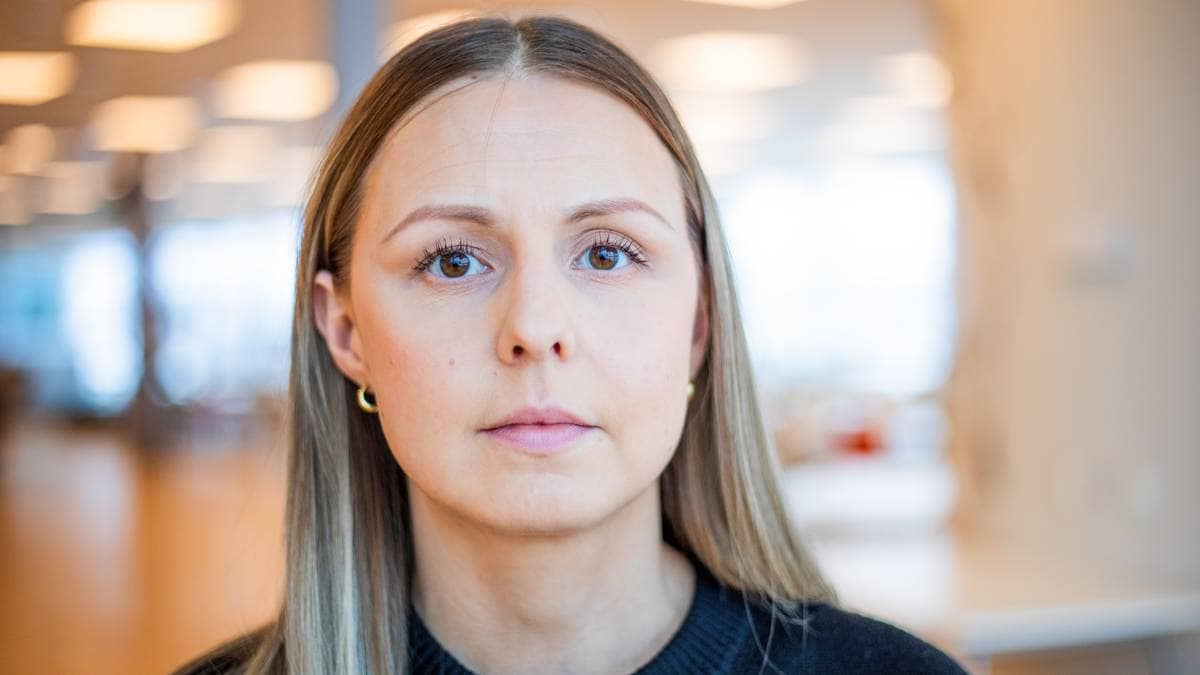
Loga Sámegillii The case summarized: • Mia Carina’s five -year -old children first lost their treatment journey because the child does not speak Norwegian, a requirement from Oslo University Hospital. • The hospital eventually allowed mother and child to travel, but emphasized that there must be a certificate confirming that the child can Norwegian for future journeys 8-10 rejections per year due to language. The summary is made by a Ki service from Openai. The content is quality assured by news’s journalists before publishing. Mia Carina Eira Jægervand and her child of five years will soon be on a treatment trip abroad. The child is looking forward, and both mother and child have prepared well. The journey will take place under the auspices of Oslo University Hospital. But when Jægervand asks what adjustments can be made considering that the child speaks Sami, she gets an answer she is not prepared for. Treatment trips at Oslo University Hospital respond that since it turns out that the child cannot do Norwegian, they see themselves having to withdraw the child from the journey. The newspaper Ávvir first mentioned the case. Jægervand felt that lack of Norwegian knowledge can lead to exclusion in the health care system. Photo: June Grønnvoll Bjørnback / news One of the criteria for traveling is that the participants must master one of the Scandinavian languages. That is, Norwegian, Swedish or Danish. – I had checked for the child to know a Scandinavian language, as the child can communicate easily in Norwegian, she informs news. But because the requirement is for the child to master Norwegian, the child is not qualified. – This decision came as a shock to me, says Jægervand. Jægervand could never imagine that having Sami as a mother tongue should provide a limitation to receive important treatment in 2025. Photo: June Grønnvoll Bjørnback / news She has contact with the University Hospital via e-mail. She explains that she sees the journey as necessary for the child’s health. Then she asks if it really is that the child is not allowed to travel. Then Oslo University Hospital changes his opinion. Here are excerpts from the mail correspondence: Now we have been preparing for this trip since November and see that the trip is necessary for the child’s health. Is it understood that the child cannot be on the trip, even though I am the child’s companion and can adapt to something mtp the linguistic? All teaching, joint times and songs takes place in Norwegian. Still, we do not pull —– from the trip, since —– is already well prepared, and —– will certainly have a good effect from the climate treatment. However, be aware that if—— searching again in the future, you must attach a certificate that confirms that —– can Norwegian. According to Jægervand, the experience has created some uncertainty. – It does not feel welcome, she tells news. Concerned and critical equality and discrimination ombudsman, Bjørn Erik Thon, informs news that the health service should be available to everyone, regardless of language or ethnicity. Bjørn Erik Thonlikestilting and Discrimination Ombud Photo: Tobias Prosch Simonsen- It is both worrying and critical that children do not receive this treatment because they speak a minority language- and that it is the mother tongue. And maybe it is extra bad when it comes to Sami which is an equal language in Norway, Thon tells news. Official and equal languages in Norway Both Norwegian and Sami are considered official languages in Norway. In accordance with Chapter 3 of the Sami Act (1992), it has been established that the Sami languages and Norwegian are equal languages, and that Southern Sami, Lule Sami and Northern Sami are equal to Norwegian in the area of management for Sami languages. As of today, there are 13 language management municipalities that are to varying degrees obliged to prepare for the use of the Sami language in the public. Section 108 of the Constitution establishes a duty to state government to facilitate the conditions for the Sami people group, such as indigenous peoples, to secure and develop their language, culture and social life. This formed, among other things, the reason why the Sami Act was given a new chapter 3 on language in 1992. The purpose of the language rules is to preserve and develop Sami languages by particularly strengthening the use of the languages in a public context. Source: The Thon Government is cautious about drawing conclusions on the question of whether this is discrimination, as it is the Discrimination Board that makes such assessments in individual cases. – This can be discrimination precisely because there are equal requirements for everyone but then it is different for different groups. Here you have to organize and look at the use of interpreter and other forms of communication, he says. Gender Equality and Discrimination Ombudsman, Bjørn Erik Thon believes there is cause for concern that children are not being treated based on minority languages. Photo: Tom Balgaard / news Not a right news has been in contact with Oslo University Hospital that explains that a treatment journey abroad is not a right. It is only an offer you can apply for in addition to other treatment. Therefore, the journey is not seen as necessary health care. Oslo University Hospital has informed Jægervand that they do not cover interpreter or facilitation services. They emphasize that one must be able to a Scandinavian language to socialize with the group and communicate with the employees. This year, Oslo University Hospital had 430 applications for a treatment trip to 120 places. It is Oslo University Hospital that chooses who can be assigned treatment trips abroad. Treatment trips abroad are funded through a separate grant scheme on the state budget. The Ministry of Health and Care Services has overall responsibility for the scheme. Photo: Simon Skjelvik Brandseth / news Sami stands out markedly around 8 to 10 rejections each year due to language. In recent years, none of these have been because the applicant has only spoken Sami, according to Oslo University Hospital. – Our staff at the treatment sites are required to be able to communicate in either Norwegian, Danish or Swedish. Sami as a language stands out significantly from these. This is stated by Harald Platou, who is the department head of the foreign office and treatment trips at Oslo University Hospital. Harald Platou Department leader for the Foreign Office and treatment trips at Oslo University Hospital Photo: Oslo University Hospital Platou further states that Jægervand will not be able to function as an interpreter. This is because she also has compulsory training and guidance while the child performs the program. – We understand that the language requirement can be perceived as exclusive to some, says Platou. – This is clearly discriminatory Sami Council Runar Myrnes Balto reacts strongly to the case. He describes it as outrageous that children can be denied health care because they cannot do Norwegian well enough. – This is clearly discriminatory. Especially to many Sami children who may not learn Norwegian until school age, he tells news. Sami Council Runar Myrnes Balto has no doubt that the case of Mia Carina and her daughter are discriminatory. Photo: June Grønnvoll Bjørnback / news After Balto was made aware of the case, he contacted the Minister of Health and Care, who is the top responsible for the treatment trips. – I felt obligated to do something, says the council member, who also informed about the case to the Equality and Discrimination Ombud. May be a challenging secretary of state in the Ministry of Health and Care Services, Karl Kristian Bekeng, says that the University Hospital in Oslo has reported challenges with treatment trips where children do not speak the same language as the other participants. Karl Kristian Bekeng state secretary in the Ministry of Health and Care Services: Truls Alnes Antonsen- not least for the child himself, as some of the purpose of such journeys is to be able to talk to others who are in the same situation, both about illness and other challenges the individual experiences. However, he adds that it is necessary to look at how these types of cases can and should be handled in the future. Must take care of all children Mia Carina Jægervand also believes that Oslo University Hospital is under discrimination, as the rules for treatment trips are today. – I expect the public health system to be able to adapt and take care of all children, no matter what mother tongue they have. Unfortunately, this situation shows that this is not always the case, she says. Now she feels mixed feelings. There are only a few weeks left for departure and no further information has been made from Oslo University Hospital about the trip. – For the child, I hope that it will be a nice and useful trip and that she gets a good experience on the treatment trip, says Jægervand. Mia Carina Jægervand. Photo: June Grønnvoll Bjørnback / news Read the entire answer to the University Hospital in Oslo Treatment Travel abroad is a supplement to treatment in Norway and no right. The scheme therefore does not fall under the right to the necessary health care in the patient and the User Rights Act. We had 430 applications for 120 seats this year and we make our withdrawal on submitted applications on our application form and we follow our withdrawal gritteries. In order for children and companions to benefit from our training program on a treatment trip, we have, among other things, a requirement that the companion and applicant must be able to be able to Scandinavian language. Then all our education takes place in groups and in Norwegian. A more correct description of the language requirement would probably have been that participants must be able to communicate in Norwegian, Danish, or Swedish. “Scandinavian” may therefore be somewhat inaccurate. Our personnel at the treatment sites are required to be able to communicate in one of these languages. Sami as a language stands out significantly from these. The companion cannot act as an interpreter, as they also have a responsibility to participate in the compulsory training and guidance specially designed for companions. This training takes place during the daytime, when the children are in childcare or in school, and it is important that the companions participate fully to get the best possible benefit from the program. An estimated 8-10 rejections per year are given due to language. None of these, in recent years, have been because the applicant has only spoken Sami. We understand that the language requirement can be perceived as exclusive to some. Treatment trips are an offer where both children and companions must be able to understand and follow important medical information, guidance and group teaching. A good communication basis is necessary for the participants to be able to utilize the treatment, collaborate with personnel and participate in the group program. Practically, it seems impossible to offer interpreting services during the stay in a way that ensures sufficient quality and continuity in treatment. We are concerned that a child who does not share language with the other participants can have a bad experience. Treatment trips involve a lot of social interaction with peers, and linguistic barriers can lead to outsiders and reduced their stay. An adult interpreter will not be able to follow a child in such social settings to continuously translate between children into play and socializing. We acknowledge the importance of an inclusive health service and will take this issue with us in our further work. In this specific case, the inquiries from the mother were answered by a nursing professional advisor from our joint mail, where you have as a sender “Treatment Travel”. We regret that the emails were not signed with the case manager’s name. In retrospect, we also see that much of the information could have been clearly explained and discussed through a telephone conversation. We take this experience further to ensure better communication in the future. Harald Platou, department head of the Foreign Office and treatment trips at Oslo University Hospital. Published 14.03.2025, at. 21.19 Updated 14.03.2025, at. 21.34
ttn-69