
The Evolution of the Nissan Leaf: From Pioneer to Competitor in the Electric Vehicle Market
A common saying among football enthusiasts goes, “What’s difficult is not getting there; the truly hard part is staying there.” This sentiment resonates deeply in the automotive world, particularly with the Nissan Leaf, a vehicle celebrated as a pioneer in the electric car sector. When it first debuted over a decade ago, the Leaf faced a mere three competitors. However, by today’s standards, that number has skyrocketed to more than fifty contenders, ranging from fully electric SUVs to crossovers that blend the features of sedans and SUVs.
The Changing Landscape of Electric Cars
The context surrounding electric vehicles has undergone a tremendous shift since the launch of the original Nissan Leaf. Significant advancements in battery technology and electric motors have redefined what consumers expect from an electric vehicle. Today, as the Nissan Leaf seeks to carve out its niche, it embodies both its youthful exuberance and a more mature, grounded approach, striving to reaffirm its relevance in a crowded marketplace.
Specifications of the Nissan Leaf
You might wonder what makes the Nissan Leaf a noteworthy contender among electric vehicles today. Below is a detailed technical overview:
| Feature | Nissan Leaf |
|---|---|
| Body Type | C-SUV with five seats |
| Dimensions | 4,350mm long, 1,810mm wide, 1,550mm high |
| Weight | 1,789 kg (52 kWh battery) / 1,937 kg (75 kWh battery) |
| Boot Capacity | 437 liters |
| Maximum Power | 160 kW (216 HP) with 355 Nm |
| WLTP Consumption | 13.8 kWh/100 km for both variants |
| Environmental Label | Zero emissions |
| Driving Aids (ADAS) | Includes ProPilot adaptive cruise control and lane centering |
| Other Features | 14.3-inch dual display, Head-Up Display, Android Automotive compatibility |
| Hybrid Electric | No |
| PHEV | No |
| Electric | Yes (Available with 52 kWh and 75 kWh batteries) |
| Price & Release Date | Starting around €30,000 to €35,000, with initial deliveries in early 2026 |
This remarkable array of specifications emphasizes the technological innovation encapsulated within the Nissan Leaf, from its efficient battery options to its smart connectivity and driving aids.
Breaking Free of Expectations
There are transformative cars that seem to usher in the future, only to lose their individuality in subsequent iterations. The Nissan Leaf is one such story. Recognized as the best electric car at the time of its launch in 2011, it was hailed as a stroke of brilliance at a time when electric technology was still in its infancy. However, as its second generation matured, it often grappled with self-identity, losing much of the edgy appeal that characterized its predecessor.
With the latest third-generation model, the Nissan Leaf aims for a fresh perspective, leveraging Nissan’s larger Ariya platform to create a more compact and welcoming vehicle poised for the competitive C-SUV segment in Europe. The transition acknowledges the previous missteps while rebutting its previous identity crisis.
The Design: A Balance of Form and Function
The design language of the Nissan Leaf borrows elements from the Ariya but integrates soft, flowing shapes intended to optimize aerodynamics, boasting a low drag coefficient of 0.25 Cx. However, some criticism arises from its exterior design, particularly regarding the seemingly over-complex wheel designs that clash with the vehicle’s smooth lines.
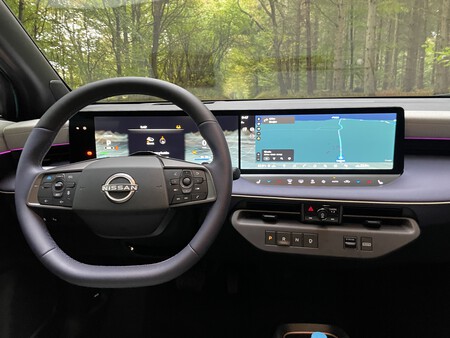
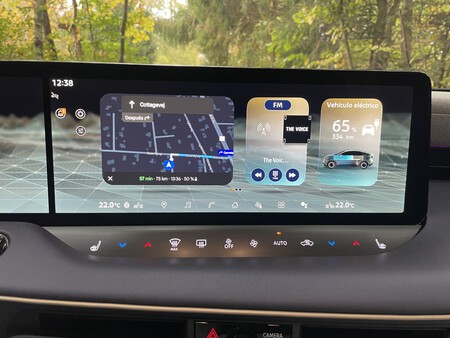
Inside, the Leaf maintains a welcoming ambiance akin to its larger sibling, featuring a spacious cabin with tactfully integrated touch controls and a dual-screen layout that combines functionality with aesthetics. The overall feel remains user-friendly, ensuring drivers can access critical information swiftly without added distractions.
Driving Performance and Efficiency
One of the most significant advancements in the new Nissan Leaf is its robust performance specifications. With a 75 kWh battery option, consumers can expect a remarkable driving range of around 622 km on a single charge—sufficient for those requiring longer trips without recurrent charging stops.
Its electric motor generating 160 kW (218 HP) provides more than adequate acceleration, though for efficiency focus, the ECO mode dampens some raw performance. What’s more, the Leaf’s charging potential—150 kW for rapid DC charging—can rejuvenate the battery from 10% to 80% in less than 30 minutes.
Advanced Controls and Smart Features
The latest Leaf showcases a cutting-edge operating system built on Android Automotive, offering seamless integration with Google services like maps and voice commands. This native functionality adds peace of mind for users seeking connectivity without missing a beat.
Conclusion
In summary, the Nissan Leaf emerges as a solid contender in the electric vehicle segment, executing a blend of functionality and advanced technology with noteworthy effectiveness. While it may not disrupt market norms or evoke fervent passion, it serves as a loyal, reliable choice for urban commuting and long-range endeavors. In an age of heightened expectations, the Leaf’s evolution exemplifies a well-rounded vehicle poised to continue its legacy as a significant player in the evolving electric automotive landscape.
Dicen los que les gusta el fútbol que lo difícil no es llegar, lo verdaderamente complicado es mantenerse.