
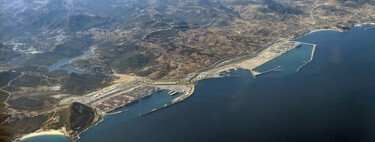
### The Complexity of Madeira’s Cristiano Ronaldo Airport
Air travel is inherently complex, but few airports illustrate this truth as starkly as Madeira’s Cristiano Ronaldo Airport. Nestled between perilous cliffs and the unforgiving Atlantic Ocean, this airport has been notorious for its challenging landing conditions. Recently, data has emerged that suggests the difficulty is escalating, driven by changes in wind patterns.
### Rising Wind Speeds: A New Challenge
During a parliamentary hearing in May, Portugal’s Secretary of State for Infrastructure, Hugo Espírito Santo, unveiled troubling findings regarding wind conditions at the airport. Since 2015, there has been an “abnormal variation” in wind speeds, with averages increasing by approximately three knots (around 5.5 km/h). While it may seem minor, in the context of an airport where precision is critical, it poses significant operational challenges. According to Espírito Santo, this climb in wind velocity is making many operations untenable.
### Geography: Why Wind Speeds Matter
To understand the impact of these three knots, it’s essential to consider the airport’s geographical constraints. As described by Euronews, Cristiano Ronaldo Airport is uniquely positioned, with one runway end built on concrete pillars and treacherous terrain rising sharply nearby. The proximity of cliffs and mountains contributes to unpredictable winds, leading to turbulence, holding patterns, and even cancellations during inclement weather.
### Investigating the Cause
Following the alarming wind speed data, Espírito Santo indicated that both the Portuguese Institute of the Sea and Atmosphere and the National Civil Engineering Laboratory are working to ascertain the underlying reasons for this phenomenon. Understanding the causes of these wind variations is as crucial as recognizing the problem itself, especially in an area where local conditions can dramatically affect flight safety.
### Technological Solutions: Enter MAWINDS
To combat these challenges, Portugal has initiated a new project, the MAWINDS system. Designed to utilize advanced LIDAR and X-band radar technology, MAWINDS aims to analyze weather conditions in real time around the airport. Launched in December 2024 with a budget of €3.5 million, this initiative is intended to enhance safety by providing better detection of turbulence and adverse wind conditions before they disrupt operations.
### Awaiting Full Implementation
While the system promises great potential, there are hurdles to overcome before it can be fully operational. The Portuguese infrastructure manager has confirmed that MAWINDS is a complex technology that has only been deployed in four other airports worldwide, leading to delays in certification. Although the airport now has a more advanced means of weather observation, fully integrating the system into daily operations will take additional time and technical work.
### Future Outlook: Safety and Regulation
The roadmap for MAWINDS includes a year-long pre-operation phase to collect data, enabling regulatory bodies like ANAC to consider modifications to wind operation limits. This endeavor is not solely focused on improving weather observation; it’s about laying the groundwork for informed regulatory decisions without compromising safety.
### Conclusion
Cristiano Ronaldo Airport exemplifies the inherent difficulties posed by geographically challenging airports, particularly in terms of weather conditions. As Portugal addresses rising wind speeds, the introduction of innovative technologies like MAWINDS may pave the way for a safer future for travelers and crew alike. For now, understanding the airport’s complex operational dynamics will remain vital as it navigates these turbulent skies.