
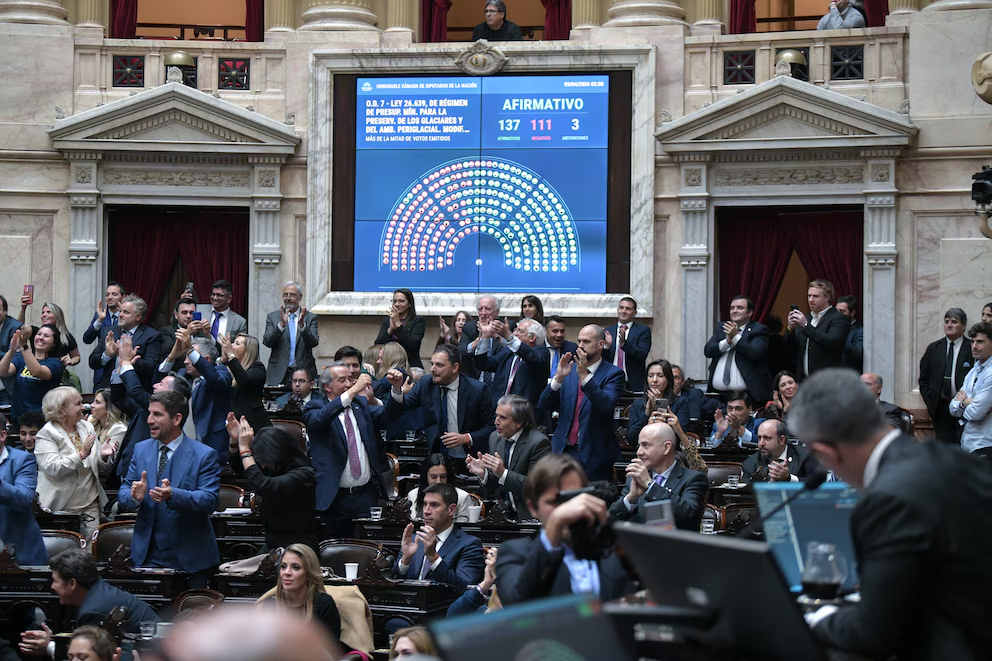
Overview of the Glacier Law Reform Vote
The Argentine Chamber of Deputies recently voted on the reform of the Glacier Law, highlighting the stark division within the legislative body. This session witnessed the participation of all 256 members, resulting in a tally of 137 votes in favor, 111 against, and 3 abstentions. Interestingly, 5 legislators were absent, showcasing the polarized atmosphere surrounding this pivotal environmental legislation.
Implications of the Reform
This reform introduces significant changes to the protected status of glaciers and periglacial environments. By granting provinces enhanced authority to determine protected areas through their own technical studies, the legislation opens the door to activities such as mining in regions deemed unsuitable for hydric functions. This alteration in policy has sparked strong opposition, particularly from environmentalists and leftist factions within the legislature, who argue that it undermines crucial environmental protections.

Supporters of the Reform
- Aguero, Guillermo Cesar (UCR – Chaco)
- Ajmechet, Sabrina (La Libertad Avanza – CABA)
- Almena, Carlos Alberto (La Libertad Avanza – San Luis)
- Almiron, Lisandro (La Libertad Avanza – Corrientes)
- Alvarez, Claudio (Innovación Federal – San Luis)
Opposition to the Reform
- Aguirre, Hilda (Unión por la Patria – La Rioja)
- Ali, Ernesto “Pipi” (Unión por la Patria – San Luis)
- Andrade, Javier (Unión por la Patria – CABA)
- Araujo Hernandez, Jorge Neri (Unión por la Patria – Tierra del Fuego)
- Arrieta, Lourdes Micaela (Provincias Unidas – Mendoza)
Abstentions in the Vote
- Falcone, Eduardo (MID – Movimiento De Integracion Y Desarrollo – Buenos Aires)
- Maureira, Karina (La Neuquinidad – Neuquén)
- Zago, Oscar (MID – Movimiento De Integracion Y Desarrollo – CABA)
Conclusion
The recent vote on the reform of the Glacier Law underscores the ongoing tension between environmental protection and economic development in Argentina. While proponents argue for local control and resource utilization, opponents emphasize the ecological risks posed by such changes. This legislative decision marks a significant moment in Argentina’s environmental policy landscape, shaping the future of its natural resources and ecological stewardship.