
The Dark Legacy of Burj Al-Rus: A Tower Built from Tragedy
There are countless monuments across the globe that echo tales of human strife, triumph, and tragedy. Yet, few can match the macabre history of Burj Al-Rus, a tower that stood for centuries on the Mediterranean island of Djerba in Tunisia. This picturesque destination, known for its connection to the *Star Wars* saga and the fictional city of Tatooine, also served as the site for one of the most horrific constructions in history: a tower made from the skulls of 5,000 Spaniards .
In the 16th century, referred to as the “Century of Discoveries,” Spain emerged as a global superpower , boasting an empire that spanned Africa, Asia, parts of Italy, the Netherlands, and vast territories in the Americas. As Spain expanded its dominion, managing these territories became increasingly complex, especially in the Mediterranean, where Ottoman and Berber pirates launched frequent assaults and captured slaves, posing a significant threat to Spanish interests.
The 16th century also saw the rise of fierce maritime figures such as Turgut Reis , also known as Dragut, an Ottoman admiral whose name became synonymous with terror. His fleet relentlessly targeted Spanish vessels, disrupting trade routes and raiding coastal towns. His notorious actions filled the pages of historical literature as the Spanish struggled to fend off his formidable forces.
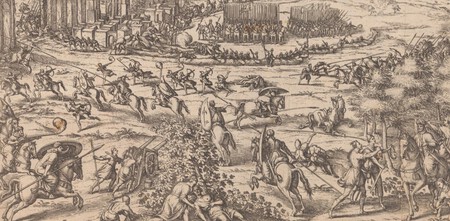
Meanwhile, Jean de La Valette , the Grand Master of the Knights of St. John in Malta, became obsessed with defeating the Ottomans and reclaiming Tripoli. In 1559, he persuaded Philip II to summon a fleet of 28 ships manned by 30,000 soldiers to mount a campaign. However, upon reaching Tripoli, the Spanish fleet encountered unexpectedly robust enemy fortifications. Under the command of Juan de la Cerda y Silva , decision-making faltered; viewing the potential for a disastrous confrontation, the fleet retreated to Djerba to regroup.
The Djerba Massacre and the Construction of the Tower
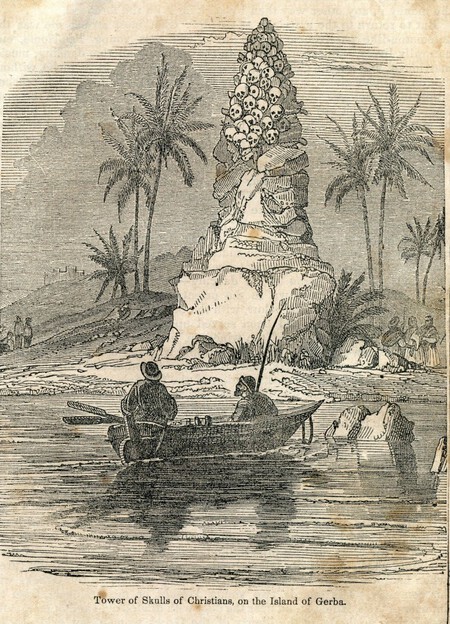
As the Spanish fortified their position, the situation took a turn for the worse. In just two months, nearly 90 galleys, under Turgut Reis’s command, took the Spanish by surprise. The resultant chaos led to a terrifying massacre . During this assault, approximately 5,000 Spanish soldiers and sailors found themselves isolated and trapped. With no option for escape, they surrendered, but Dragut had no intention of treating them as prisoners.
Instead, he issued a brutal order: to execute the 5,000 survivors. He commanded his men to dismember the bodies , clean the skulls, and use them, along with mud, to construct a tower that would stand as a grim monument on Djerba’s shores. Known as Burj Al-Rus , or the “Tower of Skulls,” this grotesque structure reached over 10 meters in height, its grisly materials making it visible from miles away, a dire warning against any further military incursions.
The tower stood undisturbed until 1848 , when the Tunisian king ordered its demolition, burying the remains of the victims. In its stead, a monolith was constructed to honor the memory of those who perished in such atrocious circumstances .
In the deteriorating years of his life, Turgut Reis met his end during the Ottoman siege of Malta in 1565, ultimately succumbing to wounds inflicted during battle. His legacy, including the shadow of Burj Al-Rus, continues to evoke a sense of chilling fascination and horror.
The tale of Burj Al-Rus serves as a haunting reminder of the brutality of war and humanity’s darker impulses. While it has officially lost its physical form, the narrative of tragedy remains etched in history, challenging our understanding of heroism and infamy. As we reflect on such episodes, it becomes essential to peel back the layers of history to truly grasp the suffering, sacrifice , and resilience embedded within.