
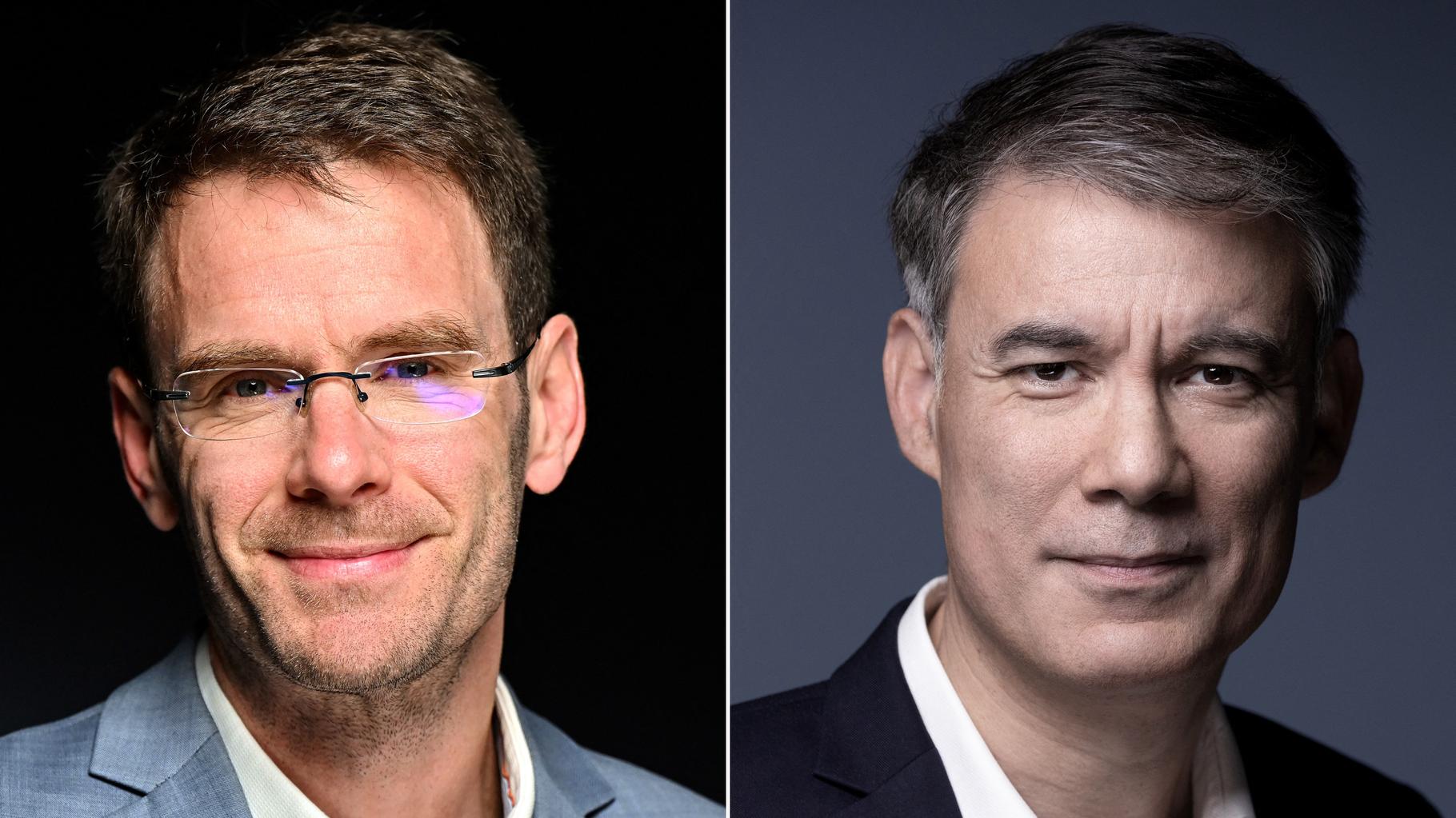
The Political Showdown: The Socialists Face a Tight Contest
The French Socialist Party is gearing up for a decisive battle that could shape its future. With critical elections on the horizon, the party finds itself in a highly competitive situation, marked by internal strife and ideological divides. The recent announcement of a second round in the elections for the party’s leadership has set the stage for a fascinating political spectacle.
The Candidates: Olivier Faure vs. Nicolas Mayer-Rossignol
In the first round of voting, Olivier Faure, the incumbent Secretary, emerged as the leading contender. With approximately 42% support, he holds a slight edge over his main challenger, Nicolas Mayer-Rossignol, who garnered around 40% of the votes. This narrow margin translates to roughly 500 votes, setting up a contest that many believe could go either way. The third candidate, Boris Vallaud, significantly trails with about 18% support and has since been eliminated from the contest.
In terms of popularity and political experience, Olivier Faure has a strong background as a deputy and an established presence within the party hierarchy. On the other hand, Nicolas Mayer-Rossignol, the mayor of Rouen, represents a new wave of leadership that could invigorate the party’s base. His supporters argue that he brings fresh ideas and an energizing vision for the Socialist Party, which has been struggling in recent years.
Analyzing the Voting Dynamics
The voting process took place across 17 regions from 5 PM to 10 PM, with about 23,000 of the party’s 40,000 members casting their ballots. This turnout underscores the urgency felt within the party to redefine its identity and strategy ahead of the 2027 presidential elections. The results were close, and while Olivier Faure’s team claims a clear victory, Mayer-Rossignol’s supporters argue that the numbers are much tighter than reported—citing only a slight edge for the incumbent.
The political atmosphere surrounding these elections is charged with tension, as party members openly debate the direction of their platform. Key issues include the party’s stance on critical policies and the overall strategy to re-establish itself as a dominant force in French politics. Themes of social justice, economic equity, and a sustainable future are expected to dominate the discussions in the upcoming weeks leading up to the next round of voting on June 5.
The Role of Boris Vallaud and Future Implications
Even though Boris Vallaud has been eliminated, his percentage of votes gives him significant leverage. His supporters hold a crucial position that could tip the scales in favor of either Faure or Mayer-Rossignol in the second round. Therefore, engaging this faction will be essential for both candidates. The looming question is: who will be able to attract these voters?
As the party braces for the next round of elections, the implications of this contest extend beyond mere leadership. The Socialist Party must confront its electoral identity and lay forth a compelling vision if it aims to regain lost ground. With the Congress scheduled from June 13 to June 15 in Nancy, the next few weeks will be critical. Both candidates know that their strategies in this upcoming face-off could either revitalize the party or plunge it deeper into political obscurity.
Challenges Ahead
While the election for a new Secretary is crucial, the Socialist Party’s internal fractures pose another vital challenge. Different factions within the party have increasingly grown apart, each with its interpretations of what direction the party should take. Traditionalists champion more established policies, while progressives push for innovation and adaptation to contemporary political landscapes.
The pressure mounts as their electoral base dwindles, an outcome that can largely be attributed to shifts in public opinion and the rising popularity of more extreme political alternatives. Thus, both Faure and Mayer-Rossignol must articulate clear, compelling points to unite the party, revitalizing its support among voters disillusioned by past failures.
Conclusion
As the French Socialist Party gears up for its next critical political phase, all eyes will be on the showdown between Olivier Faure and Nicolas Mayer-Rossignol. This election is not just about leadership; it represents a turning point for a party seeking relevance in modern France. From the upcoming voting dynamics to strategic alliances, the outcomes of these elections will resonate through the political landscape for years to come.
The stakes are high, and the actions taken in the coming weeks will determine not only the future of the Socialist Party but also its ability to reclaim its status as a potent political force.
STEFANO RELLANDINI, JOEL SAGET / AFP
Nicolas Mayer-Rossignol et Olivier Faure seront opposés à un second tour le 5 juin pour l’élection à la tête du Parti socialiste.
POLITIQUE – Un match très serré. Les socialistes ont voté pour désigner leur Premier secrétaire mardi 27 mai, et ils seront contraints à un second tour entre le premier secrétaire sortant, le député Olivier Faure, et son principal concurrent, le maire de Rouen Nicolas Mayer-Rossignol.
Selon les résultats provisoires communiqués dans la nuit de mardi à ce mercredi 28 mai par les entourages des trois candidats, Olivier Faure est arrivé en tête du premier tour. Son entourage revendique un score d’environ 42 %, contre 40 % pour Nicolas Mayer-Rossignol (soit un écart d’environ 500 voix) et 18 % pour Boris Vallaud.
L’équipe du maire de Rouen évoque un score plus serré de 41 %-41 %, avec seulement quelques voix de plus pour le premier secrétaire sortant. Les proches de Boris Vallaud donnent pour leur part un score d’environ 20 % au député des Landes. Les résultats définitifs seront communiqués mercredi à l’issue d’une commission de recollement, qui pourrait être tendue.
Un second tour aura donc lieu le 5 juin entre Olivier Faure et Nicolas Mayer-Rossignol avant un Congrès prévu du 13 au 15 juin à Nancy. Boris Vallaud, éliminé, se retrouve en position de faiseur de roi entre les deux candidats qui s’étaient déjà affrontés lors du précédent congrès en 2023.
Les adhérents – quelque 40 000 comptabilisés, et environ 23 000 votants au final – étaient invités à voter dans les sections de 17h à 22h, pour ce premier tour destiné à choisir le prochain texte d’orientation du parti, avec pour principal enjeu la stratégie pour la présidentielle de 2027.