
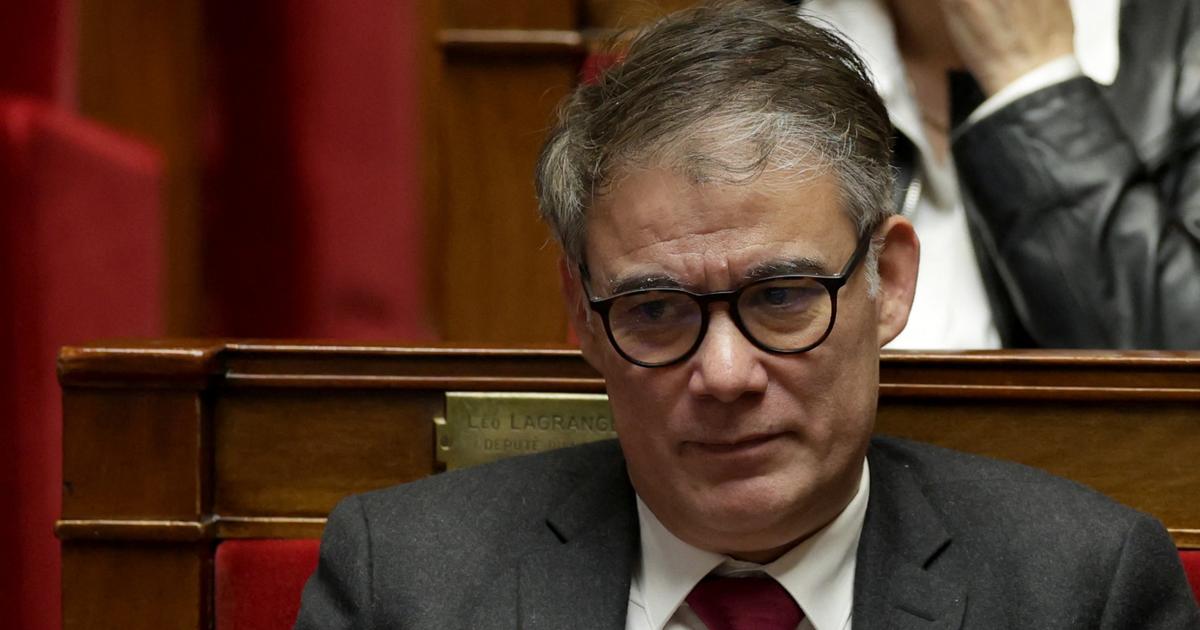
The Rising Tide of Racism: Political Responsibility in Paris
In the heart of political discourse in France, recent comments by socialists have highlighted a troubling trend of racism that is increasingly being normalized. Olivier Faure, the first secretary of the French Socialist Party (PS), has publicly criticized the government for fostering a climate of suspicion towards foreigners.
During an appearance on TF1, Faure did not shy away from touching on sensitive topics, notably the recent racist murder of Hichem Miraoui, a 45-year-old Tunisian, who was shot dead by a neighbor in Puget-sur-Argens. The incident, which has elicited widespread condemnation, has become a focal point for discussions about racism in France. Faure stated, "I will not accuse Bruno Retailleau of a crime he did not commit," referring to the Minister of the Interior, whom Faure believes bears some responsibility for this societal malady.
Faure lamented what he referred to as a “normalization of racism” , asserting that it has become a legitimate form of expression within the public sphere. He pointed a finger at Retailleau, suggesting that his comments create an environment where perceptions of threat are disproportionately linked to certain communities . This is particularly relevant in light of a recent report concerning the Muslim Brotherhood and political Islamism in France, released by the Ministry of the Interior, which has drawn sharp criticism from the left. Many see it as a means of stigmatizing Muslims, rather than addressing genuine security concerns.
“A Climate of Suspicion Towards Foreigners”
Despite Retailleau’s condemnation of the brutal crime, labeling it as “anti-French,” Faure argues that the rhetoric used by political leaders contributes to a wider atmosphere of racism. He stated that politicians, including the President of the Republicans, foster discussions suggesting that there is a threat posed by citizens of foreign descent. This type of discourse not only perpetuates prejudice but also legitimizes harmful actions against targeted communities.
In the lead-up to upcoming elections, Faure’s statements serve as a warning that the political climate could intensify divisions within French society. He draws attention to comments made by Prime Minister François Bayrou regarding a “feeling of migratory submersion,” which Faure believes have contributed to a widespread suspicion of foreigners and even of French citizens perceived as outsiders.
Government officials, including Bayrou, argue that such discussions are necessary to address public concern over immigration. Yet Faure contends that they are only fueling a rhetoric of fear that alienates certain groups and ignores the rich diversity that has long been a hallmark of French culture.
Faure concluded that the responsibility lies not just with individual politicians but also with the larger factions within the government. He implored leaders to reconsider their language and the implications it has on societal attitudes . In a world grappling with identity , immigration , and national security , the way public figures converse about these sensitive topics carries monumental weight.
Faure’s comments ignited a public discourse around how politicians can wield their power, and he strongly advocates for a more inclusive and compassionate narrative that embraces diversity rather than marginalizing it. In the wake of incidents like the murder of Hichem Miraoui, it is crucial for both politicians and citizens to work collaboratively towards fostering a greater understanding and solidarity within their communities.
Simultaneously, the comments have raised questions about whether the government is aware of its role in perpetuating such a climate and whether it is willing to take action to dismantle it. The frustration expressed by Faure is representative of a broader sentiment within many French citizens who recognize the danger of letting prejudice flourish under the guise of political rhetoric.
The stakes have never been higher for a country that prides itself on its values of liberty, equality, and fraternity. As France stands at a crossroads, it is imperative that its leaders take accountability for their words and actions, ensuring that they foster unity rather than division.
Invité sur TF1, le premier secrétaire du PS a reproché au gouvernement d’entretenir un «climat de suspicion vis-à-vis des étrangers».