
The Escalation of Tensions in Space: A New Era of Restrictions
The tension between the two largest space superpowers—the United States and China—has reached an alarming peak. In a bold and unprecedented move, the NASA has decided to block all access of Chinese citizens to its programs, facilities, and networks. This action recalls the political climate of the late 20th century and signals a significant turn in relations amid evolving global challenges. The restrictions are so extensive that they even extend to virtual Zoom meetings.
Understanding the Wolf Amendment
The Wolf Amendment, a law enacted in 2011, already restricted direct collaboration between NASA and Chinese entities. This law has effectively prevented China from participating in the International Space Station (ISS) and has prompted the Chinese space agency to develop its own permanently inhabited space station in low Earth orbit. The recent measures take these restrictions even further. Now, citizens of Chinese nationality, regardless of their residency status or visa compliance in the United States, find themselves barred from participating as contractors, postgraduate students, or university scientists in any NASA projects. The justification for this sweeping veto centers around concerns of “cybersecurity.”
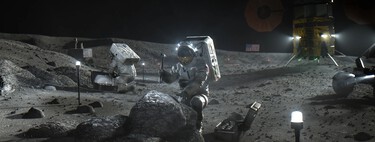
<img alt="Forget the 'Little step for man'. The new moon career is not for glory, it is for the control of its resources" width="375" height="142" src="https://i.blogs.es/f41ff9/nasa-recursos/375_142.jpeg"/>The Dynamics of the Current Lunar Race
The timing of this new ruling is particularly notable as it coincides with an aggressive push from NASA’s acting administrator, Sean Duffy, who has openly declared a “second space race” against China. In a recent meeting with NASA employees, he proclaimed, “We are going to win the Chinese on the Moon. We are going to do it safely. We are going to do it fast. We are going to do it well.” This statement embodies a sense of urgency in an era where technological and strategic advantages in space could have long-term implications for national security and global dominance.
However, not everyone shares Duffy’s optimistic outlook. Former NASA Chief, Jim Bridenstine, a key figure in initiating the Artemis program, expressed skepticism during a Senate hearing. He indicated that unless significant changes occur, the likelihood of the U.S. beating China’s lunar ambitions seems slim. Duffy’s rebuttal suggests a desire for proactive momentum rather than reactive caution.
A Geopolitical Struggle for Lunar Resources
The backdrop to this renewed lunar competition is intensely geopolitical and economic. Whichever nation establishes a permanent presence at the South Lunar Pole will gain critical advantages in resource exploitation—most notably, ice water and strategic communication capabilities. The first country to deploy advanced communication technologies in that area would likely set the protocols and standards for future operations.
Moreover, a significant fear among U.S. officials is that China could assert its dominance by declaring an “exclusion zone” if they establish a small nuclear reactor on the Moon for power generation. This apprehension compelled the U.S. government to hasten NASA’s plans for its own lunar nuclear reactor in light of the Sino-Russian partnership aiming to create a lunar laboratory.
The Shadow of Espionage and Technological Distrust
The atmosphere of distrust is further compounded by a long history of accusations surrounding industrial and technological espionage between the U.S. and China. With the rise of artificial intelligence, concerns have escalated, compelling tech giants like Google and OpenAI to strengthen their hiring practices to safeguard proprietary information.
The semiconductor sector, a cornerstone of contemporary technology, has been particularly vulnerable to these geopolitical frictions. High-profile companies such as ASML and Taiwanese TSMC have suffered from industrial espionage, with employees linked to Chinese firms being implicated in significant data breaches. The U.S. has extended its scrutiny to the renewable energy sector, where unverified components have been discovered in Chinese-manufactured products.
The Implications of NASA’s New Policies
The latest restrictions on Chinese citizens serve as a clear indicator that, amid internal challenges facing its lunar program, the United States is willing to adopt drastic measures to safeguard its technological leadership and national security. This new era of the space race has transformed from an engineering competition into an increasingly combative landscape, where collaboration now has borders, and talent acquisition is intricately tied to geopolitical stances.
As the space race unfolds, it remains to be seen how these dynamics will affect the broader international landscape. The quest for dominance in outer space is inseparable from the intricacies of earthly politics and technological advancement, and the unfolding scenarios will likely have lasting repercussions for both nations and the world at large.