
Myth of Supermassive Black Holes in Every Galaxy
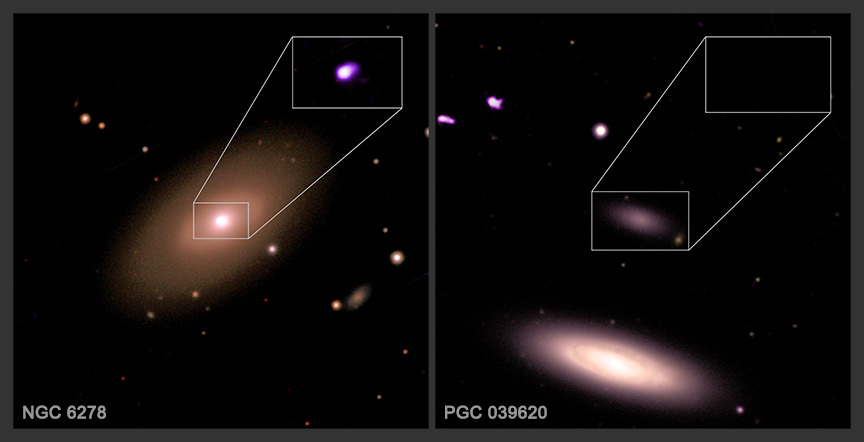
It has long been thought that the center of every galaxy harbors a supermassive black hole. However, recent research suggests that smaller galaxies, particularly dwarf galaxies, deviate from this trend. This unexpected finding opens up new avenues of exploration in our understanding of galaxy formation and the supermassive black holes they may harbor.
Black Holes and Their Masses
In the core of large galaxies, supermassive black holes can be observed, with masses reaching millions or even billions of solar masses. A prime example is Sagittarius A* (Sgr A*), located in our Milky Way, which boasts a mass four million times that of the Sun. Studies indicate that larger galaxies typically host more massive central black holes. However, discerning whether smaller, dwarf galaxies contain central black holes remains a challenge.
Formation Mechanisms
There are two primary mechanisms believed to contribute to the formation of these colossal black holes:
- Accretion of Smaller Black Holes: This scenario posits that smaller black holes, crafted from the remnants of massive stars after supernova explosions, accumulate over time.
- Direct Collapse of Gas Clouds: Alternatively, supermassive black holes may originate from the direct collapse of large interstellar gas clouds.
Should the stellar origin dominate the formation of supermassive black holes, one might expect to find one at the center of all galaxies, including dwarf galaxies. Conversely, if their formation is exclusively linked to the collapse of gas clouds, they would be considerably rarer in lower-mass galaxies.
Exploring the Data: 1,600 Galaxies
Many past studies have attempted to identify black holes in numerous dwarf galaxies by analyzing light emitted from the hot gas disks surrounding potential black holes. These bright disks often emit intense X-ray radiation, serving as indicators. A new study led by Fan Zou, a postdoctoral researcher at the University of Michigan, expands upon previous research by surveying 1,600 galaxies within a 160 million light-year radius. Data collected over two decades using NASA’s Chandra Space Telescope now enables researchers to differentiate between central black holes and other types of black holes created by stellar binaries.
Key Findings
The pivotal result from the study indicates that while all large galaxies prominently feature central black holes, such black holes are evident in only about one-third of dwarf galaxies. This marks a significant departure from previous assumptions, highlighting the potential importance of direct growth from massive interstellar gas clouds.
Further Investigations Needed
Future studies are essential to corroborate these findings, as there could be ambiguous cases. For instance, supermassive black holes of stellar origin might take time to settle into the central region of smaller galaxies, leading to erroneous classifications as X-ray binaries. Exploring this topic further with different telescopes and extending the sample to more distant galaxies could yield valuable insights into the origins of these cosmic giants.
This comprehensive study by Zhou and colleagues was published in the prestigious The Astrophysical Journal and continues to unravel the mysteries surrounding black holes.
Rafael Bachiller is the director of the National Astronomical Observatory and a member of the Royal Academy of Doctors of Spain.