
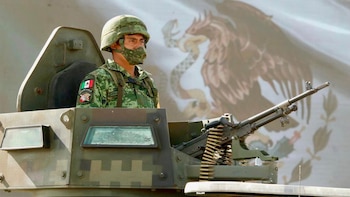
Almost 7,000 people have been detained, over 5,000 firearms seized, and around 72 tons of drugs confiscated—these are the staggering results reported by the Ministry of Security and Citizen Protection on September 5 regarding the North border operation . This extensive ongoing initiative was launched on February 5, 2025, designed to implement coordinated efforts at Mexico’s northern frontier, resulting in significant seizures of weaponry and narcotics.
As detailed in recent updates, the North border operation has successfully led to the arrest of 6,940 individuals , the confiscation of 5,378 firearms , 937,793 cartridges of various calibers, and 25,464 loaders . The operation has also achieved the seizure of 4,683 vehicles and 844 properties linked to illicit activities, underscoring the concerted efforts being made to combat organized crime.
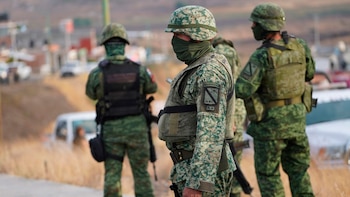
According to the report from Mexico’s Government Security Cabinet, all operations are being conducted with strict adherence to the rule of law and are committed to protecting human rights . The focus of this strategy is not only on law enforcement but also on ensuring the legitimacy of actions against organized crime and drug trafficking.
In Baja California , operations targeted key areas including Mexicali , Tijuana , and Rosarito beaches . Specific actions in Mexicali involved the arrest of two individuals and the seizure of three short firearms, loaders, cartridges, and methamphetamine. In collaborative efforts across Tijuana , Mexicali , and Rosarito , eleven more arrests occurred, along with various seizures, highlighting the ongoing battle against drug trafficking.
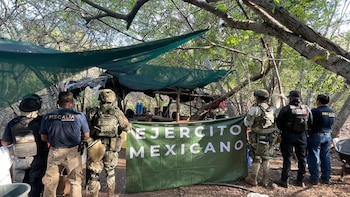
In Sinaloa , the Ministry of Security and Citizen Protection reported identifying and disqualifying eight areas associated with the production of synthetic drugs in Culiacán and Cosalá . This resulted in the confiscation of nearly 3,890 liters of chemical substances used for methamphetamine manufacturing. Additionally, in Navolato , authorities arrested four individuals and confiscated several firearms and ammunition.
In Sonora , operations unfolded in Splice and Nogales . Significant seizures included a vehicle, firearms, and an extensive haul of drugs. In Nogales , a staggering 45,000 liters of hydrocarbons were confiscated alongside several trucks and vehicles, demonstrating the scale of operations aimed at curbing organized crime’s profitability.
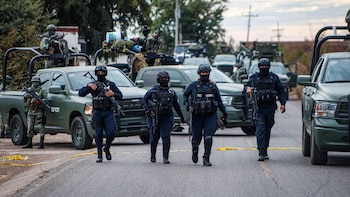
Finally, the operations in Tamaulipas centered on San Fernando , leading to further seizures, including firearms, tactical vests, and ammunition. Collectively, these actions are imposing significant economic impacts on organized crime , effectively limiting their operational capabilities across these critical border regions.