
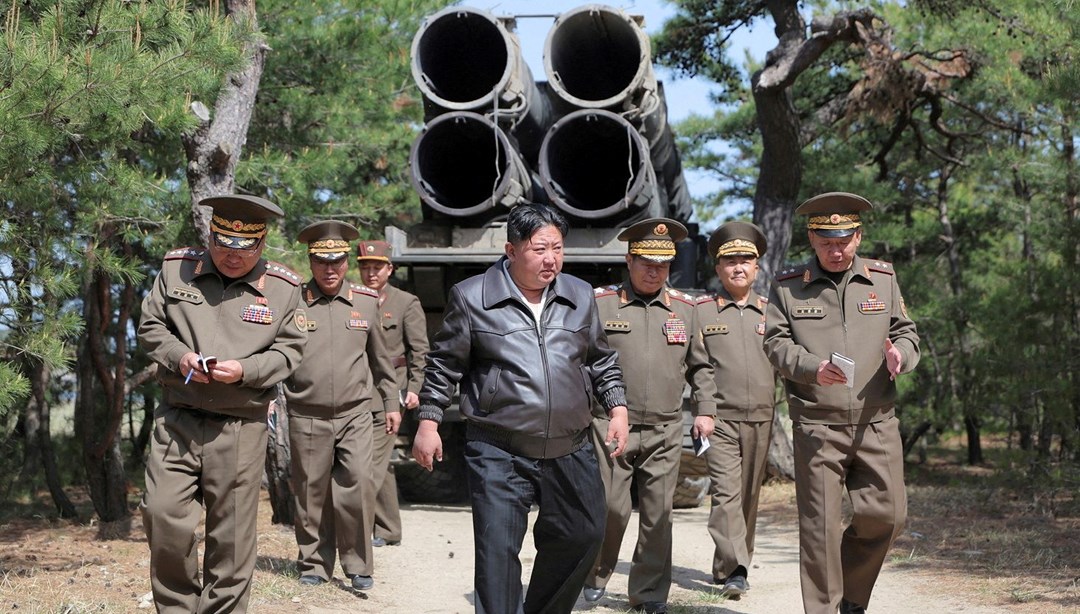
Military Tensions Between North Korea and the USA
The ongoing military tensions between North Korea and the United States, as well as regional allies, have once again come to the forefront. In an alarming announcement, the North Korean administration delivered a stern message to Washington, raising concerns over increased hostilities .
North Korea’s Assertion of Defense
The North Korean Ministry of Defense stated that the United States continues to arm itself under the pretext of threats to its mainland. The announcement emphasized that senior officials in the U.S. military have repeatedly made provocative statements suggesting a possibility of war with North Korea due to its efforts to enhance its nuclear capabilities for self-defense .
Furthermore, the release described U.S. defense expenditures as indicative of a “hegemonic” and “adventurous” military policy. This perspective indicates a growing concern in Pyongyang regarding the intentions behind American military advancements.
Monitoring U.S. Nuclear Programs
The statement revealed that North Korea is closely monitoring the nuclear arsenal being developed by the United States. The North Korean defense officials also highlighted that their efforts are continuous to build an effective deterrence against any security instability . “Any military provocation against us will be met with appropriate responses,” they asserted.
The context is further deepened by the U.S. carrying out its second test of the “Minuteman 3” intercontinental ballistic missile this year. The North Korean officials condemned the test as part of a regular activity termed to deter threats and protect allies, labeling this rationale as essentially hypocritical.
Critique of U.S. Defense Policies
In robust terms, North Korea criticized American defense policies as “gangster-like,” asserting that U.S. military operations purportedly for “defense” and “deterrence” serve only to bolster its own aggressive stance while characterizing North Korea’s legitimate defensive measures as threats. This contradiction highlights a double standard in the justification of military actions on both sides.
According to the analysis released by North Korea, increasing American military capabilities under the excuse of addressing threats from enemy nations is further destabilizing the global security environment . They noted, “The sure way to guarantee the security of the U.S. mainland is not through reckless military buildup but rather by completely abandoning military threats and aggressive endeavors against others.”
Global Responses to Rising Tension
The international community is increasingly concerned about the implications of these rising tensions. Diplomatic channels appear strained, and many are calling for renewed dialogue to prevent further escalation. Examining historical contexts shows that cycles of provocation and response often lead to crises that could have otherwise been avoided through proactive engagements.
The Importance of Deterrence Strategies
For North Korea, having an effective deterrent is crucial in light of perceived U.S. threats. The defense report articulated that Pyongyang would not diminish its deterrent capacities. “Our nuclear deterrent remains a core element of our national sovereignty and security,” officials reiterated.
In contrast, the U.S. continues to assert that its military advancements are necessary for not only its own defense but also for that of regional allies such as South Korea and Japan . This underscores a broader debate about the necessity and justification of military buildup in response to perceived threats from North Korea and potentially others in the region.
Call for Diplomatic Solutions
Amid these escalating tensions, voices advocating for diplomatic solutions are becoming more prominent. Various nations, organizations, and analysts are pushing for renewed discussions that could pave the way toward achieving stability in the region. The consensus among these advocates is that dialogue is essential to mitigate the risk of conflict and promote peace.
Political analysts suggest that continued militarization could lead to unintended consequences, escalating towards open conflict , which neither party desires. Therefore, it becomes critical for both the U.S. and North Korea to explore potential avenues for negotiation instead of continuing down a path of mutual hostility.
Final Analysis on Current Military Dynamics
As the situation unfolds, one can only hope for a shift toward cooperation rather than conflict. The current dynamics between North Korea and the United States underscore a deeply entrenched cycle of provocation , fear, and defense expenditures . While both nations perceive their actions as justified, it is imperative to understand that a collaborative approach may ultimately yield a more secure and peaceful future for all involved parties.