

In April, the alliance between Russia and North Korea was publicly confirmed when both countries acknowledged their military cooperation regarding the ongoing Ukraine War . This partnership involves supplying North Korean troops and military hardware to Moscow, while Russia reciprocates by enhancing North Korea’s military capabilities. The result is a potential global shift in strategic balance, with Pyongyang acquiring a functional army backed by advanced military technology.
One notable aspect of this development is the silence from South Korea . Recently, The Guardian noted that although the South Korean government condemned North Korea for launching ballistic missiles, it remained silent when a North Korean KN-23 missile , which is specifically designed to target South Korean infrastructures, struck a residential building in Kyiv , killing twelve civilians.
This silence has not been an isolated incident. South Korea did not react when Russia showcased an anti-aircraft system designed to protect Pyongyang or when news broke that Russian instructors were training North Korean drone operators within North Korea. Analysts suggest that this may reflect a disturbing lack of awareness in Seoul regarding the extent of North Korea’s military transformation, which is no longer confined to theoretical exercises but has been fueled by real combat experience in Ukraine.
Metamorphosis is an apt term when describing this transformation. According to Ukrainian military intelligence , North Korea is supplying a staggering 40% of the ammunition used by Russia in its ongoing offensive against Ukraine. Concurrently, North Korea has escalated its arms production and has reportedly dispatched an initial 12,000 soldiers to the Kursk region in Russia, with subsequent reports suggesting that this number may have risen to 18,000 including military engineers, logistics personnel, and even interpreters.
While these soldiers are officially engaged in reconstruction efforts, they are also learning critical lessons in modern warfare, including how to coordinate combined weapons, manage reconnaissance and attack drones, engage in electronic warfare , and adopt technologies previously unknown to the North Korean military.
Further indicating the depth of this cooperation, technology transfers from Russia have resulted in improved precision capabilities for KN-23 ballistic missiles , which have been deployed against various urban centers, including Kharkiv . Captured North Korean soldiers displayed extreme ideologization, going so far as to attempt suicide rather than face interrogation. One soldier even claimed he would return home as a hero for participating in a modern war .
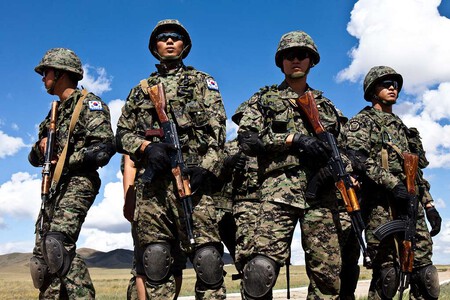
Political calculations also complicate the situation for South Korea. While Ukrainian President Zelenski has urged South Korea to act before North Korea’s technological advances begin to threaten Seoul and Tokyo , the South Korean government seems hesitant, often appearing complacent in the face of this escalating threat. Analysts suggest that this stance is not merely an oversight but a carefully calculated decision reflecting internal political dynamics , as well as economic considerations.
Acknowledging North Korea’s rearmament and combat experience might compel Seoul to take firm actions —like sending military support to Ukraine—that could be hugely unpopular domestically. Additionally, South Korea’s government is working on economic recovery amid a backdrop where Russia was previously considered a key trading partner.
The South Korean political scene is divided: while the right emphasizes the need for military rearmament, the left advocates for dialogue and downplays any obligation to Ukraine. Recent upheaval, including attempts to impose martial law, has left officials reluctant to make bold decisions, fearing political backlash.
Ambiguity and paralysis are perhaps the best descriptors of South Korea’s current tact. This “strategic ambiguity,” which has been a hallmark of its foreign policy, allows it to avoid confronting international conflicts that could jeopardize relationships with nations like China and Russia.
However, critics warn that this outdated position endangers South Korea as military threats evolve rapidly, while bureaucratic processes remain sluggish and slow to adapt. Retired General Chun In-bum has noted that South Korea faces a danger akin to a ” level 10, super Godzilla ,” while its institutional responses lag behind evolving threats, showing readiness only for perceived “tigers.”
In today’s fast-evolving military landscape, South Korea finds itself in front of a speeding train, with the opportunity to prepare swiftly evaporating.

In conclusion, the military cooperation between Russia and North Korea has significant implications for the balance of power in East Asia. Moscow’s integration of Pyongyang into its military logistics and support systems could dramatically alter the regional military landscape. Meanwhile, South Korea’s hesitance to confront the shifting realities leaves it vulnerable to emerging threats while its leaders grapple with a balance between economic interests and national security. As North Korea continues to gain valuable experience and technological advancements from its partnership with Russia, the question shifts from if this military evolution will turn against South Korea to when it will happen.
Image | Morning Calm, Getharchive
In Xataka | North Korea has been sending armament for months to Russia. In return, Russia is giving him what longs for her: a functional army
In Xataka | Russia gave animals, artillery and raw to North Korea. His last gift places his army at another level: space