
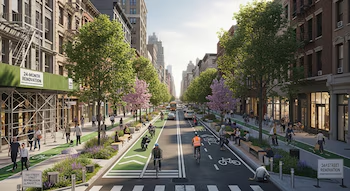
A New Era for New York’s 14th Street
The impending transformation of 14th Street in New York City marks a significant milestone in urban development. This ambitious project aims to fundamentally reshape one of the city’s most important corridors, extending from the Hudson River to the East River. Over the next 24 months, residents and commuters will witness the expansion of pedestrian plazas, the incorporation of green spaces, and an overall improvement of public transportation infrastructure.
Objectives of the Redevelopment
The New York Department of Transportation (NYDOT), the local authority overseeing urban mobility, announced that this initiative is designed to enhance the experience for pedestrians and cyclists. It aims to reposition 14th Street as a central axis for urban transit and commercial activity. This comprehensive plan, backed by a $3 million planning study, targets the daily experience of approximately 28,000 bus passengers and hundreds of thousands of individuals who traverse this vital corridor.
Enhancing Road Safety and Environmental Quality
The project anticipates a complete overhaul of existing road structures, focusing on pedestrian safety and environmental enhancement. The redesign will evaluate connectivity with adjacent neighborhoods, incorporating Avenue B, Union Square Park, Irving Place, Broadway, and University Place. Plans also include integrating the corridor with the Meatpacking District and the scenic Hudson River Park.
A Model for Sustainable Urban Mobility
This redevelopment is not merely cosmetic. The NYDOT aims to establish an urban corridor that exemplifies effective mobility, revitalized public spaces, and enhanced commercial viability. With a history of temporary interventions over the past six years—such as specialized lane markings and signage—this project signifies a shift away from provisional solutions towards structural modifications.
In 2019, an exclusive bus lane was implemented as a temporary measure during the interruption of L train services. The outcome was promising; bus speeds improved by 24%, and ridership surged by approximately 30%. This success has informed the current plans, steering the corridor’s potential toward safer, sustainable, and economically vibrant solutions.
Citizen Engagement and Community Involvement
NYDOT highlighted the importance of citizen consultation as a cornerstone of the planning process. To facilitate community participation, workshops, surveys, and dissemination activities will be organized to gather feedback from residents, commuters, and local businesses. The first public workshop is scheduled for March 25, 2026, at the Pratt Institute, where community members can actively contribute to project development.
Future Aspirations
The 14th Street Plan: Keeping People Moving and Businesses Booming encapsulates these goals. A collaborative effort combining recent experiences, community input, and financial backing aims to reshape this corridor into a model of safe mobility and green infrastructure.
As the 14th Street transformation progresses, authorities anticipate increased foot traffic and public transportation usage. The designated investments and urban strategies aspire to establish new standards for safe, sustainable, and economically viable urban corridors throughout New York City.
Overall, the revitalization of 14th Street promises not just to enhance urban mobility but also to foster neighborhood integration and commercial vitality, aligning with the community’s vision for a brighter future.