
Discovery of Niallia tiangongensis: A New Space-Dwelling Bacterium
Chinese scientists have announced the discovery of a new species of bacterium, Niallia tiangongensis, that exists exclusively aboard the Tiangong Space Station. This microorganism is related to Niallia circulans, a pathogen commonly found in soil and known to cause wound infections in humans. It seems that this new species has emerged under the unique conditions of outer space.
The Journey of Tiangong Space Station
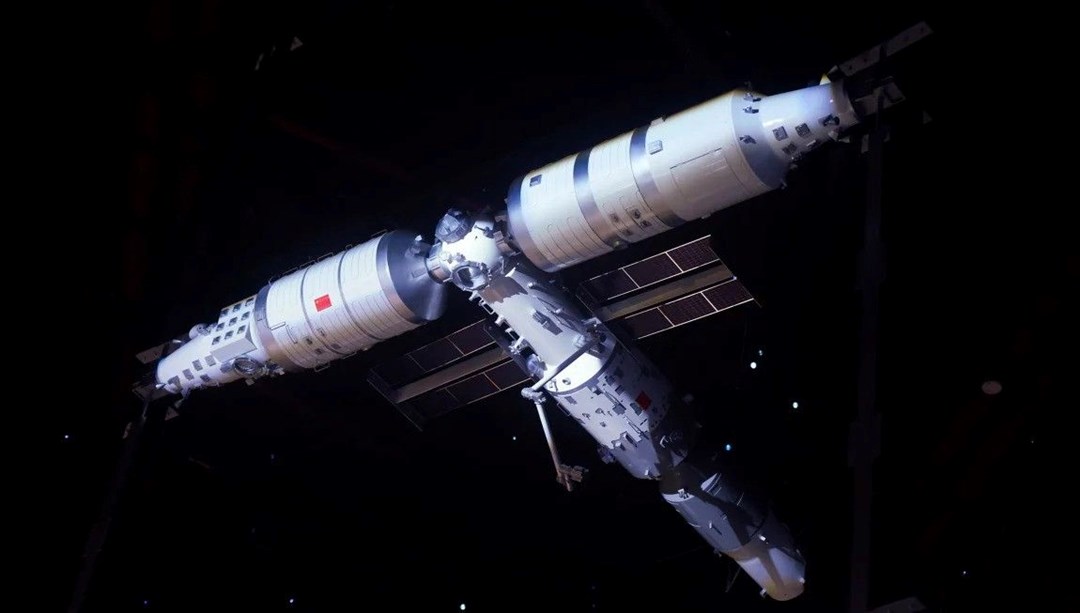
Construction of the Tiangong Space Station began in 2021 with the launch of its core module. Since that launch, three taikonauts (Chinese astronauts) have been sent to the station every four months to conduct various experiments in orbit. These experiments include collecting samples from the surface equipment within the station. The new bacterium was stumbled upon during these investigative efforts.
The Significance of Bacterial Mutations in Space
Finding mutated bacteria in space isn’t particularly surprising. Similar situations have been documented aboard the International Space Station (ISS) in the past. For example, in 2018, five bacterial species related to the opportunistic pathogen Enterobacter bugandensis were identified, and last year, eight more different types were found. Genetically, these bacteria were found to be distinct from their earthly counterparts.
Sampling Insights from May 2023
In May 2023, taikonauts Fei Junlong, Deng Qingming, and Zhang Lu collected samples from a cabin as part of the CHAMP program (Chinese Space Station Microbiome Program). The newly found Niallia tiangongensis bacterium is a product of these efforts.
According to research published in the International Journal of Systematic and Evolutionary Microbiology, scientists are still uncertain whether this new bacterium evolved through mutations of N. circulans in space or if some genetically advantageous spores simply found an opportunity to proliferate in the outer space environment. Notably, it has been observed that this new bacterium can break down gelatin, utilizing it as a source of both nitrogen and carbon.
The Microbial Evolution and Environmental Adaptation
Additionally, some protein mutations point to an increased ability of this bacterium to form biofilms, which are structures that protect a community of microorganisms. Remarkably, it has also been documented that this bacterium can repair itself more quickly from radiation damage. Such traits prove beneficial when coping with the challenges of low gravity and high radiation prevalent in space.
Implications for Future Space Missions
Studying how bacteria evolve in space holds significant importance for the health of future astronauts, cosmonauts, and taikonauts. Some scientists suggest that current space environments may be “too sterile” for human health. This investigation could provide invaluable insights into potential risks associated with alien microorganisms. Furthermore, the mutations observed in space could expose vulnerabilities within these bacteria, potentially paving the way for novel strategies in combating diseases on Earth.
Understanding the Microbiome of Space Stations
The study of the microbiome aboard the Tiangong Space Station adds layers to our understanding of how life adapts under extreme conditions. Microorganisms like Niallia tiangongensis offer a tantalizing glimpse into the resilience and adaptability of life forms beyond our planet. This new bacterium seems to challenge our perception of life and survival, pushing the boundaries of what we know.
Future Research Directions and Voyages
As we further unravel the intricacies of life in space, researchers aim to explore how these conditions affect cellular functions and the overall dynamics of microbial populations. Moreover, continued samples from the Tiangong Space Station will enhance our comprehension of how the extraterrestrial environment influences biodiversity.
The Broader Impact on Earth-Based Microbiology
The significance of this research extends beyond space exploration. The adaptive traits found in space bacteria may inspire alternative approaches for addressing microbial diseases on Earth. Understanding how bacteria can thrive in unfamiliar and extreme environments may lead to breakthroughs in medicine and biotechnology.
Conclusion on the Relevancy of Extraterrestrial Findings
The discovery of Niallia tiangongensis underscores the endless possibilities that await in space exploration. As our understanding of these microorganisms deepens, we can unlock secrets that may benefit both astronauts and societies on our home planet. Research like this can bridge the gaps between space science and terrestrial applications, revealing the world’s interconnectedness—one microbe at a time.