
The Artemis II Mission: A Leap Toward Lunar Exploration
After some delays, the highly anticipated Artemis II mission is scheduled to launch on April 1, 2026. This mission marks a significant milestone, as it will be the first time in over 50 years that humans journey towards the Moon. However, the four astronauts on board won’t actually set foot on the lunar surface; they will orbit the Moon for 10 days, making them the farthest humans from Earth in history. A critical component of this mission comes from Spain, showcasing the international collaboration that is vital for space exploration.
The Orion Spacecraft
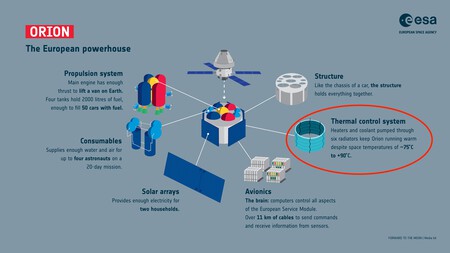
The Orion spacecraft, which will carry the crew, consists of two main modules:
- Crew Capsule – Manufactured by Lockheed Martin for NASA.
- European Service Module (ESM) – Provided by the European Space Agency (ESA), with Airbus Defense and Space as the main contractor.
The Role of the Thermal Control Unit
A crucial part of the ESM is the Thermal Control Unit (TCU), designed and built by Airbus Crisa in Tres Cantos, Madrid. The TCU plays an essential role in the functionality of the spacecraft, responsible for:
- Supplying air and water to the astronauts.
- Regulating internal temperatures to ensure comfort for the crew and proper functioning of onboard equipment.
Redundancy for Safety
Fernando Gómez-Carpintero, the general director of Airbus Crisa, explained that the Orion carries two identical TCUs for redundancy. This design ensures that if one unit fails, the other can take over, providing a vital layer of safety for the crew, monitoring and regulating life support systems including propulsion, communication, and energy.
A Historic Partnership
This mission represents a historic collaboration as it marks the first time NASA has entrusted a non-American company with the construction of a crucial element for a U.S. manned space mission. The involvement of Airbus Crisa reflects a growing trend of international partnerships in space exploration.
Who is Airbus Crisa?
Founded in 1985, Airbus Crisa specializes in the development and manufacturing of electronic components for space missions. Since its integration into the Airbus group in 2000, it has taken on several significant projects, including:
- Electronics for the James Webb Space Telescope
- Components for Martian rovers like Curiosity and Perseverance
- Systems for the Ariane and Vega rockets
- The electronics of SPAINSAT NG, Europe’s advanced military secure communication satellite
Spain’s Long Connection with Lunar Exploration
Spanish ties to lunar exploration date back decades. During the Apollo 11 mission, Spain played a critical role in relaying Neil Armstrong’s first words from the Moon through an antenna in Fresnedillas de la Oliva. Today, its successor antenna in Robledo de Chavela remains a part of NASA’s Deep Space Network, continuing Spain’s legacy in space communication.
The involvement of Airbus Crisa in the Artemis II mission represents a significant step forward, contributing essential technology to a manned spacecraft and reaffirming Spain’s prominent role in global space initiatives.