
Commercial aviation has been aiming to achieve the challenging dream of flying faster than the speed of sound without negatively impacting those on the ground. The primary challenge lies not just in the velocity but also in the shock waves generated by supersonic aircraft, which can be heard as a disruptive sonic boom. The X-59 is designed to test a pioneering solution: achieving supersonic speeds with a significantly reduced acoustic signature. NASA is not yet discussing commercial routes, but this initiative represents a substantial step toward overcoming a major barrier to supersonic flights.
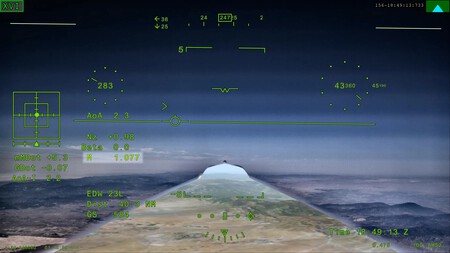
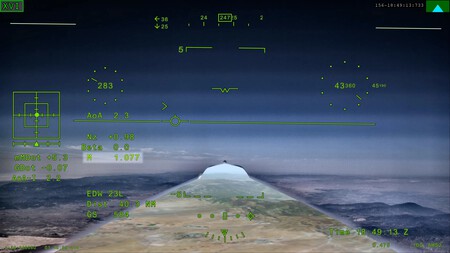
The latest advance occurred last Friday, when the X-59 successfully exceeded the speed of sound during a test flight for the Quesst mission. As reported by NASA, pilot Jim “Clue” Less completed an 81-minute mission, taking off and landing at Edwards Air Force Base in California. The aircraft achieved a maximum speed of approximately Mach 1.1, equivalent to about 1,150 km/h, flying at an altitude of roughly 13,200 meters. This milestone is significant, although it remains part of an extensive testing phase focused on assessing flight characteristics.
The Test of the Most Discreet Supersonic Flight Enters a Decisive Phase
It is crucial to evaluate not only what happens inside the X-59 but also what is heard below. The Quesst mission aims to demonstrate technology that can minimize the sonic boom, transforming it into a lighter sound knock. The next phase involves flying over American communities and gathering feedback on the noise experienced by individuals below. NASA plans to share these results with national and international regulators, aiming to shape future noise standards based on actual data.
This first supersonic flight represents not an endpoint but the launch of a more rigorous testing phase. Upcoming tests will involve flying in “mission conditions” at a cruising speed of Mach 1.4—approximately 1,490 km/h—at altitudes around 16,800 meters. This data will be essential, as it reflects the operational parameters envisioned for future flights over populated areas in the United States. Before assessing public reaction to the sound output, the aircraft must demonstrate stable operations in these conditions.
The X-59 is more than just an eye-catching design; it embodies a long-term commitment to revitalizing supersonic flight. As NASA reminds us, it has invested more than seventy years into studying supersonic flight, particularly the noise associated with these speeds and methods for reducing it. The Quesst mission utilizes advanced simulations, wind tunnel testing, and computational fluid dynamics to anticipate how air interacts with the aircraft. This phase is critical in validating whether the entire concept performs as intended in real-world conditions.
Ultimately, the X-59 is not intended to transport passengers directly; rather, it aims to gather data that could help unlock opportunities for supersonic passenger flights, a market that has been virtually closed for years. Information collected will be shared with regulators, contributing to new noise standards based on empirical data rather than historical context. NASA also plans to produce design tools and technologies for future quieter supersonic aircraft, potentially giving manufacturers the confidence to explore commercial aircraft capable of high-speed travel without causing significant disturbance on the ground.
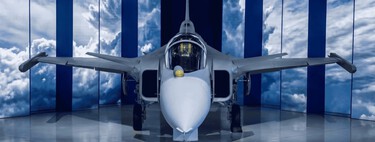
The X-59 has crossed a significant threshold, but the Quesst mission still has critical tests ahead. It must approach the operational conditions planned for inhabited area test flights and, crucially, assess whether the resulting sound is deemed acceptable. The real value of NASA’s data will hinge on these findings.
Images | POT
In Xataka | Airbus has just flown the commercial aircraft with the longest autonomy in the world. Your goal: 22 hours straight without a stopover