

Google’s “Nano Banana”: The New Era of Image Editing
Google has been secretly developing a revolutionary tool known as “Nano Banana,” which many believe could pose a significant threat to Adobe Photoshop, particularly in the realm of photo editing. For weeks, this mysterious tool had been popping up on various test platforms, leaving professional users in awe. Recently, Google confirmed its existence, stating that it is integrating this experimental model into its new AI project, Gemini .
Significance of Nano Banana
This development marks a potential turning point in the world of digital design, indicating what could be the beginning of the end for traditional tools like layers and masks that have dominated for nearly three decades. With Nano Banana, users can easily change the color of elements—such as a shirt—without impacting facial features or other critical components of an image. Tasks that used to take minutes can now be accomplished in mere seconds . While it isn’t fully equipped for professional applications yet, it serves as an exceptional tool for initial sketches and everyday use.
The Power of Memory
What sets Nano Banana apart from other AI image generators is its ability to remember and retain elements during the editing process. Most traditional models generate images from scratch with each prompt, while Nano Banana can refine and iterate on the same image multiple times. This capability allows for greater precision and flexibility, making it an appealing choice for both casual users and professionals looking for quick solutions.
Practical Applications of Nano Banana
Let’s explore some fascinating examples of what can be accomplished with Nano Banana. If you want to try it yourself, we have put together a guide to get you started. Each achievement has merely required simple text prompts.
Example 1: Historical Recreation
In this first example, an original photo of a man was transformed into a 1950s Valencian scene, complete with appropriate attire and furnishings that made it visually credible for the era.
Example 2: Futuristic Vision
Next, the same man appeared in a futuristic Shanghai scenario set in 2050, showcasing Nano Banana’s ability to adapt to imaginative contexts.

Example 3: Adding Companions
Returning to the original photo, Nano Banana was used to add a second man next to the first, creating a dynamic duo captured in the moment.

Example 4: History Reimagined
In another imaginative twist, the pair was transformed into Roman gladiators within an amphitheater, demonstrating the tool’s extensive creative potential.

Example 5: Advertising Modernization
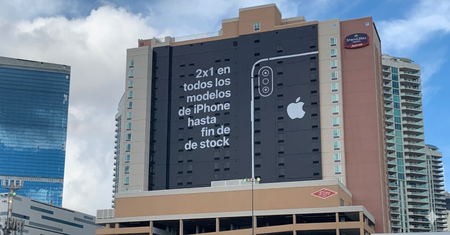
An advertisement captured at a Las Vegas event was not only modified to reflect current trends but also had its text adjusted to read, “2×1 on all iPhone models until stocks last.”
The Financial Implications
The cost to generate each image using Nano Banana is around $0.039 for a resolution of 1024 x 1024 pixels. This price point could significantly impact the market, as Adobe has announced their own plans to integrate similar technology into their Firefly and Express platforms. This competitive stance hints at a defensive strategy by Adobe, aiming to retain their subscriber base amidst evolving needs.
The implications for industries and individual creators are astounding. Those who routinely spend substantial amounts on licenses for editing software may find themselves reconsidering as they discover the ability to produce high-quality mockups in mere moments rather than days. Educational professionals, e-commerce businesses, and creatives alike can now harness the power of AI for customized content creation with just a simple text prompt, making the possibilities nearly endless.