
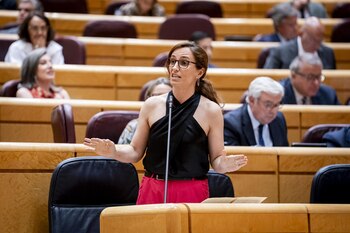
In recent discussions, the Minister of Health has taken a definitive stand on ensuring the right to oncological forgetfulness . This right aims to protect individuals who have overcome cancer from facing discrimination when applying for insurance and financial services. The Minister noted her commitment to doing “everything possible” to safeguard this essential right, emphasizing that the control and oversight of this issue falls under the jurisdiction of the General Directorate of Insurance and Pension Funds, part of the Ministry of Economy, Trade, and Business.
During a Senate session, Senator Olaia Duarte from EH Bildu raised concerns regarding the discriminatory practices of certain insurance companies, which reportedly increase premiums or deny coverage to individuals with a history of cancer. In response, the Minister expressed her dedication to resolving these issues, recounting collaborative efforts with the Spanish Association Against Cancer and other government bodies. “We have created a document of frequently asked questions to assist patients, insurers, and financial institutions,” stated the Minister, underlining the government’s proactive approach.
The Minister expressed her disappointment that cancer survivors struggle to obtain mortgages or insurance even after being declared healthy post-treatment, sometimes years later. She reiterated that the Ministry of Health is actively contributing solutions, collaborating with various stakeholders to ensure fair access to necessary financial services.
The Real Decree Law 5/2023 , enacted on June 28, 2023, introduces an essential measure known as the oncological right to forgetfulness in Spain. This law allows individuals who have successfully completed cancer treatment to omit any mention of their past condition when applying for insurance or financial products. Specifically, it stipulates that they need not disclose their cancer history if five years have passed without a relapse, thereby reducing the risk of discrimination.
Senator Duarte highlighted the struggles faced by many in the Basque Country as they encounter significant barriers. According to her, individuals are experiencing dramatic challenges in attaining loans, resuming scholarships disrupted by cancer treatments, and renewing driving licenses beyond the standard three-year period. “The only recourse for citizens facing such challenges is to navigate the complaints service offered by the General Directorate of Insurance and Pension Funds, which involves frustrating bureaucratic hurdles and long waiting times,” she pointed out.
Duarte argued that this setup fails to provide adequate protection for those who have conquered cancer. A fundamental revision of this decree, including a thorough evaluation of its effectiveness, is necessary to adapt it to the current realities faced by cancer survivors. “We must ensure that those who have undergone oncological treatment can live under conditions of equality ,” she concluded.
The discussions in the Senate reflect a growing awareness and urgency surrounding the issue of discrimination against cancer survivors in Spain. Many voices are calling for comprehensive solutions and clearer guidelines to ensure that individuals are not unfairly penalized for their medical history. In an age where equality and fairness are championed, it is vital that legislation reflects these values in practice.
The ongoing efforts by the Ministry of Health, alongside advocacy from organizations like the Spanish Association Against Cancer, signify a positive movement towards establishing better protections for cancer survivors. With additional collaborations and commitment to refining the existing laws, there exists potential to eliminate the unfair stigmas that have persisted for far too long.
As society navigates these sensitive issues, it is essential to place emphasis on compassion and understanding . The plight of cancer survivors deserves focused attention and actionable reforms. The right to oncological forgetfulness is just one step in the journey towards a more inclusive and equitable society where everyone, regardless of their medical past, can secure their future without fear or hindrance.