
I meet again Miquel Ballester twelve years later. I interviewed him in 2013 when I was starting my career in Xataka, and he was doing the same in Fairphone, a company he officially co-founded a few months earlier. The singular goal was clear: “to create the world’s first fully fair smartphone.”
Many things have changed since then. We both have gray hair now and have witnessed how smartphones have conquered the world, becoming commonplace products with one significant challenge: being truly differentiable.
A Different Mobile in Everything, Including Your Materials
However, at Fairphone, they have managed to do just that: differentiate themselves. Their focus is totally different from other manufacturers. While their original mission has remained, it has expanded. According to Ballester, “it has always been a tool,” as Fairphone aims to “change the industry from within.”
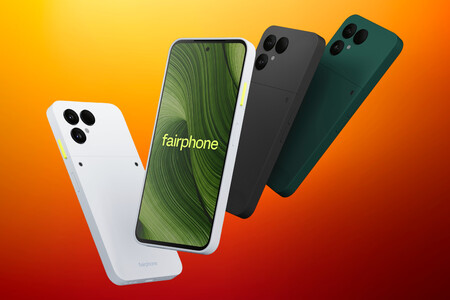
Fairphone (Gen. 6).
Ballester explains, “We could have remained an NGO or inspired other companies to recognize the market for fair electronics.” Instead, they decided to take matters into their own hands, leading to the birth of the original Fairphone and subsequent models.
The Fairphone commitment to conflict-free minerals remains a cornerstone of their devices. Miquel Ballester points out that the situation has improved, aided by legislative changes in Europe that enhance monitoring and reporting of materials sourcing. However, conflict-free minerals constitute only a part of the broader equation.
The company has expanded its commitment, growing from four monitored supply chains to 23, with the goal of sourcing half its materials from fair or recycled resources. The new Fairphone (Gen. 6) exemplifies this effort, with over 50% of its material weight derived from fair or recycled sources, improving from 42% in the Fairphone 5.
Managing a direct supply chain is vital, especially concerning rare earth materials, whose scarcity impacts the global industry. Ballester clarifies that while they feel the repercussions on pricing, the component manufacturers bear more of that burden than the final assemblers.
Long Live Modularity and Repairability
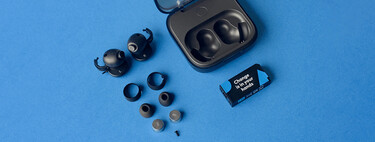
One aspect that defines Fairphone is its radical approach to repairability and modularity, a philosophy they’ve extended beyond phones to include serviceable headphones, known as Fairbuds.
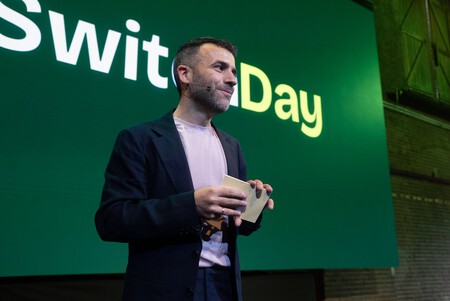
Miquel Ballester, Head of Product at Fairphone.
This philosophy raises an inevitable question: “Does being repairable and modular involve too many sacrifices?” According to Ballester,
“In Generation 6, we are proud of the balance achieved between performance, modularity, and sustainability. We made difficult choices, but all were strategic to deliver a balanced phone for our target consumers.”
The decisions made reflect prioritizing certain cutting-edge components over others, resulting in trade-offs, as seen in the ultra-wide-angle sensor’s reduced resolution. However, modularity imposes design and size restrictions, necessitating that the device be “a few millimeters thicker”—9.6 mm for the Fairphone (Gen. 6)—to accommodate a serviceable battery.
Despite these design adjustments, Ballester emphasizes the importance of attractiveness: “The mobile must work and be visually appealing. It’s crucial that customers feel drawn to purchase it in stores across 20 European operators.”
Having honed their approach over years of experience, Ballester expresses pride in the Fairphone (Gen. 6) design, which feels good to hold, is lightweight, and features a larger screen than its predecessor, Fairphone 5. He reflects, “The Fairphone 5 was an excellent device but attempted too much. With Gen. 6, we could be stricter about what to include.” The Fairphone (Gen. 6) retails at 599 euros, a decrease from its predecessor’s 699 euros, particularly notable amid rising overall prices.
The evolution of strategies reflects Ballester’s insight: “Nothing scares me,” he states boldly about the prospect of substantial sales increases over the next five years, emphasizing their confidence in current models and the audio segment.
Fairphone in Spain and Competing with Giants
Fairphone aims to secure a strong foothold in the European market with significant presence in countries like Germany, the Netherlands, the UK, and France, but what about Spain?
Ballester notes, “Spain’s market is different for our product type. Other European countries tend to spend more on phones.” Fairphone may not be considered overly cheap, as that could compromise their sustainability initiatives. While Spain presents challenges, Balester indicates they remain open to future expansion.
In countries where Fairphone operates, they face fierce competition, prompting interest in how their ethical vision withstands pressure from giants of the telecommunications industry. Ballester clarifies that the answer lies in their value proposition, highlighting modularity and repairability as unique selling points.
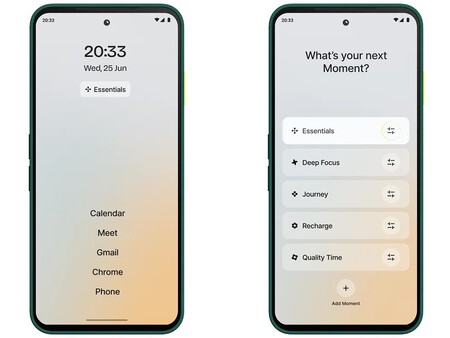
Fairphone Moments proposes a minimalist launcher for less distraction.
The “Fairphone Moments” initiative aims to transform how users interact with their devices, minimizing distractions. The minimalist launcher allows users to access a simple list of frequent applications, promoting a more intentional use of technology. Furthermore, an attractive yellow switch on the Fairphone (Gen. 6) offers an easy way to switch modes.
Fairphone has evolved since its inaugural model, narrowing its focus on appealing to users who prioritize sustainability without sacrificing performance or usability. While they operate a simplified Android version, slight customizations reflect their identity, creating a unique user experience.
User Evolution and Expansion Plans
As Fairphone transitions to naming its devices simply “Fairphone” followed by “(Gen. 6),” Miquel Ballester sees this as a shift towards user inclusion. The brand caters not solely to activists but a broader audience seeking reliable technology with longevity.
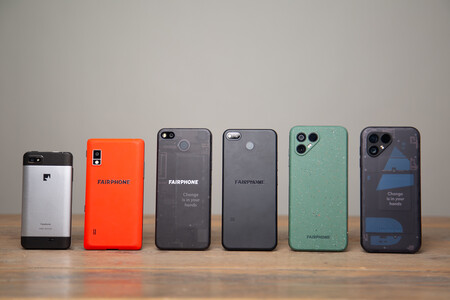
Evolution of Fairphone models over the years.
In the future, Fairphone aims for growth in Europe while exploring partnering opportunities. Balester exudes confidence, emphasizing their commitment to sustainability as they scale operations without compromising values, ensuring that Fairphones appeal to consumers in an evolving market.