
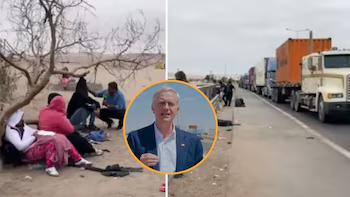
Migrants Departing Chile Amid Fears of Expulsion
Increasing Migration Pressure
Foreigners have started to leave Chile through the border with Peru, largely driven by the announcement from right-wing presidential candidate José Antonio Kast. Kast declared that if victorious in the upcoming elections, he would expel foreigners living in the country without proper documentation. This statement has created a wave of anxiety among the migrant population, prompting many to take steps to exit.
Context of the Exodus
This alarming trend was particularly evident on November 22, as migrants began gathering at the border. Authorities from the Yarada los Palos district arrived but did not issue formal statements. The anticipated implementation of physical barriers, such as walls, by a potential Kast administration has heightened fears among migrants. Reports suggest that as many as 400 to 500 individuals showed up at the border seeking to leave voluntarily.
Irregular Migration Routes
Many migrants are opting to use unauthorized entry points to Peru, as they lack the necessary documents for formal passage. The bureaucratic hurdles in both Chile and Peru complicate their attempts to regularize their status, leading many to choose illegal routes instead.
Personal Accounts of Fear
One Latina correspondent interviewed individuals at the border to gauge their sentiments. While some claimed their departure had nothing to do with Kast’s rhetoric, others expressed that fear of deportation spurred their decision. One migrant articulated the distressing thought that parents could be deported, separating them from their children. Another shared their struggles in trying to formalize their status, which were ultimately rejected, leading them to leave preemptively.
Strong Messages from José Antonio Kast
Kast has been vocal about his strict stance on immigration. In a video recorded at the border, he warned irregular migrants that they have 111 days to vacate Chile voluntarily. He emphasized that those who fail to do so will face arrest and expulsion, leaving only with what they can carry.
Campaign Implications and Policies
Kast’s campaign includes proposals to classify irregular migration as a crime and to introduce stringent penalties for those supporting illegal immigrants. His stance reflects growing public anxiety surrounding security and migration issues, even with official statistics showing relatively low crime rates in Chile.
The Bigger Picture
The implications of Kast’s declarations extend beyond his immediate campaign. They feed into a broader narrative of national recovery amidst perceived crises. As he seeks to win the election against candidate Jeannette Jara, Kast’s populist strategies resonate with voters anxious about security and immigration.
Government Response to Border Concerns
In parallel, Peruvian President José Jerí has announced a state of emergency in 28 provinces bordering Chile. This measure aims to bolster territorial control and involves the deployment of military support alongside the National Police. Jerí emphasized a multi-sectorial approach to manage potential irregular entries from various nationalities.
Conclusion
The ongoing situation at the Chile-Peru border is emblematic of the heightened tensions surrounding migration policies in Latin America. With fears of expulsion driving migrants to cross borders, the political climate is poised for significant shifts as candidates leverage these issues in their campaigns. The humanitarian implications and broader effects on regional migration patterns will require close monitoring in the coming months.