
A little over a year ago, in June 2024, a Mexican National Guard team was observing the Tlaquepaque bus station in Jalisco when an intriguing event unfolded. One of the specially trained dogs, intended to detect narcotics, began sniffing two cardboard boxes situated at a messaging company’s office. As the agents approached, they noted a peculiar scent, akin to “decomposition,” prompting them to open the packages. To their surprise, they discovered not drugs, firearms, or any illegal substances, but 80 dehydrated fish bladders .
These bladders belonged to a distinct species known as the Totoaba Macdonaldi. Despite their seemingly unappealing appearance, the 80 bladders , collectively weighing approximately 18 kilos , could have fetched around $360,000 on the Chinese black market .
They are often referred to as the “Cocaine of the sea.” But what exactly is a Totoaba?
The Totoaba Macdonaldi may not be a household name in many parts of the world, but it is well-known in its native habitat along the coasts of Mexico . This species is endemic to the Upper Gulf of California and is notable for its impressive size, capable of reaching lengths up to two meters and weights of 100 kg , living up to 30 years . The Totoaba’s swim bladder is particularly sought after in various markets.
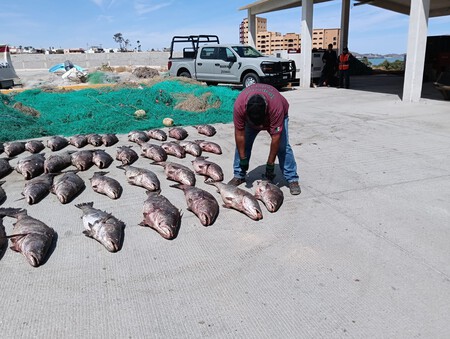
</div>Why is it so sought after? In certain regions of China, the Totoaba swim bladder is dubbed a delicacy due to its supposed medicinal properties , leading to exorbitant prices in the black market. Despite a lack of scientific research to verify these claims, it is commonly used in soups that are believed to alleviate joint pain or provide relief for pregnant women. Its popularity has become so immense that it’s even regarded as a luxury gift or dowry.
How much does it cost? The price can vary, but it is often exorbitant. Reports suggest that a kilo of Totoaba bladder could surpass $8,500 in trading markets. Some estimates even report figures as high as $20,000 per kilo , or €2,200 for just 100 grams . There are even instances of bladders from preferred specimens fetching upwards of €40,000 , although these prices fluctuate based on demand and availability.
Is this a pressing issue? Yes, it certainly is. The intense demand for Totoaba has placed immense pressure on its populations, prompting the Mexican government to take definitive actions. Fishing for Totoaba was prohibited in the 1970s , and in 1991 , the species was officially declared endangered . It also appears on the Convention on International Trade in Endangered Species (CITES) list, underscoring its vulnerable status.
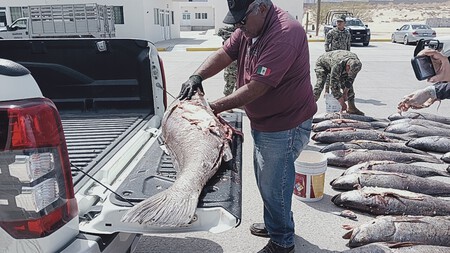
</div>Current Situation : According to a statement released by the Mexican government, the uncontrolled fishing of Totoaba during the 20th century has drastically reduced its population, pushing it towards extinction. Although the illegal smuggling persists, there are some signs of hope. Various protective measures, including repopulation efforts , have been initiated, with 40,000 young Totoaba released in Baja California Sur as part of ongoing efforts to enhance their dwindling numbers. This brings the total releases to approximately 270,000 individuals in the region.
Are additional measures being taken? Yes, indeed. To combat the illegal trade, Mexican authorities have conducted multiple operations, including the recent seizure of 80 Totoaba bladders at the Jalisco Bus Station. Furthermore, border patrols have intercepted additional shipments, enhancing enforcement against this smuggling network.
Political Action : Beyond enforcement, the Totoaba has become a subject of heated political discourse in Mexico. Recent years have seen the government strengthen its legal framework to protect this endangered species. A commission has even approved a reform package aimed at regulating the export of legally farmed Totoaba meat while maintaining strict bans on the commercialization of their bladders.
Recently, Nikkei reported that Mexico has partially lifted the ban on the export of Totoaba, but this pertains specifically to fish farm-derived meat, with strict regulations in place to oversee this merchandise and prevent smuggling.
Cocaine of the Sea? This nickname may sound exaggerated, but it accurately reflects the lucrative market surrounding Totoaba bladders, leading to severe consequences for the environment. The combination of high financial returns and regulatory gaps has engaged drug trafficking organizations in this illicit trade.
In the words of Felbab-Brown, an expert in organized crime from the Brookings Institute, “The cartels recognized that these Chinese merchants earn substantial profits from jellyfish, Totoaba bladders, and similar marine species. This has resulted in a merging of economies that benefits these trafficking networks.” Reports indicate that there is collaboration between Chinese organized crime factions and Mexican cartels, further complicating attempts to control this illegal trade.
Additional Threats : Another victim of the Totoaba smuggling crisis is the vaquita marina , a porpoise critically endangered due to the fishing nets deployed to catch Totoabas. Its population has dwindled to alarming numbers, leading environmental organizations to warn of its imminent extinction.
Images | Government of Mexico 1 and 2.
In conclusion, the issues surrounding the Totoaba not only highlight the dangers of illegal wildlife trafficking but also pose serious questions about biodiversity and ecological stewardship. As the Mexican government grapples with enforcement and protective measures, the global community must remain vigilant in the fight against illicit trade affecting endangered species. This ongoing battle offers vital lessons in the conservation of marine biodiversity for generations to come.