
Less renowned than Teotihuacan, Chichen Itza, or even nearby Palenque, Toniná stands as one of Mexico’s significant archaeological treasures. Thriving between 600 and 900 AD, this necropolis preserves a complex example of Mayan civilization and urbanism, highlighted by a unique pyramidal structure that exceeds the height of the famous Pyramid of the Sun in Teotihuacan.
Government Action to Protect Toniná
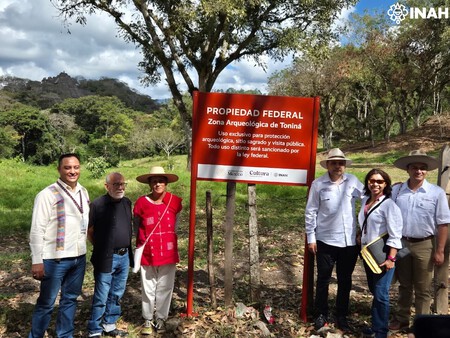
To ensure its preservation, the Mexican government has taken significant measures by expropriating 9.2 hectares surrounding the site, placing them under the National Institute of Anthropology and History (INAH).
The Decree’s Implementation
Mexico has demonstrated its commitment to cultural heritage by invoking an expropriation decree. The current administration, led by Claudia Sheinbaum, announced that the INAH has now “taken possession” of the property near the Toniná site in Chiapas. This acquisition stems from a public utility declaration made in December 2025.
Reasons for Expropriation
The main goal behind this action is twofold: conserving the archaeological environment and fostering research opportunities. INAH emphasizes the importance of providing “optimal conditions” for Toniná, which it considers a crucial part of Chiapas and Mexico’s living history.
Expanding Research Capabilities
Claudia Curiel de Icaza, Secretary of Culture, has stated that this decree reinforces the state’s capacity to preserve cultural heritage, allowing for improved management, restoration, and research tasks. The INAH will strengthen its efforts to monitor and study this ancient Mayan city.
Significance of Toniná
The importance of this initiative extends beyond legal aspects; it offers a chance for Mexico to promote Toniná to a broader audience. The INAH aims to implement a comprehensive reactivation program, crafting a structured route for its eventual reopening, while also promoting “responsible tourism.”
A Cultural Treasure
Toniná’s location, straddling the Mayan highlands and lowlands, has contributed to its unique archaeological significance. The site’s enthralling acropolis features overlapping platforms and colossal pyramidal structures, making it stand out in the Mayan world.
The site’s peak occurred between 600 and 900 AD, marking its significance during the Classic period, and it served as a witness to the decline of the Old Mayan Empire. The INAH describes Toniná as a site with rich cultural assets comparable to Palenque.
Historical Context and Ongoing Discoveries
The first known mention of Toniná dates back to the 17th century by Brother Jacinto Garrido. Since then, archaeological study intensified during the 19th century and further evolved through the 20th century, particularly in the 1970s and 1980s.
Today, the INAH continues to excavate and conserve Toniná, believing that it still holds many secrets waiting to be uncovered. The desire to learn more about this remarkable site drives ongoing research efforts.