
The Return of Buttons in Automotive Technology: A Look at the New Mercedes GLC
In the rapidly evolving world of automobiles, we find ourselves immersed in two significant revolutions . The first is the transition to electric vehicles (EVs) powered by batteries, aimed at decarbonization of the industry. The second revolution is less defined, centered on the interface controls in vehicle cabins. A few years back, major car manufacturers leaned heavily towards touch screens while sidelining physical buttons. However, a subtle shift is emerging, with some companies, including Mercedes-Benz , returning to the tactile feel of buttons, as exemplified in their new Mercedes GLC .
Yes, this is the same vehicle featuring an impressive 39.1-inch side screen . The MBUX Hyperscreen was showcased during the Munich Auto Show, highlighting not just a leap towards advanced infotainment technologies , but also a nod towards more traditional controls. While the exterior design exudes the classic elegance of prior Mercedes models, the interior is a digital spectacle . The MBUX Hyperscreen, which stretches across the entire dashboard, simulates three individual screens, hosting a myriad of functionalities—from infotainment controls to real-time car data and essential driving information displayed behind the steering wheel.
When Mercedes initially introduced the Hyperscreen, all vehicle controls were relegated to digital interfaces. However, the automotive industry is experiencing a paradigm shift , prompting manufacturers to rethink their approaches. In this context, Mercedes has taken a measured step back with the GLC and the CLA Shooting Brake , another electric model in their lineup.
This reimagining includes a redesigned steering wheel that integrates essential control elements—such as knobs and buttons—allowing drivers to maintain focus on the road without diverting their gaze to a screen. In a revealing interview with Magnus Östberg, Mercedes’ head of software, he acknowledged the brand’s prior missteps. “Perhaps we went a little too futuristic,” he admitted, recognizing a growing preference among consumers for physical controls.
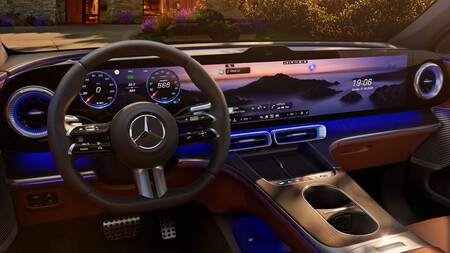
The new steering wheel with buttons
Östberg firmly asserted that reinstating physical buttons on the steering wheel is “the easiest and most profitable way to integrate physical controls in cars” while maintaining design aesthetics that prioritizes digital interfaces. “Finding that balance between tactile feedback and digital functionality is crucial for us,” he emphasized. The decision to reintroduce buttons marks a significant turning point for Mercedes, with plans to incorporate these features into more models in the near future. Östberg speculated that SUVs would likely lead this initiative due to their larger space and customer preferences.
Interestingly, this trend appears to vary by market. Östberg noted that while European customers favor buttons, Asian customers often lean toward touch screens and voice commands, hinting at the possibility of region-specific designs.
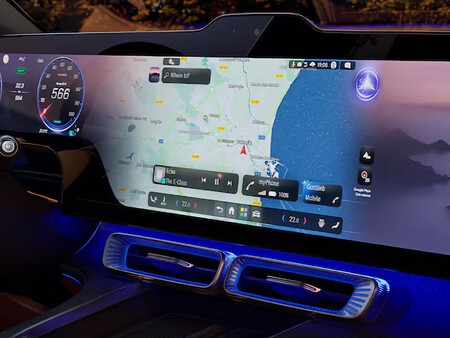
Climatizer controls will continue on screen
Mercedes is not alone in this realization; Volkswagen has also announced a shift towards more physical controls in their cabin designs. The recent Munich Motor Show saw them unveiling their new design philosophy, which emphasizes real buttons instead of the previously utilized controversial capacitive buttons .
Interestingly, Euro NCAP recently stated that vehicles will only achieve a five-star safety rating —a pivotal factor for consumers—if essential functions can be controlled using physical controls, further emphasizing the importance of tactile interface in vehicular safety.
Conversely, some manufacturers like Mazda seem to be moving in the opposite direction. Historically known for a heavy reliance on buttons and minimalist screens, their latest models show a surprising shift towards larger touch screens, exemplified by the Mazda CX-5 2025 . Despite initial hesitations, Mazda has aligned its design philosophy with a growing consumer preference for screen-based interfaces.
Despite Östberg’s revelations, it’s unlikely that screens will disappear anytime soon; indeed, Gordon Wagener, Mercedes’ design chief, remarked that the interior of the GLC epitomizes luxury while looking at the likes of Apple for inspiration on software differentiation. The ultimate goal remains to establish a harmonious balance where physical buttons and expansive touch screens coexist seamlessly in modern automobiles.
As the automotive landscape continues to evolve, the dialogue between traditional controls and modern technology illuminates the path forward, ensuring that user experience remains at the forefront of design innovation.