
Mercadona: A Cultural Phenomenon in Spain
The US Government has recently taken note of a remarkable “cultural phenomenon” emerging from Spain: Mercadona. This supermarket chain has not only captured the attention of American exporters but has also achieved significant turnover figures that command respect on a global scale. According to the US Department of Agriculture (USDA) in its Retail Foods Annual report, Mercadona’s influence now extends beyond traditional retail confines.
The Rise of Mercadona
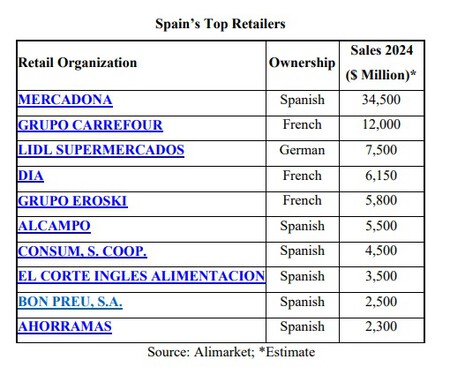
Under the leadership of Juan Roig, Mercadona has become a cornerstone of the Spanish retail landscape, boasting a market share of around 30%. This dominance is evident in various regions, and the chain remains significantly ahead of competitors like Carrefour, Lidl, and DIA. Its growth has also drawn the attention of US officials, marking an unprecedented acknowledgment of its impact.
Attention from American Exporters
Mercadona is mentioned multiple times in the USDA report, which is aimed at US exporters exploring opportunities in Spain. The report emphasizes Mercadona’s impressive sales figures, estimated to be around $34.5 billion last year—more than double that of its closest competitor, Grupo Carrefour. These statistics underline the strength and market presence of Mercadona, further illustrating why it’s classified as a “cultural phenomenon.”
The Secrets Behind its Success
The USDA identifies two critical factors contributing to Mercadona’s success: its distinctive Spanish food offerings and its strategic emphasis on private labels, especially the Hacendado brand. The growing popularity of private brands among Spanish consumers, driven by quality and price considerations, is significant. In fact, a study by Aldi reveals that Spanish households allocate 44% of their shopping budgets to private labels.
Trends in Distributor Brands
A recent report highlighted the surge in distributor brands across Spanish supermarkets, with Mercadona at the forefront of this movement. From 2018 to 2023, the chain reduced its external brand offerings by 45%, resulting in a 74.5% share of white label products within its inventory. This indicates a strong consumer preference shift toward retailer brands, allowing Mercadona to shape the market dynamics.
Innovation and Adaptation
Mercadona continues to evolve by diversifying its offerings, particularly in ready-to-eat foods. Roig has expressed his belief that kitchens may eventually become obsolete in Spanish homes. To align with this vision, Mercadona has invested substantially in its “Ready to Eat” product line, indicating a forward-thinking approach that caters to changing consumer habits.
The Broader Retail Landscape
The USDA’s report also details key insights into the Spanish food distribution sector. The growth of new store openings and the rise of self-service formats highlight the shifting retail landscape. Spanish consumers are increasingly blending online and offline shopping experiences, leveraging digital options for larger purchases while seeking fresh produce in store.
The report points to a focus on efficiency, AI technologies, and personalization in retail strategies, showcasing the high degree of fragmentation in the sector. With Mercadona leading the way, its influence is reshaping the retail landscape in Spain.
Conclusion
As a cultural phenomenon, Mercadona’s journey offers valuable lessons for businesses everywhere. Its innovations, commitment to private labels, and adaptability to market demands present a blueprint for success in a rapidly changing retail environment. For American exporters and international brands, understanding Mercadona’s strategies could open doors to new opportunities in Spain’s vibrant marketplace.