
Introduction to the AwalkHS Exoskeleton
In an era where technology continually pushes the boundaries of human capability, the emergence of exoskeletons has revolutionized the field of mobility and rehabilitation. The latest addition to this exciting frontier is the AwalkHS, developed by Seeppo. Currently featured in a crowdfunding campaign on Kickstarter, this innovative device boasts artificial intelligence (AI) capabilities that aim to enhance the physical abilities of users, whether they are carrying heavy loads, hiking, or undergoing muscle rehabilitation.
What Makes AwalkHS Unique?
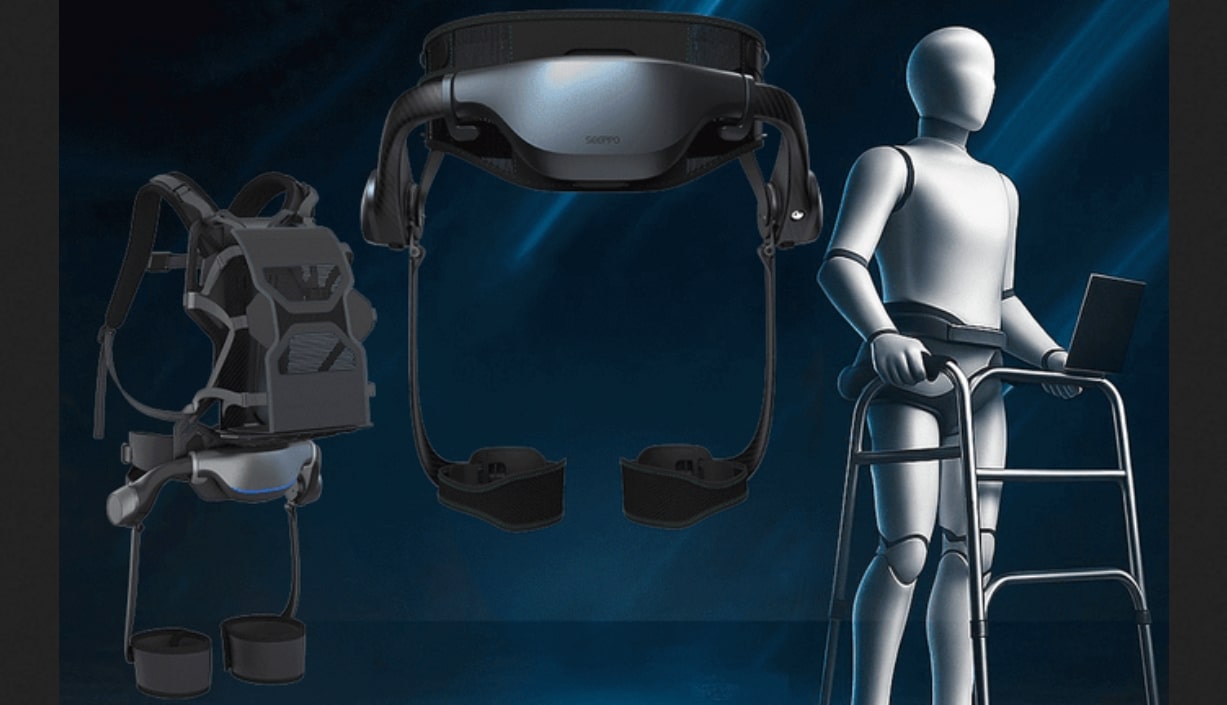
The AwalkHS is not just another exoskeleton; it is a sophisticated apparatus equipped with cutting-edge AI technology designed to optimize the user’s physical efforts. It is available in three distinct models: the AwalkHS-N, AwalkHS-L, and AwalkHS-P, catering to different needs and usage scenarios. The price points for these variants are $1399 for the AwalkHS-N, $1699 for the AwalkHS-L, and $2299 for the AwalkHS-P, making it accessible for various users.
The Three Modes of the AwalkHS
AwalkHS-N: Everyday Mobility Enhancer
The first model, AwalkHS-N, serves as a mobility enhancer for everyday activities. This version is ideally suited for daily commutes, leisure walks on easy trails, and aiding post-exercise recovery. The device reads users’ intentions and augments their movements for a smoother, more efficient walking experience.
AwalkHS-L: Heavy Lifting Made Easy
Next, we have the AwalkHS-L, designed for individuals who need to carry loads of up to 70 kg. This model features adaptive terrain support, allowing it to assist users effectively while hiking in mountainous regions or transporting heavy items. This blend of functionality and convenience makes the AwalkHS-L a perfect tool for labor-intensive jobs and outdoor enthusiasts alike.
AwalkHS-P: Support for Reduced Mobility
Finally, the AwalkHS-P is tailored for those with reduced mobility. This model integrates real-time assistance, fall detection, and includes a two-arm walker configuration. It is particularly beneficial for postoperative recovery and long-term rehabilitation, providing essential support to individuals regaining their mobility.
Advanced Features of the AwalkHS
One of the standout features of the AwalkHS is its ability to respond quickly to users, thanks to a 1000 Hz movement detection rate. This technology allows the device to read movements without any noticeable latency, effectively interpreting user intentions. The AwalkHS employs a suite of sensors, including IMU (Inertial Measurement Unit) and FSR (Force Sensitive Resistor), to analyze movements with remarkable precision.
To ensure user safety, the exoskeleton is equipped with a comprehensive 360° motion security system. This feature can detect anomalies, alert users of potential dangers, and instantly lock joints as needed, providing a sense of security during use.
Performance and Quiet Operation
From a technical perspective, the AwalkHS integrates two high-density brushless motors, which can deliver up to 26 Nm of torque while operating at a remarkably low sound level of merely 38 dB. This silent operation ensures that users can function in various environments without drawing unwanted attention. Regardless of the version, the exoskeleton offers a responsive, natural, and quiet electric assistance experience.
Market Response and Future Implications
The initial response to the AwalkHS has been overwhelmingly positive, as individuals recognize the potential of this technology to reshape their daily lives and work environments. In addition, it opens new avenues for research into mobility solutions, especially for those who require rehabilitation or assistance in their day-to-day activities.
Moreover, the generational impact of such advancements could lead to additional developments in AI-assisted devices. As developers and researchers receive feedback from the early adopters of technologies like the AwalkHS, we may witness even more refined iterations that meet specific user needs.
Conclusion
The intersection of technology and human mobility marks a pivotal moment in various industries, from healthcare to logistics. The AwalkHS exoskeleton by Seeppo serves as a testament to how innovation can enhance human capability while ensuring safety and comfort. Whether it’s for supporting mundane tasks or facilitating rehabilitation, the AwalkHS offers a transformative approach that could redefine the standards for exoskeletal technology.
Currently, a crowdfunding campaign showcases a curious exoskeleton. It features artificial intelligence that optimizes user efforts, whether carrying heavy loads, hiking, or engaging in muscle rehabilitation or relaxation.
An AI-Enhanced Exoskeleton
In February 2025, we discussed the Hypershell X, a Chinese exoskeleton capable of increasing lower limb power by 40% and reducing physical effort by 30%. Today, the American company Seeppo is in the spotlight, particularly with its exoskeleton AwalkHS, which is the subject of a crowdfunding campaign on Kickstarter.
Powered by artificial intelligence, the device is available in three versions: AwalkHS-N, AwalkHS-L, and AwalkHS-P. The prices offered to campaign backers are $1399, $1699, and $2299, respectively. Each version has its own set of features and uses.
The Three Modes of the Exoskeleton
The AwalkHS-N is defined as a simple mobility booster adaptable to daily travel, easy trails, and relieving post-exercise fatigue. The device reads user intentions to facilitate movements for “smarter strides.”
Next is the AwalkHS-L, which allows carrying weight up to 70 kg maximum and features adaptive terrain support. Therefore, the exoskeleton is suitable for individuals carrying heavy loads and those engaged in mountain hiking.
Finally, the AwalkHS-P is more geared towards individuals with reduced mobility. This model offers real-time assistance, fall detection, and the integration of a two-handed walker. Thus, this exoskeleton is suitable for postoperative stages and long-term recovery.
Responsive, Safe, and Silent
According to Seeppo, the AwalkHS responds faster than user reflexes due to a 1000 Hz movement detection rate, without any latency. In other words, it doesn’t just detect movement; the device can recognize user intentions. Furthermore, movements are accurately analyzed using data from various sensors, including IMUs (attitude, orientation, position, etc.) and FSRs (force), among others. Additionally, the user is protected by AI via a 360° motion security suite that can detect anomalies, alert about dangers, and also instantly lock joints.
From a technical standpoint, the device incorporates two high-density brushless motors delivering up to 26 Nm of torque, and operates at a mere 38 dB noise level. In any given situation—depending on the versions—the exoskeleton offers responsive, fluid, natural, and silent electric assistance.