
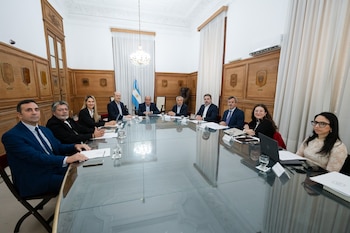
The Casa Rosada serves as the venue for the representatives of the May Council, a body established by the government to coordinate with various sector representatives the policies set to be enacted following the legislative renewal scheduled for December. This initiative aligns with the reforms endorsed by President Javier Milei and the 19 governors who signed what is known as the May Pact.
The inaugural meeting took place on June 24, primarily serving as an introduction. It was at this meeting that the expectation to reconvene on July 21 was established. The call was made by the Council’s President and Chief of Cabinet, Guillermo Francos, setting the gathering for 9 AM in the Shield Hall of the Casa Rosada.
Attendance was robust, starting with the Minister of Deregulation, Federico Sturzenegger, who arrived twenty minutes early. Sturzenegger is tasked with executing the guiding policies across different government sectors and endorsing suggestions from the various stakeholders.
Moments later, the Senate’s representative, the radical Carolina Losada, entered the meeting in a discreet manner, adhering to the agreement made during their initial gathering to keep discussions confidential until a final document is signed months later.
Joining them were national deputy, Cristian Ritondo, representing the lower house, and Gerardo Martínez, the general secretary of the UOCRA, who represents labor unions. The governor of Mendoza, Alfredo Cornejo, representing the provinces that signed the May Pact, was the last to arrive.
The president of the UIA, Martín Rappallini, made an appearance alongside a guest whose identity was kept from the press—Secretary of Labor of the Nation, Julio Cordero, who oversees the portfolio expected to be impacted by potential labor reforms.
During discussions, several Council members indicated that the main focus would be to address initial proposals concerning labor issues, alongside specific tax-related topics.
Both Sturzenegger and Martínez, along with Rappallini, held significant roles in steering labor conversations moving forward.
Post-meeting, Martínez emphasized the importance of dialogue around labor modernization, insisting that no direct reforms should be approved without the consensus of the CGT. He also voiced his disapproval of ceilings imposed on wages by the Minister of Economy, Luis Caputo, alongside objections to criminalizing union protests.
“Reducing the Argentine cost is our primary goal, which can be achieved through tax reforms and other initiatives,” they mentioned from UOCRA’s circle. Labor modernization could contribute, but essential agreements between unions and employers primarily come through collective work agreements, which are typically negotiated on the ground.
Sturzenegger had also brought with him the labor lawyer, Agustina García de Cecco, part of the Ministry of Deregulation and State Transformation, and María Cecilia Domínguez Diacoluca, who serves as the Council’s technical secretary.
The previous month’s meeting mainly set the stage for future engagements, establishing that a gathering would take place every month to monitor progress and follow up on ongoing projects and proposals.
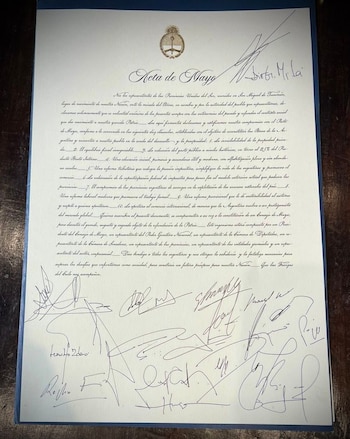
This multisectoral body aims to provide a framework for debate around the reforms that President Milei intends to execute during the latter part of his term, prioritizing specific areas more heavily than others. For instance, the May Pact signed on July 9 last year focuses on labor, tax, pension reforms, and the discussion concerning the rediscussion of federal tax sharing.
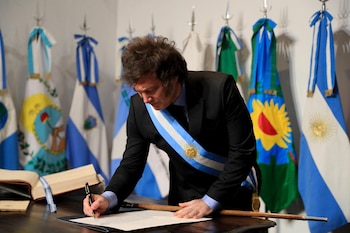
The government prioritizes these areas in a specific order: the first two are slated for promotion next year; the third is directed toward post-2027 initiatives, conditional upon Milei’s re-election; and the fourth, concerning federal tax sharing, appears to be less feasible, given that the related debates involve all provinces.
The ten clauses encapsulate aims relating to fiscal balance, education, natural resource management, and trade openness, among other essential aspects. However, the nation’s urgent need focuses squarely on the aforementioned reforms.
Each sector expressed a willingness to engage in discussions during the June meeting; however, the exact topics of future meetings remain uncertain. All sectors agreed to uphold the utmost discretion as they navigate these discussions. “We were asked to maintain confidentiality for practicality’s sake; it is crucial for addressing these matters,” sources from various parties have confirmed.
As the Executive Power’s voice regarding reforms, much was expected from Minister Sturzenegger regarding the proposed initiatives. Although his team refrained from discussing the specifics of upcoming projects, legislative bishops, particularly Losada, will likely contribute significantly, especially after Ritondo spent the recent days finalizing operational details related to the candidacies in the Alliance of Freedom Avanza and the PRO for the Buenos Aires province.
Additionally, the context surrounding Mendoza Cornejo’s travel is notable; he is one of the few governors who possess the potential (and backing) to forge alliances with libertarians leading up to the October elections. This discussion gained traction recently when he decided to align provincial elections with national ones. The discourse surrounding potential candidates continues to unfold, though it’s worth mentioning that Minister of Defense and Cornejo’s former internal rival in 2023, Luis Petri, enjoys considerable acceptance within the provincial electorate.