
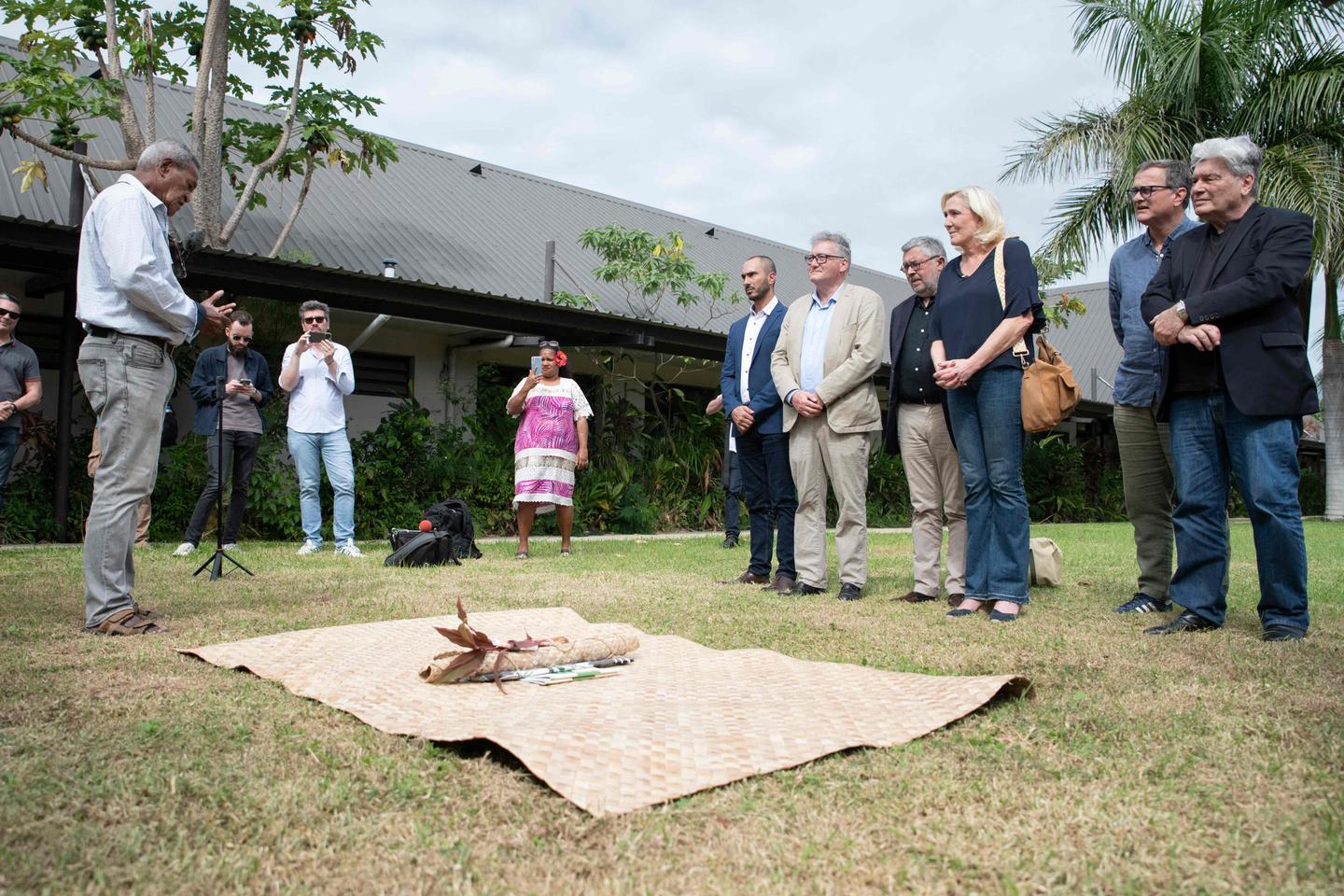
The Complex Landscape of Marine Le Pen’s Recent Visit to New Caledonia

Marine Le Pen, the president of the National Rally (RN) group in the French Assembly, recently embarked on a politically charged visit to New Caledonia. Her journey, from May 28 to May 31, 2025, was expected to be a smooth event in an archipelago where she had previously garnered significant support during the 2017 and 2022 presidential elections. However, the reality was starkly different, marked by jeers , abrupt confrontations, and a palpable atmosphere of tension with local pro-French supporters.
The backdrop of her visit was a highly contentious political climate. Le Pen’s proposal for an institutional pause followed by a referendum in forty years diverges sharply from the demands of local Loyalist factions and The Rally-Les Républicains. These groups envision a complete and enduring integration within the French Republic, possibly proposing a “differentiated development” approach to governance, particularly emphasizing the needs of the predominantly non-independence-supporting South and the independence-seeking North and islands.
This strategic shift by Le Pen signifies a departure from her party’s historical stance. For years, the National Rally had adamantly opposed the Nouméa Accord (1998) and the ensuing independence referendums. In a surprising turn, during her visit, she admitted that the Nouméa Accord at least served to initiate peace. “We must acknowledge that the Nouméa Accord has at least had the merit of bringing peace,” she declared, explaining her newfound pragmatism as a necessary response to avoid civil conflict. This remarkable volte-face has left many political analysts puzzled and questioning the underlying motivations driving her agenda.
Reactions and Engagements During Her Visit
Le Pen’s presence did not go unnoticed. The reception she received ranged from enthusiastic supporters to vocal detractors, many of whom expressed their discontent through protests. The stark contrast between the cheers and jeers illustrated the divided sentiment among New Caledonians regarding her vision for their future and the proposals surrounding independence. Her encounters with local leaders were marked by starkly differing perspectives on the future of New Caledonia, raising questions about the feasibility of her proposals in the face of entrenched local sentiments.
During her visit, Le Pen also met with various stakeholders, including local politicians, party members, and community groups. While some praised her proposal as a fresh perspective , others vehemently opposed it, arguing that her plans lacked practical implementation strategies. The need for a constructive dialogue was a recurring theme throughout her engagements, as stakeholders stressed the importance of continued communication to navigate the complexities inherent in the current political landscape.
The Historical and Modern Context of New Caledonia
New Caledonia, a French territory , has long been embroiled in political strife concerning autonomy and independence. The Nouméa Accord , signed in 1998, established a roadmap for greater self-governance while safeguarding the rights of the indigenous Kanak population. Over the years, three referendums have been held to gauge public sentiment regarding independence from France. However, the results highlighted a persistent division among the population, complicating the discourse around sovereignty.
The current climate reflects broader debates about identity and belonging within French territories. As political tides shift globally, the case of New Caledonia provides vital insights into the evolving dynamics of post-colonial governance and the aspirations of diverse communities seeking to assert their identities while grappling with broader questions of national belonging. The urgency of these conversations cannot be overstated, as they hold implications not only for New Caledonia but also for other regions facing similar dilemmas.
Marine Le Pen’s visit encapsulates the complexities and challenges of pursuing a cohesive political vision within a historically polarizing environment. Political leaders , both locally and nationally, must navigate an intricate landscape shaped by a rich tapestry of cultural identities , aspirations, and historical narratives, reflecting the ongoing evolution of governance in the 21st century.