
The Turmoil in Cameroonian Football: Marc Brys’ Controversial Resignation
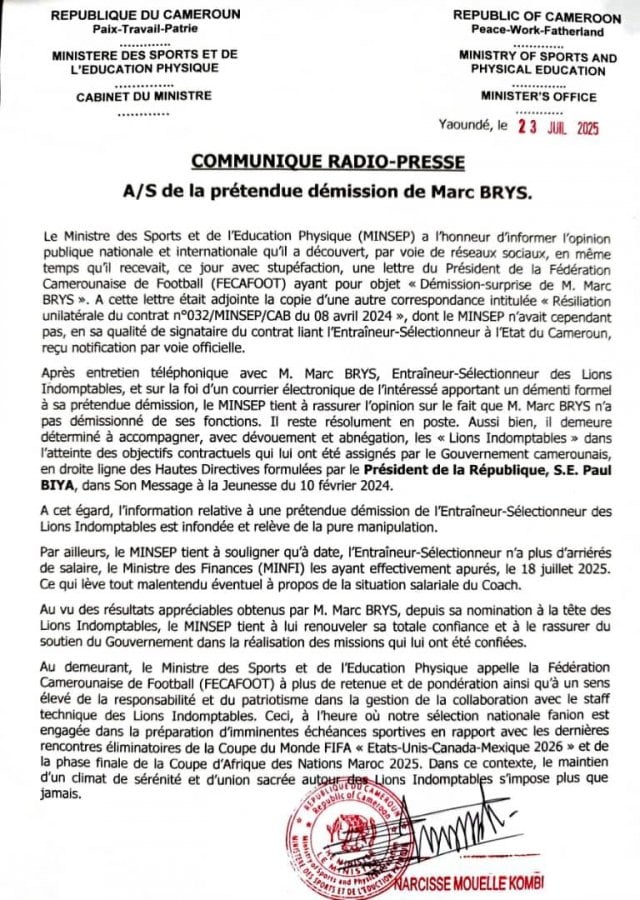
In recent weeks, Cameroonian football has been shrouded in controversy, reflecting a significant rift between the Cameroonian Football Federation (Fecafoot) and the Ministry of Sports . This conflict primarily revolves around Marc Brys , who was appointed as the national team’s coach by the government. After months of tension, Fecafoot announced on Wednesday that Brys had resigned, setting off a chain of events that would deeply embroil the country’s football administration.
However, the announcement quickly turned into chaos when, hours after the press release, Marc Brys himself issued a statement disputing the resignation . He claimed that his identity had been usurped in what appears to be a deliberate act of sabotage. Brys detailed his grievances in a letter that emphasized his confusion over the situation: “I allow myself to write to you today in all urgency, after being informed of the circulation of a allegedly emanating letter from me, transmitted via my personal messaging or my social networks. It seems to be addressed to the Cameroonian football federation, and in which I would present my resignation from my functions as coach of the national team of Cameroon.”
In this strong rebuttal, Brys insisted he had never authored such a letter. He explained, “I hold here, with the greatest firmness, to categorically deny this information. It appears, when examining the elements in my possession, that my messaging was most likely compromised. This hacking, as regrettable as it is, has obviously sown trouble and aroused a wave of rushed reactions.” This statement not only confirmed his position but also painted a picture of internal sabotage and conflict within the federation .
The Impact of Marc Brys’ Statements
Brys’ statements raise critical questions about the management of Cameroonian football and the integrity of its leadership. His insistence that he never resigned has highlighted deep-rooted issues within Fecafoot ’s structure, potentially alienating players, staff, and fans who look to the organization for stability and direction.
Moreover, Brys pointed out the lack of direct communication from Fecafoot prior to the release of the resignation announcement, saying, “I am deeply surprised and even challenged by the fact that no managers, including Fecafoot, took the trouble to contact me personally before disseminating this alleged large-scale information.” This statement hints at the miscommunication and inefficiencies that plague the current administrative system.
Political Implications
The incident also underscores the political tensions between Fecafoot and the Ministry of Sports. With a government-appointed coach now at the center of a public squabble, the role of politics in sporting decisions cannot be ignored. The ambiguity surrounding Brys’ coaching position raises questions about whether this was a preemptive strike by Fecafoot against the Ministry’s influence.
Throughout his career, Brys has shown promise, bringing a wealth of tactical knowledge and international experience. His tenure in Cameroon was supposed to be a turning point for the national team, particularly in light of its historical challenges on the international stage. However, this controversy threatens to derail any progress that might have been made so far.
Future of Cameroonian Football
As the situation unfolds, the future of Cameroonian football hangs in the balance. Will Fecafoot stand by their announcement, or will they have to issue a public apology and reinstate Brys as head coach? Furthermore, how will players react to this drama? They look to their coach for guidance, and if they perceive that there is instability within the federation, their motivation and morale could be severely impacted.
Various stakeholders are calling for a thorough investigation into the incident, specifically into the claims of hacking and identity theft. Participants in Cameroonian football are demanding greater transparency and communication from their governing bodies to avoid unnecessary public relations debacles in the future.
Regardless of how this current crisis resolves, it shines a glaring light on the underlying issues facing Cameroonian football and raises significant concerns regarding leadership, governance, and the fundamental integrity of the sport within the nation.
While the situation remains fluid and the stakes are undeniably high, it serves as a pointed reminder of the challenges that can arise when politics and sports intermingle, especially at such a crucial juncture for a talented roster looking for international success.