
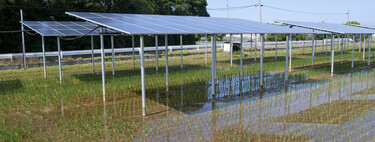
Solar Panels at Airports: A New Frontier
In our daily lives, solar panels have become a familiar sight, adorning rooftops and balconies across urban landscapes. However, airports have remained a notable exception, primarily due to safety concerns surrounding glare and reflection. For years, this apprehension acted as a barrier to adopting renewable energy sources in such critical environments. This narrative has shifted dramatically at Malaga-Costa del Sol Airport, where the vision of integrating solar energy has finally materialized.
Overcoming the Glare Challenge
The chief obstacle in implementing solar panels at airports revolves around glare. The fear that solar installations could produce distracting reflections for pilots during approach has often halted projects. Until recently, this issue lingered unresolved in many regions.
At Malaga, the airport has taken a bold step forward. They are the first in Spain to integrate self-consumption photovoltaic installations, largely driven by private companies such as Europcar and Goldcar. The project is underpinned by a collaboration with the engineering firm Ubora Solar.
Safety Comes First
The project began with comprehensive glare studies, meticulously analyzing visual risks in alignment with the regulatory frameworks set by the Federal Aviation Administration (FAA) and the European Aviation Safety Agency (EASA). These studies accounted for flight trajectories and control tower visibility, adjusting the orientation and inclination of the solar panels to mitigate any potential issues.
The results of these studies were revealing: the luminance values fell below the European threshold of 20,000 cd/m². The reflections created by the solar panels coincided with the sun’s position, effectively masked and rendered imperceptible—a phenomenon known as sun masking.
International Context and Future Implications
While solar installations at airports have been commonplace in countries like the United States and various regions in Europe for some time, Malaga’s progress is noteworthy because it stems from private incentives rather than direct airport management initiatives. This sets a precedent, positioning Malaga as a laboratory example for future renewable energy projects in Spanish airports.
A Vision for Sustainable Air Travel
The successful integration of solar energy at Malaga-Costa del Sol Airport symbolizes a paradigm shift in how airports can approach sustainability. For years, solar energy was viewed with skepticism due to safety concerns. However, this project demonstrates that fear can be alleviated through meticulous planning, thorough studies, and advanced technology.
In conclusion, Malaga-Costa del Sol Airport is not just a hub for flights; it is now a beacon for the energy transition in one of the most regulated environments. This initiative signifies a commitment to harnessing renewable energy without compromising safety, paving the way for similar projects across the globe.
Image Source: Ubora Solar and Unsplash.