
Video Calls in Space: A New Frontier
Video calls have become an integral part of our daily lives. With platforms like WhatsApp, FaceTime, and various others, we often forget the complex infrastructure that makes real-time communication possible. When we venture beyond Earth, to locations hundreds of thousands of kilometers away, technology that feels mundane transforms into something extraordinary.
‘Hello’ from Space
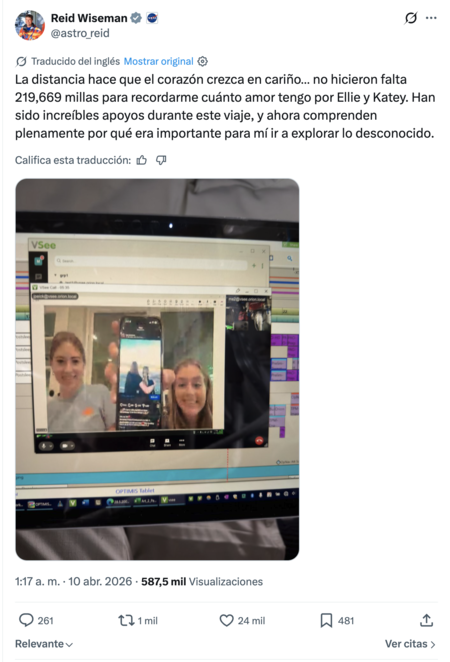
The Artemis II mission, launched on April 2, 2026, marks a significant milestone in human space exploration. After more than 50 years without manned lunar flights, this mission has reintroduced astronauts to the Moon. Most notably, Artemis II has achieved the unprecedented feat of enabling video calls from deep space using a platform called VSee.
The Emotional Weight of Connection
During the mission, commander Reid Wiseman shared a poignant message on X, stating, “Distance makes the heart grow fonder… it didn’t take 219,669 miles to remind me how much I love Ellie and Katey.” This statement highlights the emotional significance of video communication, especially considering Wiseman’s personal history. At the time, the spacecraft was approximately 219,669 miles (about 353,500 kilometers) from Earth, making the message resonate even more deeply.
The Evolution of Space Communication
While video calls from deep space are groundbreaking, they aren’t entirely new. Astronauts aboard the International Space Station (ISS) have utilized video communication for years. From educational purposes in 2010 to regular family calls, video exchanges became commonplace by 2015. The novelty of Artemis II lies not simply in video calls from space but in connecting from such remarkable distances.
Understanding the Technical Difference
The ISS operates at a relatively low Earth orbit, just a few hundred kilometers high. In contrast, the Artemis II mission has reached unprecedented distances during its lunar trajectory, surpassing the records of past crewed missions, including Apollo 13. This makes the video calls made during Artemis II the furthest in human history.
The Necessity of Specialized Tools
The choice to use VSee for these video calls stems from the unique challenges of deep space communication. Conventional apps are not built to handle high latency, data loss, or unstable connections prevalent in space. VSee, however, was designed specifically to function effectively under these conditions, showcasing the importance of durable technology in space exploration.
The Infrastructure that Makes It Possible
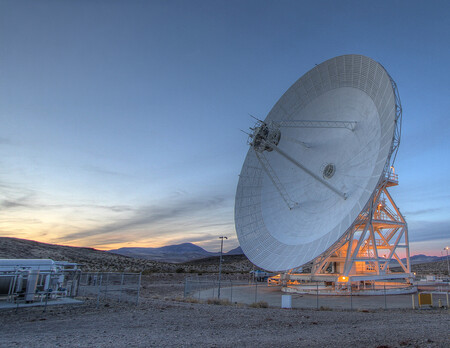
Successful deep space communications rely not just on a capable application but also on a robust infrastructure. The NASA Deep Space Network comprises three major stations located in Goldstone (USA), Madrid (Spain), and Canberra (Australia). These stations work together to provide continuous contact with spacecraft as the Earth rotates, highlighting the global effort required for deep space missions.
Conclusion
The Artemis II mission marks a groundbreaking achievement in human space exploration, particularly in its use of video communication from the depths of space. As we advance our technological capabilities, the emotional connections made possible by these innovations open up new dimensions in our understanding of human experience beyond Earth.