
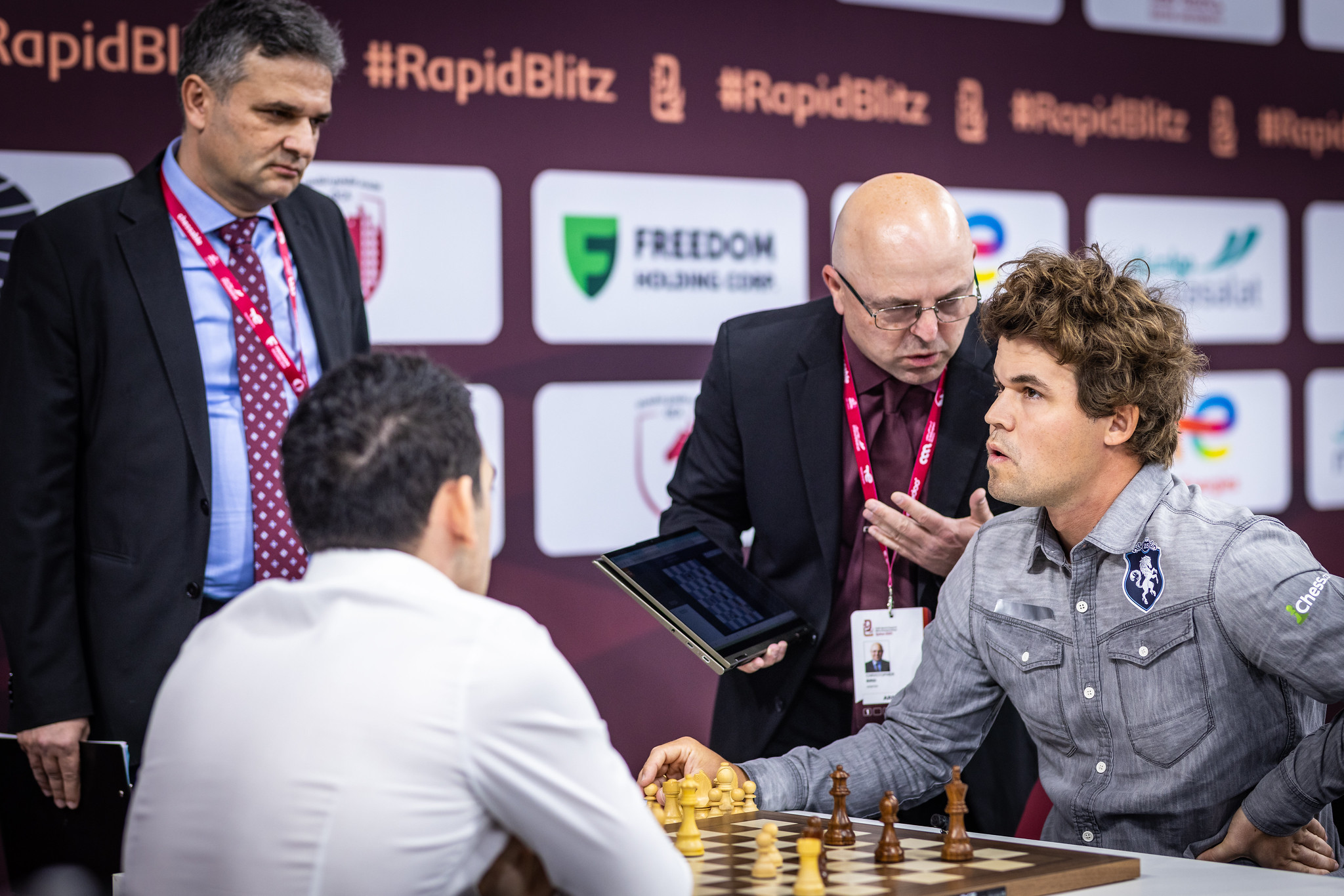
In chess, the referee often plays a minimal role, usually present just as a figurehead. However, during pivotal moments of high-stakes matches, their decisions can significantly alter the course of the game. A recent incident at the Blitz Chess World Cup held in Doha, Qatar, illustrates this point vividly. The American referee Chris Bird declared Magnus Carlsen to have lost a crucial game after the grandmaster inadvertently sent pieces flying across the board with only four seconds left on the clock.
The High Stakes of Blitz Chess
In the blitz format, each player gets just three minutes for the entire match, with a two-second increment added per move. The intense timing often leads to frenzied moves, where desperation can quickly turn an otherwise calm game into chaos. In this particular match, Carlsen attempted to recover his position after the mishap but made the critical error of stopping the clock prematurely, an illegal move given that the pieces were still scattered.
Haik Martirosyan, Carlsen’s opponent, immediately halted the game to await referee intervention. Following a brief discussion between Bird and Carlsen, the Norwegian ultimately conceded without further dispute, despite visible frustration.
A Pattern of Misfortune
Bird initially considered a more lenient sanction, typically affording one minute to the opponent during disputes. However, he deemed the incident too significant; the game was already lost for Carlsen, who had failed to reconstruct the position effectively. Notably, this wasn’t the first blemish on Carlsen’s performance during the tournament. The previous day, he lost another match after his queen fell to the ground, rolling away and out of reach, ultimately falling to Indian grandmaster Arjun Erigaisi.
Commentators speculated that Carlsen could have pressed the clock as if he had completed his move, but the tension of the moment caused him to falter and make a mistake.
Reactions From Peers
Following his controversial defeat, Carlsen slammed his fist on the table—marking a repeated display of frustration. This led to remarks from fellow grandmaster Levon Aronian, who expressed concern over such behavior affecting other players in the tournament. Aronian noted that while Bird had apologized for the earlier incident, the performance integrity remains vital in professional chess.
Adding to the drama, Carlsen again arrived late by approximately 15 seconds for another game—an uncommon slip for someone of his caliber. Although he managed to win that match against Bu Xiangzhi, it highlighted the razor-thin margins for error in blitz games.
Resilience and Victory
Despite these setbacks, Carlsen demonstrated resilience by bouncing back in the subsequent semi-finals, defeating Fabiano Caruana. In the final match, he experienced a rocky start, but ultimately triumphed, ending with two victories in the remaining games of the tournament. His composure under pressure reinforces his status as one of chess’s all-time greats.
With his 20th world title secured, Carlsen continues to prove that, despite the occasional stumble, he remains largely unbeatable across various chess formats. While he has indicated a pause on pursuing further classical titles, his dominance in rapid and blitz formats showcases that he still reigns supreme.