
Madrid’s Push for Affordable Housing: Embracing Prefabricated Wooden Modules
A while ago, terms like “prefabrication” and “wood” were not favored in the discourse of major construction companies. Prefabricated houses had a stigma, and wood seemed outdated compared to concrete and steel. However, Madrid is on the cutting edge of change, showcasing a significant shift in housing development through the introduction of prefabricated wooden modules.
Recent Developments in Madrid’s Housing Market
The Madrid City Council recently unveiled its first promotion of affordable housing constructed using “prefabricated 3D wooden modules.” This initiative aims to alleviate the ongoing housing crisis in the city, a crucial step towards providing accessible homes for its residents.
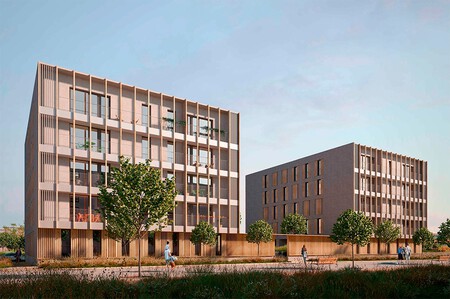
The newly opened municipal development features 52 two- and three-bedroom apartments, complete with storage units and 78 parking spaces. Rather than being just another construction effort by the Municipal Housing and Land Company (EMVS), this project is noteworthy as it marks Madrid’s first foray into the realm of wood-based prefabrication.
The Iberia Loreto 1 Project
Located in the district of Barajas, the Iberia Loreto 1 project has been constructed at a cost of €14.6 million. This two-block development is separated by a green area and is intended to provide a sustainable living environment. The adoption of “industrialized wood construction,” where wooden modules were pre-fabricated in a factory, is not only innovative but also eco-friendly.
The Importance of Industrialized Construction
By leveraging industrialized construction techniques, Madrid is following in the footsteps of other countries facing housing shortages. For instance, Australia has embraced this model to tackle its housing crisis, while interest in similar approaches has emerged in Portugal and the USA. Notably, Japan has successfully integrated prefabricated housing into its market.
Although Spain’s industrialized housing sector still holds a relatively modest market share, interest is steadily growing. Notably, the Basque Country has explored this option to enhance housing supply, and recent developments, such as a hotel built with prefabricated modules in Zaragoza, underscore the potential of this construction method.
Speed and Efficiency: Key Advantages
One of the most significant benefits of the prefabricated wooden module approach is its speed of construction. The Iberia Loreto 1 project was completed in just 17 months, showcasing the efficiency of assembling pre-manufactured modules. This approach not only streamlines the building process but also aids in reducing workplace accidents by shifting part of the construction work to factory settings.
Future Prospects for Madrid’s Housing Initiatives
Buoyed by the success of the Iberia Loreto 1 project, the Madrid City Council plans to expand this endeavor further. They aim to develop over 800 additional homes using the same system, with 170 of them in Barajas, Moncloa-Aravaca, and Villa de Vallecas. A portion of these projects will unfold through the Suma Vivienda Plan, marking a collaborative effort between public and private sectors.
By 2026, the city intends to initiate work on 2,500 new affordable rental units through EMVS, reinforcing its commitment to tackling the housing crisis head-on.
Conclusion
Madrid’s forward-thinking approach in utilizing prefabricated wooden modules reflects a crucial shift in the construction industry. These developments signal not just a response to a pressing housing crisis, but also a commitment to sustainability and efficiency will shape the future of urban living in Spain’s capital. As the city continues to invest in industrialized public construction, it paves the way for more eco-friendly and efficient living solutions.