
Understanding the Population Dynamics in Madrid and Catalonia
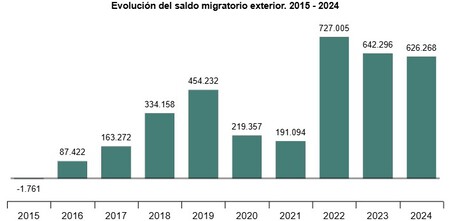
The latest data from the Instituto Nacional de Estadística (INE) reveals an intriguing phenomenon occurring in two of Spain’s most populated regions: the Community of Madrid and Catalonia. While both regions continue to attract a significant influx of immigrants from other countries, they’ve been experiencing a concerning trend of losing their own residents to other autonomous communities. This results in a negative internal migratory balance, indicating a complex migratory motor that operates at different speeds.
Analyzing the Shifting Population Trends
Despite being popular destinations for international migrants, recent figures highlight a considerable outflow of residents from both regions. For instance, many individuals have opted to relocate to nearby regions such as Castilla-La Mancha from Madrid and the Valencian Community from Catalonia. Such movement occurs amidst skyrocketing real estate prices, prompting many residents to seek more affordable living conditions.
The immigration balances effectively summarize these trends. In Catalonia, the external migration balance reached a positive figure of 129,030, while the internal migration balance registered at -6,437. This means that while 53,585 residents from other areas moved to Catalonia, a greater number, 60,022, left for other autonomous communities.
Similarly, the Community of Madrid recorded a positive external balance of 113,964, coupled with an internal balance of -12,993. This shows a trend where 113,335 residents departed to settle elsewhere, surpassing the 100,342 new arrivals from other regions.
Real Estate Affordability: A Major Factor?
One of the primary drivers of this population shift appears to be the escalating cost of housing, which has dramatically affected living conditions in urban centers. A recent study identified Madrid and Barcelona as two of the most expensive cities for housing in Spain. Overcrowded living situations have intensified, leading many to seek out more affordable options in surrounding areas.
The INE study indicates notable differences in migration patterns even within municipalities themselves. Central districts of Madrid, which have historically been desirable locations, are witnessing a decline in population, while outer districts are gaining new residents. This shift highlights the stark contrast in the quality of life and housing availability within the regions.
Broader Context: Migration Beyond Borders
These internal migration movements are not isolated phenomena; they occur within a wider context of shifting demographics and economic conditions. For instance, a noted increase in Venezuelan migrants has diversified communities in both cities, impacting specific neighborhoods across various income levels.
Interestingly, while Madrid and Catalonia face challenges with internal migration, neighboring regions are thriving. The Canary Islands and Balearic Islands reported positive internal migration balances, as did places like Castilla-La Mancha and Galicia. These areas have become attractive alternatives for those leaving the bigger cities.
The Future: Will the Trend Continue?
Looking ahead, it remains to be seen whether the trends in population outflow from Madrid and Catalonia will intensify. With continued economic pressures, especially in the housing market, more residents may continue to seek opportunities in regions offering better living conditions.
As local municipalities use detailed data from the INE to analyze these patterns, tailored solutions and policies will be key in retaining their populations.
Conclusion
In conclusion, while Madrid and Catalonia remain vibrant centers for international migration, the internal dynamics are a growing concern. The rising cost of living, particularly housing, is pushing local residents toward more affordable regions. This juxtaposition of significant foreign immigration alongside domestic emigration presents a unique challenge for policymakers and urban planners in these bustling communities.